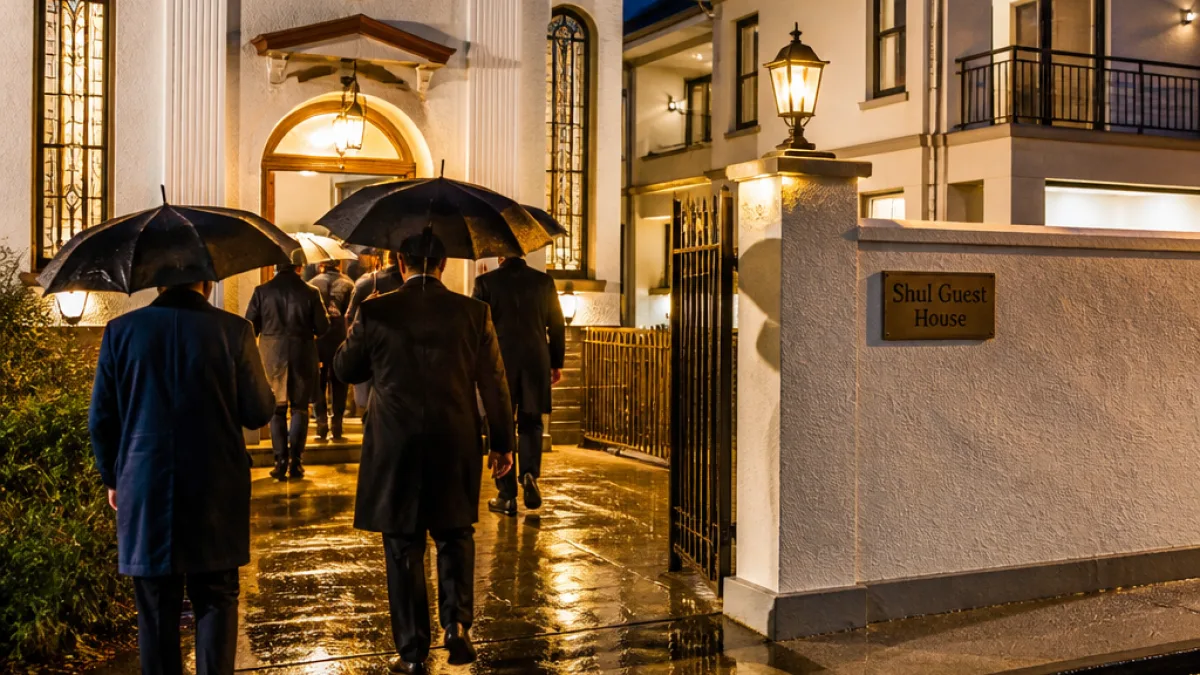
The small Jewish community in East London marked a rare communal recovery over Rosh Hashanah when the local shul achieved a full minyan for evening and morning services, despite heavy rain across the city. The turnout came after a prolonged period during which full high holy day services were not possible, leaving the congregation’s social and religious life diminished.
High holy days return after years of disruption
According to reporting in the SA Jewish Report, the East London Hebrew Congregation, which counts about 26 members most of them elderly, held services led by Rav Ilan Herrmann who travelled from Johannesburg for the weekend. The congregation’s secretary, Ellen Ettinger, said the achievement was significant because the community had not previously managed full Rosh Hashanah services in recent years.
“We amazingly had minyanim for the services,” Ellen Ettinger said to the SA Jewish Report.
The congregation’s last full Rosh Hashanah had been in 2019, before a prolonged dispute with its then rabbi and the disruption caused by the COVID‑19 pandemic curtailed regular gatherings. Previous reporting chronicled how those years affected the shul’s ability to maintain routine religious life and communal activities.
Practical steps to sustain communal life
In preparation for the holy days the congregation renovated and re‑equipped the former rabbi’s house to make it habitable. Ettinger said the work required thousands of rands and many hours of shopping to supply crockery, cutlery and other essentials taken from the shul.
- The house now has three bedrooms and can accommodate five people, with extra space available if required.
- The congregation intends to offer the property to Jewish visitors seeking a kosher stay in East London.
- Visitors and visiting clergy are being encouraged to lead services in return for accommodation.
Ettinger told the SA Jewish Report that a family from Johannesburg — including a rabbi and his wife and two children — is expected later in the year and has indicated a willingness to conduct services while visiting. The move is aimed at both supporting visiting worshippers and ensuring the shul can sustain regular services when local numbers are low.
Why this matters locally
For a congregation with a small and ageing membership base, achieving full attendance for Rosh Hashanah carries symbolic and practical importance. Regular high holy day services are a cornerstone of communal religious life, providing opportunities for social connection, spiritual observance and pastoral care that are especially vital for elderly members.
The renovation of the rabbi’s former house represents an investment in the congregation’s ability to host and attract visiting families and clergy, which could help plug gaps in leadership and service provision. It also creates a modest income‑in‑kind model that leverages accommodation in exchange for liturgical support.
| Detail | Figure |
|---|---|
| Congregation size | About 26 |
| Bedrooms in renovated house | 3 |
| Accommodation capacity | 5 (additional space as required) |
Local civic and faith networks often play a role in sustaining small congregations and community organisations. In East London, the survival and modest revitalisation of the Hebrew Congregation will be watched by residents who follow the city’s civic life and by faith leaders across denominations seeking to maintain interfaith relations and community cohesion.
While the recent success at Rosh Hashanah does not remove the longer‑term challenges facing a small, ageing congregation, it does provide a practical blueprint for maintaining services: refurbish existing assets, accommodate visiting clergy and families, and encourage reciprocal arrangements that strengthen the shul’s ability to function.
The SA Jewish Report provided the original account of the services and the congregation’s preparations.