Suspects cornered after dramatic chase along Atlantic Seaboard
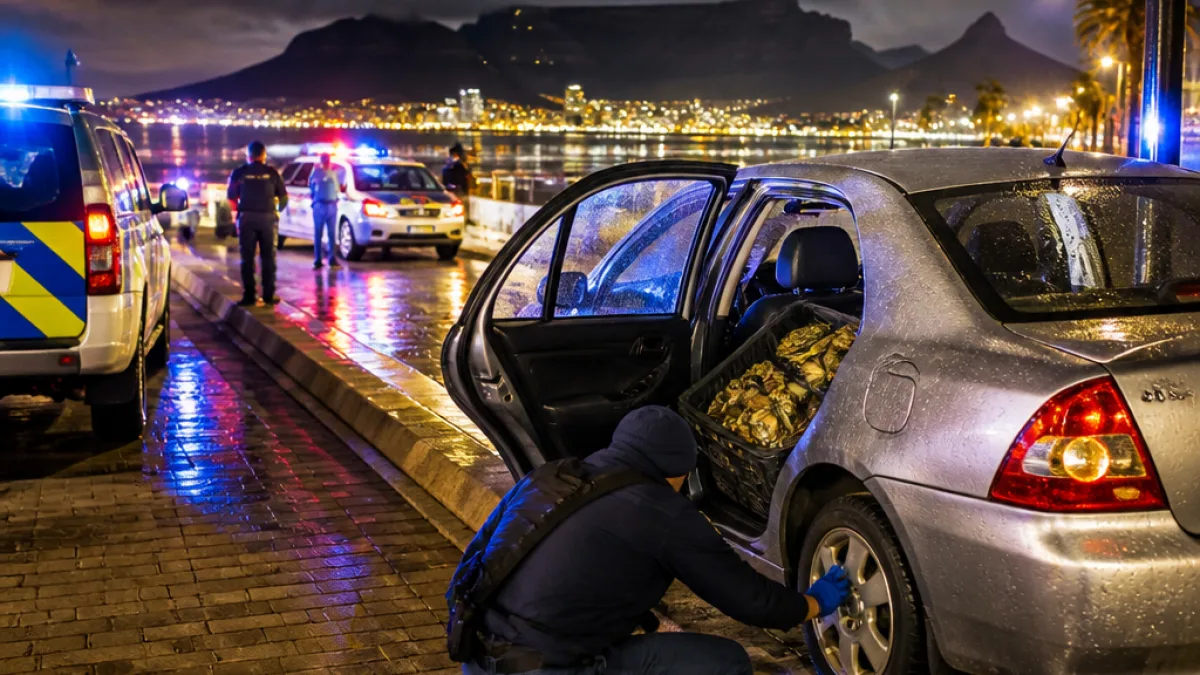
A targeted, intelligence-led operation by City of Cape Town law enforcement and members of the South African Police Service ended in the arrest of suspected abalone poachers on Wednesday after a high-speed chase through the suburbs of Camps Bay and Sea Point.
Video circulating from the scene shows plain-clothed officers and Metro Police engaging a vehicle, with one suspect briefly pinned to the road while other officers boxed in the getaway car. A policeman is seen attempting to open the driver’s door before the vehicle reversed with a rear passenger door still open; an officer points a firearm at a back-seat occupant. Police later fired a shot at the vehicle’s tyres in an effort to stop it, and the car ultimately struck the pavement before occupants were detained.
According to reporting by IOL, the operation began in Camps Bay after information was received about suspected illegal abalone poaching. Officers first engaged the vehicle on Regent Road outside the Point Centre, and the driver then fled up Kei Apple Road in Sea Point. Abalone was recovered during the operation, and the SAPS made further arrests after recovering abalone from a second vehicle involved.
“Illegal abalone poaching remains a serious concern along the Atlantic Seaboard, and proactive enforcement is essential,”
said Heather Tager, Chief Operating Officer of the Sea Point City Improvement District (CID), who commended Metro Police and the Intelligence Unit for the arrests. The Sea Point CID offered to provide CCTV footage from its area-wide camera network to support the investigation, IOL reported.
Sequence of the operation
The following sequence is drawn from the available reporting and local official statements:
- Initial tip-off: Intelligence received relating to suspected abalone poaching in Camps Bay.
- Pursuit: Suspected vehicle located and engaged outside the Point Centre on Regent Road.
- Flight: Driver evaded a Metro Police blockade and fled up Kei Apple Road, Sea Point.
- Use of force: Police fired a shot at the tyres to disable the vehicle.
- Collision and arrest: Vehicle struck the pavement and occupants were apprehended; abalone recovered from at least one vehicle and a second vehicle yielded further recovered abalone.
| Stage | Location | Action |
|---|---|---|
| Tip-off | Camps Bay | Proactive, intelligence-led operation initiated |
| Initial stop | Regent Road (outside Point Centre) | Vehicle engaged by Metro Police |
| Pursuit | Kei Apple Road, Sea Point | Driver fled blockade; police fired at tyres |
| Arrest | Sea Point pavement | Vehicle crashed; occupants apprehended; abalone recovered |
Why this matters locally
Abalone poaching remains a persistent and lucrative illegal trade along the Western Cape’s Atlantic coastline. It drives organised crime, threatens coastal livelihoods, and undermines biodiversity. The City’s Law Enforcement Department has in recent weeks increased proactive patrols and checkpoints, and this operation underscores the coordinated response between municipal Metro Police units and the SAPS.
Sea Point’s CID has positioned its CCTV network as a resource for investigations, a reflection of growing cooperation between private security initiatives and public law enforcement. Tager’s endorsement of the arrests highlights local concern: the CID has been vocal about the impact of marine poaching on the broader community and the need for sustained enforcement.
Questions remain
Police have not released the exact quantity of abalone seized, nor have they confirmed how many people were arrested in total. The circumstances that led to the initial tip-off have also not been disclosed. Charges are expected to be formalised once SAPS completes its investigation and dockets are prepared for possible prosecution.
For residents and visitors using the Atlantic Seaboard, enforcement activity can mean temporary roadblocks and increased law-enforcement presence. Those with information about illegal fishing or poaching are encouraged to contact their nearest police station or Crime Stop.
This incident is another reminder that coastal conservation and public safety are linked: policing efforts to curb illegal marine harvests require not just arrests but continued intelligence gathering, court-ready dockets and inter-agency co-operation to dismantle the networks that profit from poaching.
Police provided the details to media through a City operation briefing, and the Sea Point CID confirmed its cooperation, according to IOL’s account of the events.