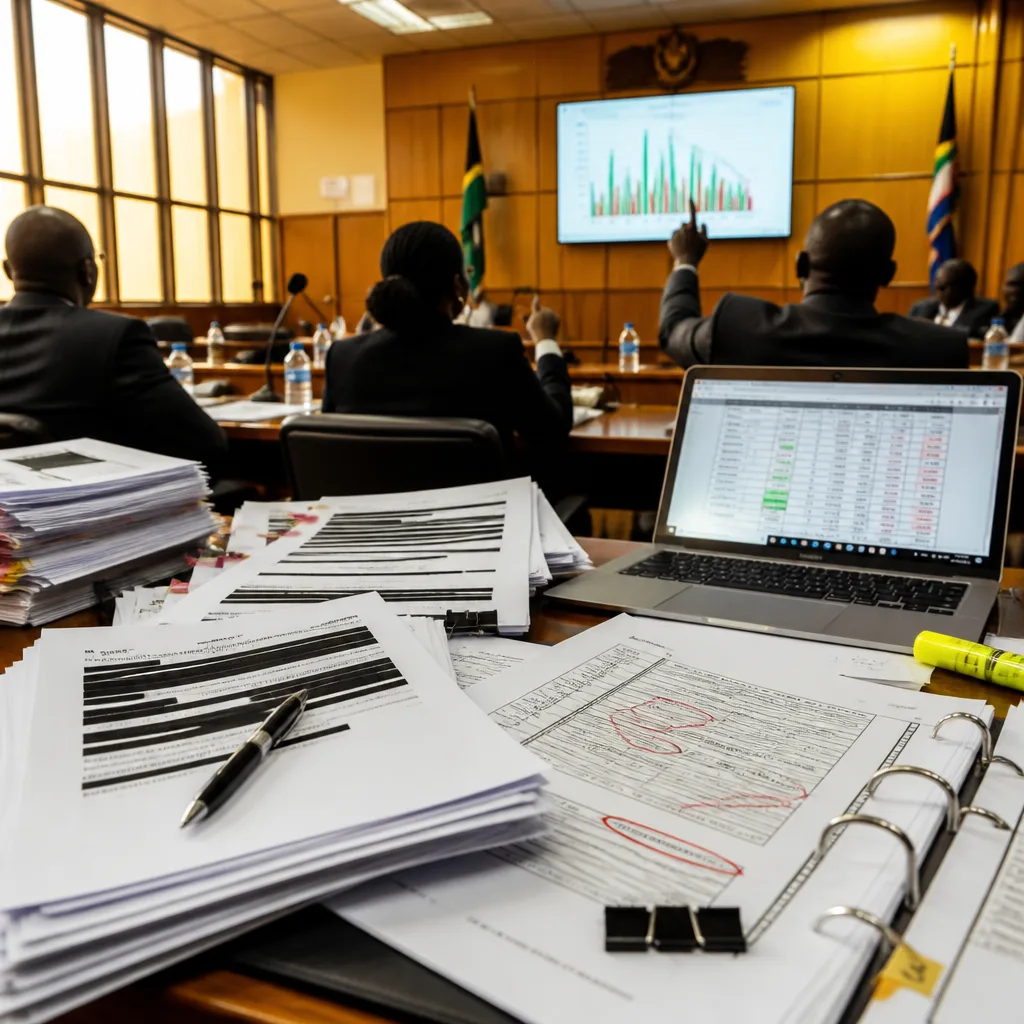
SAPS has told Parliament that problems with its crime statistics on women and children remain unresolved more than 15 months after the Portfolio Committee on Police first raised the matter. The admission came during a committee briefing in which the police service was asked to explain why previously published figures were withdrawn and why Parliament had been given inaccurate information.
Parliamentary concerns date back to June 2025
The committee originally queried the figures in June 2025 after separate counts for women and children who were murdered, subjected to attempted murder or seriously assaulted were omitted from published statistics. SAPS management initially told MPs the missing numbers were present in the full report. Subsequent checks by committee members found they were not.
In a letter of 17 June the committee asked SAPS why the figures had been omitted and why Parliament had received inaccurate information. SAPS later acknowledged faults in the data extracted from police dockets and its Crime Administration System, and withdrew the previously published figures, promising corrected data and an explanation.
Data faults identified by SAPS
The police service’s own review identified multiple problems that prevent reliable counts of victims in the women-and-children subset. Those issues include:
- Quarterly figures that do not add up to published annual totals;
- Some offences counted more than once, producing subset totals that could exceed overall victim numbers;
- Inconsistencies in recording victims’ ages and sexes;
- Failures to link victims to the correct charges in the system.
"Adding up the quarterly figures did not produce the annual totals," the police review found.
Because of these weaknesses, SAPS told the committee it could not reliably say how many women and children fell into the specified serious crime categories.
Implications for oversight and policy
Experts and advocacy groups rely on police statistics to track trends in gender-based violence and to allocate resources for prevention and victim support. The lack of accurate, up-to-date police figures means that national and provincial decision-makers cannot confidently assess whether serious violence against women and children is rising or falling.
Statistics South Africa’s Victims of Crime Survey, released on 1 September, reported that 31.4% of women who experienced assault identified a spouse or intimate partner as the perpetrator. While the survey provides important context, the committee emphasised that it cannot substitute for accurate administrative data from the police.
Broader backdrop
The committee’s statement also noted recent high-profile matters that underscore the demand for credible police information and effective investigations. These included the discovery of the bodies of nine women in Ekurhuleni and the prosecution of Lieutenant General Shadrack Sibiya on serious sexual-offence and trafficking charges. The committee made clear these cases are separate from the statistical failures but said they highlight the urgency of reliable data and proper investigative practice.
MPs demanded a firm deadline for the rectification process. The committee has asked SAPS to:
- identify which figures were wrong or withdrawn;
- publish corrected data;
- explain the inaccurate information provided to Parliament.
At the briefing, the committee indicated it would press the police service for timelines and accountability for the corrections. More than 15 months after the issue was first raised, SAPS had not yet completed the rectification work.
| Issue | Consequence |
|---|---|
| Duplicate counting of offences | Subset totals may exceed overall victim numbers |
| Mismatch between quarterly and annual totals | Annual statistics unreliable |
| Inconsistent recording of age/sex | Cannot accurately identify women and children victims |
The committee said it would seek a clear timetable and a detailed accounting from SAPS on the steps taken and the outcomes of the data-cleaning process. Until corrected figures are produced and validated, Parliament and the public must rely on alternative sources such as the national victim survey for trend indications, even though those surveys measure different phenomena and cannot replace administrative police records.
Correction and transparency remain the central demands from MPs: to know which statistics were withdrawn, to receive corrected datasets and to be told why incorrect information was supplied to Parliament in the first place. The committee is expected to pursue these matters at future briefings.