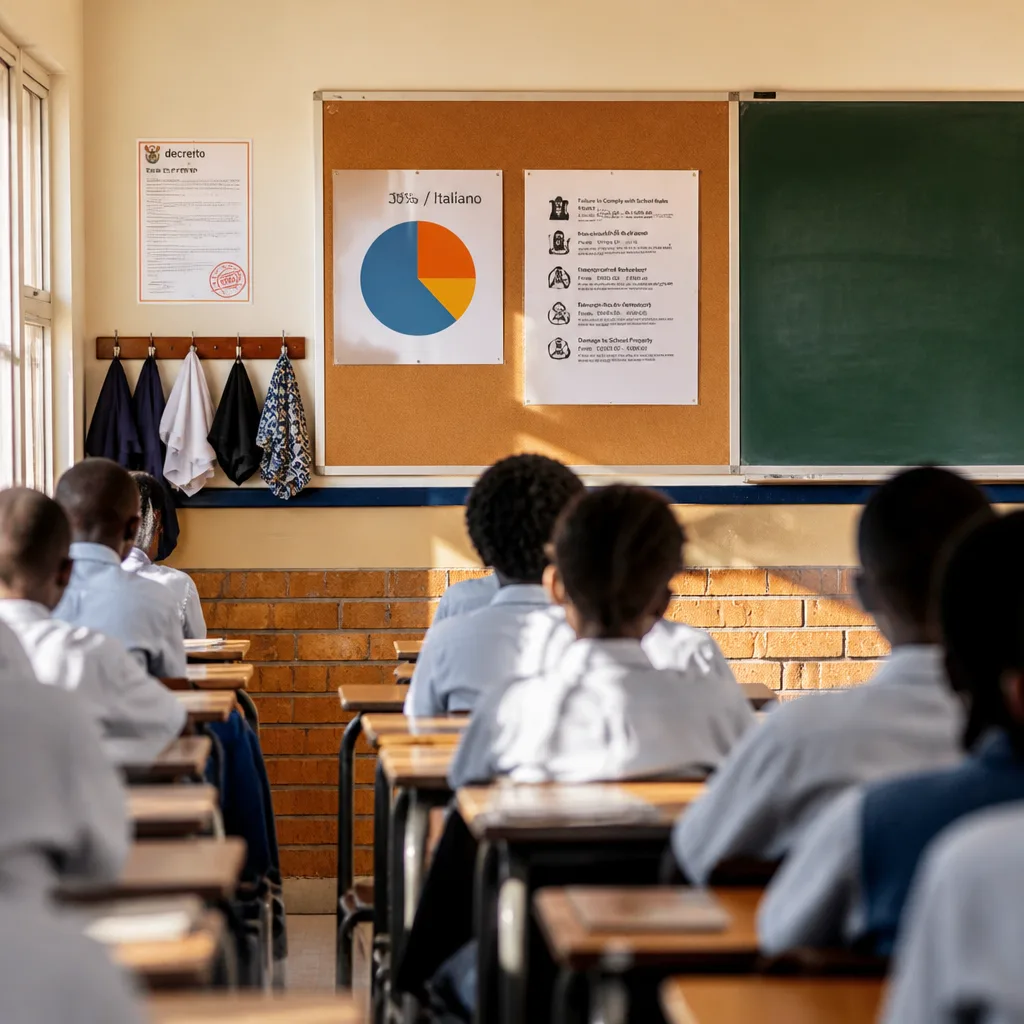
The Italian cabinet has adopted a decree‑law that makes wearing full face coverings such as burqas and niqabs in schools illegal and introduces a nationwide cap of 30% on the share of pupils who do not speak Italian in the classroom, the government announced. The measure, reported by Al Jazeera, also provides for fines of up to $1,140 (€1,000) for non‑compliance.
Immediate effect but subject to parliamentary ratification
Because the changes have been introduced as a decree‑law, they can take effect immediately but must be ratified by parliament within 60 days. President Sergio Mattarella still has to sign the measure, and he has previously expressed concern about measures that might create barriers to education, according to the report.
“This is the direction we want to continue to follow: a school that integrates without giving up on rules, that supports those who have more difficulties and that puts everyone in a position to start from the same point,”
The quote was attributed to Prime Minister Giorgia Meloni in a post on her social media account, where she framed the changes as measures to strengthen language learning and uphold school rules.
Policy elements and immediate consequences
The decree contains two main elements:
- A prohibition on wearing burqas and niqabs inside schools.
- A national cap limiting the proportion of pupils who are non‑Italian speakers in any given classroom to 30%, to be implemented starting next year.
Failure to comply with the new rules may incur fines capped at $1,140 (approximately €1,000), the report said. As a decree‑law, schools and local authorities are expected to begin preparing for implementation while awaiting parliamentary scrutiny.
| Measure | Details |
|---|---|
| Face coverings | Burqas and niqabs banned in schools |
| Classroom composition cap | Maximum 30% non‑Italian speakers per classroom (from next year) |
| Penalties | Fines up to $1,140 (≈€1,000) |
Context: politics, migration and education
Italy is a principal arrival point for migrants to Europe and the issue of integration has become central to the national political debate ahead of the 2027 general election, the report noted. The measures were announced at a gathering of the youth wing of Prime Minister Meloni’s Brothers of Italy party and are consistent with the government’s broader emphasis on national identity and social cohesion.
Opponents in Italy say the rules are politically motivated and aimed at countering the appeal of the far‑right National Future (FN) party, which has campaigned for stricter migration controls and framed schools as a battleground for its agenda, Al Jazeera reported. President Mattarella’s caution highlights the potential legal and ethical questions that arise when national identity, religious freedom and access to education intersect.
Implications for learners and schools
For teachers and learners, the decree raises practical and pedagogical challenges. Schools will need clear guidance on how to assess language proficiency, manage class composition, and ensure that learners who are excluded from particular classrooms are still able to access quality teaching and language support. Language acquisition programmes, integration support and classroom resources will be central to whether the policy meets its stated aim of improving Italian language learning.
Education systems elsewhere, including South Africa’s, often grapple with the balance between language instruction, inclusion and classroom equity. The Italian move will be watched by policymakers and education practitioners for its operational effects on schools, its impact on learners from migrant backgrounds, and any legal challenges that follow.
The decree’s immediate adoption, pending parliamentary approval, places Italian schools at the forefront of a divisive public debate about how to reconcile migration, religious expression and universal access to education.