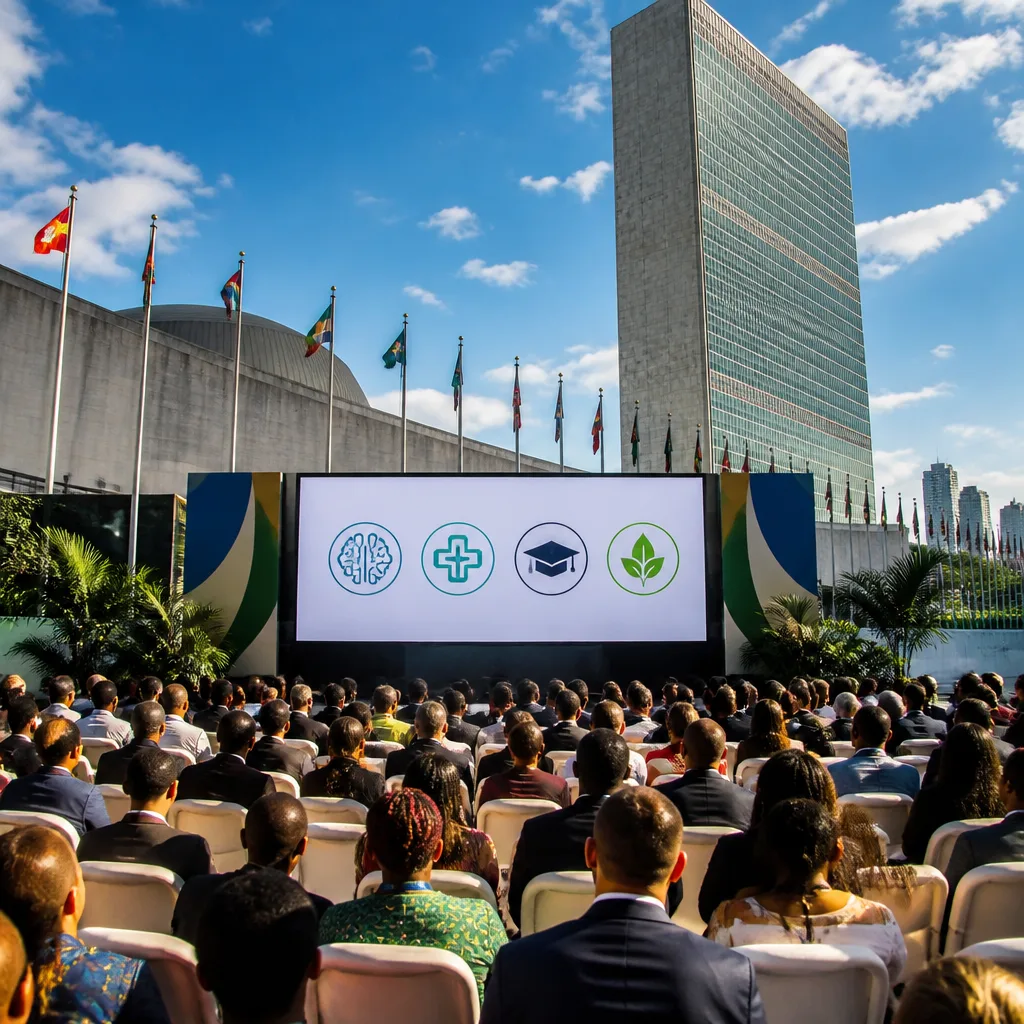
The inaugural Borgo Dialogues in the United States brought together leaders from business, finance, academia, faith groups, healthcare and international institutions in New York this week to examine how technology, governance and investment choices shape education, work and human dignity.
Summit on the sidelines of the UN General Assembly
The meeting, held from 20 to 23 September alongside the 81st United Nations General Assembly, was organised by the Laudato si’ Centre for Higher Education and follows an earlier gathering at Borgo Laudato si’ in Castel Gandolfo.
Organisers said the platform aims to create cross‑sector dialogue on complex, transnational challenges such as artificial intelligence (AI), the changing nature of work, healthcare systems and sustainable development. At the centre of the convening was a question intended to sharpen participants’ thinking: “What are we building, for whom, and who will inherit it?”
“The Borgo Dialogues represent an invitation to courageous leadership rooted in listening, encounter and shared responsibility,”
The quote above is from Cardinal Fabio Baggio, Director General of the Laudato si’ Centre for Higher Education and founder of the initiative, who told delegates the dialogues were meant to foster trust and collective responsibility at a time of institutional fragmentation.
What the conversations covered
The programme featured leadership roundtables, private meetings and strategic discussions. Key themes reported by organisers included:
- Artificial intelligence and workforce transformation — how AI will affect jobs, skills and the responsibilities of educational institutions.
- Healthcare and human dignity — ethical questions arising from technological change and how systems should protect vulnerable populations.
- Sustainable development and intergenerational equity — aligning investments and policies with long‑term social and environmental goals.
Organisers described the initiative as rooted in Catholic social teaching and focused on the role leadership plays in promoting the common good.
Why this matters for South African education
Although the gathering took place in New York, the themes discussed are directly relevant to South African schools, universities and training providers. The rapid uptake of AI tools raises practical questions in classrooms and at admissions and assessment points, while workforce shifts shape the skills universities must deliver. Healthcare topics intersect with public‑health education and the training of health professionals, areas where South African institutions already face capacity and equity challenges.
South African education stakeholders might draw three particular lessons from the dialogues:
- Leadership in higher education needs to balance innovation with ethical safeguards so that technology does not exacerbate inequality.
- Cross‑sector partnerships — between universities, health systems, industry and civil society — can help align curricula with labour‑market needs while attending to social outcomes.
- Deliberate mechanisms are required to ensure investments and policy changes benefit current learners and future generations alike.
| Event | Dates | Main themes |
|---|---|---|
| Borgo Dialogues, New York | 20–23 September | AI and work; healthcare and human dignity; sustainable development |
Participants were encouraged to confront difficult questions across institutional boundaries and to commit to actions that uphold human dignity, according to the organisers. Cardinal Baggio said the dialogues sought to build trust across differences and to encourage leaders to act with a longer‑term view.
For South African educators and policymakers, the challenge is practical: how to translate high‑level commitments into classroom practice, assessment frameworks and workforce planning that reduce rather than reproduce inequality. The Borgo Dialogues add to a growing international conversation about governance and pedagogy in an era of rapid technological and social change — a conversation that South African institutions cannot, and should not, ignore.
The Laudato si’ Centre plans further gatherings; organisers say the platform will continue to convene leaders to explore the intersection of values, technology and policy.