
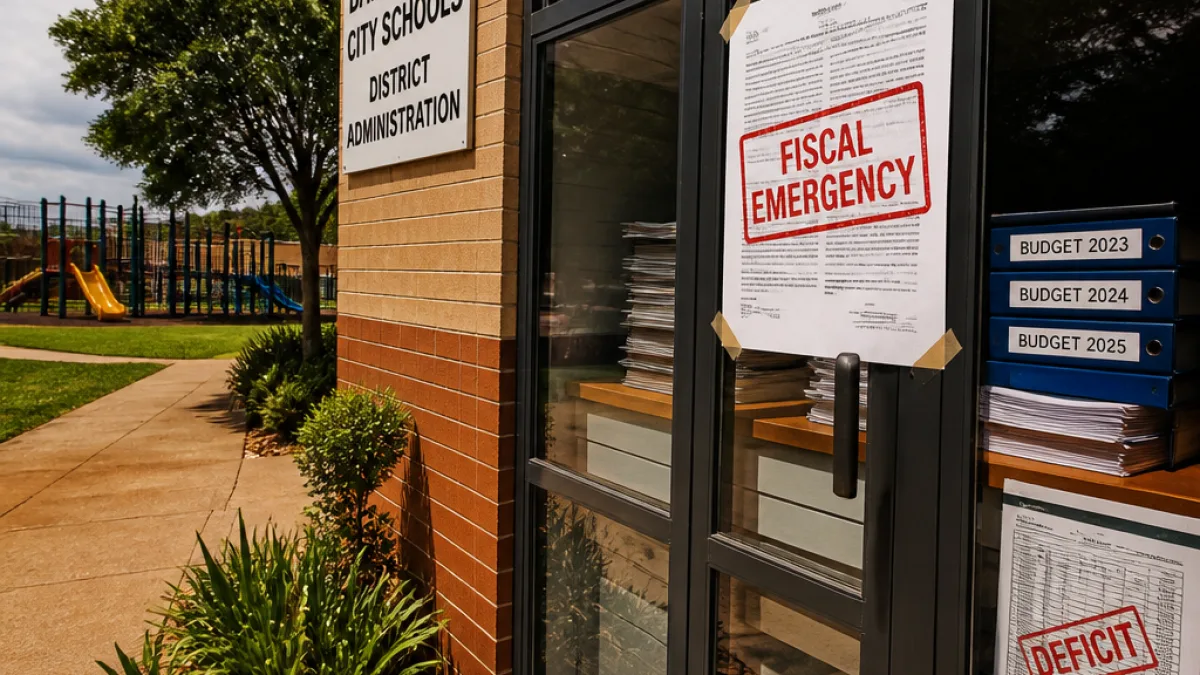
State intervention follows failed recovery plan
Ohio Auditor Keith Faber has formally declared Barberton City Schools to be in a state of fiscal emergency after the district failed to submit an acceptable plan to eliminate projected budget shortfalls. The announcement on 22 September 2026 elevates state oversight to its most severe level and empowers a special commission to take a wide range of fiscal actions.
Under Ohio law, the fiscal emergency designation follows a period in which the district was already under fiscal watch. The auditor said the district’s most recent recovery proposal still showed a US$1.5 million deficit for the fiscal year ending 30 June 2027, which failed to meet the statutory requirements for an acceptable recovery plan.
What the fiscal emergency means for the district
The declaration triggers the formation of a financial planning and supervision commission. The commission will include representatives from state and local government together with school officials. Its powers include assuming any authorities of the elected local school board that the commission considers necessary to remedy the district’s fiscal condition.
The commission must meet with the district and community and, within 120 days of its first meeting, develop a plan aimed at eliminating the fiscal emergency. The state auditor will act as the commission’s financial supervisor and provide accounting assistance, training and oversight to ensure compliance with the recovery plan and state financial reporting requirements.
- Trigger: Failure to submit an acceptable recovery plan under fiscal watch.
- Immediate effect: Formation of a financial planning and supervision commission.
- Deadline: Commission must produce a recovery plan within 120 days of its first meeting.
"The district’s most recent recovery proposal still showed a US$1.5 million deficit for the fiscal year ending June 30, 2027," the auditor said in his announcement.
Background: a deepening fiscal crisis
State records show Barberton had been placed under fiscal watch on 21 May after failing to submit a recovery plan to address anticipated deficits over the coming three years. The projected shortfalls cited when the district entered fiscal watch included:
| Fiscal year | Projected deficit (US$) |
|---|---|
| 2027 | 5.1 million |
| 2028 | 12 million |
| 2029 | 21 million |
Officials said the district did not meet the statutory deadline to provide an acceptable recovery plan within 120 days of entering fiscal watch, prompting the auditor’s declaration of fiscal emergency.
Local consequences and wider context
For residents of Barberton, Ohio, the commission’s arrival could mean decisive changes to how the school district manages its budget and delivers services. The commission has the legal authority to approve or overrule local board decisions on budgeting, staffing and other fiscal matters if it deems that necessary to restore financial stability.
While this development is distant from our Barberton in Mpumalanga, the case illustrates how municipal and educational finance pressures can force state intervention when recovery plans fall short. In tourist towns and small cities, fiscal shocks — whether from declining revenue, rising costs or other shocks — have knock-on effects for services that matter to households and local economies, including schooling, transport and maintenance of public spaces.
Residents in communities with single large employers or heavy reliance on state grants should note the structured path available under Ohio law: step-wise oversight from fiscal watch to fiscal emergency, mandatory recovery plans and a commission process intended to ensure financial reporting and accountability. How the commission balances short-term fiscal fixes with the long-term quality of education will be closely watched by parents, staff and taxpayers.
The immediate next steps are procedural: the auditor will assemble the commission and begin work with district leaders and community members. The commission has 120 days from its first meeting to present a recovery plan designed to end the emergency.