White River conservation work received a major boost when hundreds of volunteers took part in the annual White River Clean‑Up on 19 September, organisers reported. The event — described as the largest single‑day volunteer initiative in Delaware County — focused on removing litter and flood debris after severe flooding earlier in August left the river and its banks heavily impacted.
Community response after mid‑August flooding
According to Muncie‑Delaware Clean and Beautiful, the White River Clean‑Up has been held since 2006 and in 2026 covered a stretch of 135 kilometres of river. Organisers said a record‑breaking level of participation was recorded this year as people responded to the visible impacts of recent floodwaters.
Jeff Hanser, board president of the Muncie White River Clean‑Up event, framed the floods as a traumatic event for the community and said volunteers saw the clean‑up as an urgent recovery action. He warned that the river requires constant care and called for shared responsibility in maintaining it as a natural asset.
“The flooding was really a trauma that was inflicted on the community,” said Jeff Hanser, adding that the river is “literally Delaware County’s best natural resource.”
Scale and logistics of the clean‑up
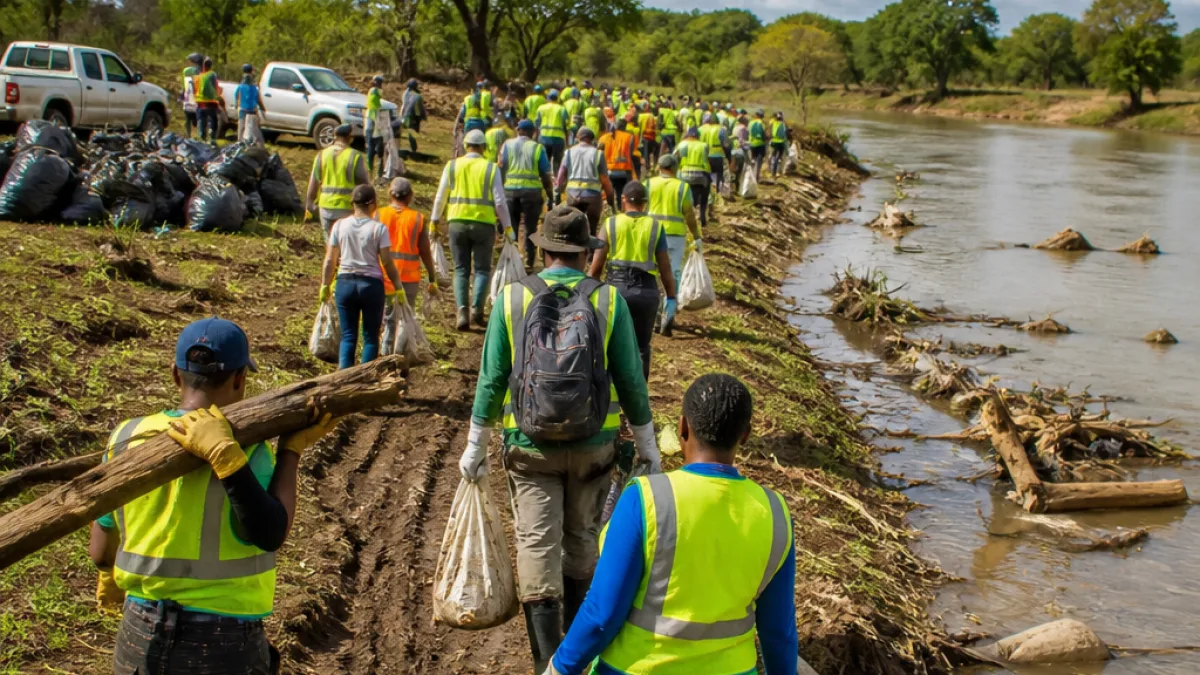
Organisers reported that hundreds of participants gathered at West Park, working along banks and in shallow water to remove litter and larger debris left by the floods. What is usually an annual beautification exercise became this year a visible demonstration of community resilience and recovery.
- Start year: 2006
- Distance covered: 135 kilometres of river
- Participation: described by organisers as a record turnout of hundreds
- Main aim: remove garbage and flood debris left after mid‑August flooding
Photographs from the event showed volunteers extracting bags of refuse from riverbanks and the water. Media reporting noted that the August floods left an “overabundance of garbage” and debris throughout the channel, increasing both the workload and the urgency of the clean‑up.
Local consequences and wider lessons
While the event took place in Muncie, the account is pertinent for communities that neighbour rivers and rely on them for tourism, recreation and ecological services. Floods can deposit large volumes of material that become sources of pollution if not removed quickly. Volunteer mobilisation helped reduce immediate hazards and improve the river’s appearance and usability for residents and visitors.
For municipalities and civic groups, the Muncie example underlines two practical points: planned, regular clean‑up programmes create capacity that can be scaled up after extreme weather events; and visible civic action can support recovery for households still facing long‑term impacts from flood damage.
| Metric | Reported figure |
|---|---|
| Years the event has run | Since 2006 |
| River distance covered | 135 kilometres |
| Participants | Hundreds (record turnout) |
| Main driver in 2026 | Mid‑August flooding |
Organisers emphasised stewardship language: flood recovery is not only about repairing houses and infrastructure but also about restoring natural systems that mitigate future harm. The president of the clean‑up board said every resident carries a responsibility to maintain the river.
For river towns here in Mpumalanga, where rivers support eco‑tourism, agriculture and local recreation, the Muncie clean‑up offers a clear example of community mobilisation after floods. It also raises questions for local authorities on resourcing and planning for post‑flood environmental clean‑up work, so that waterways can be restored quickly and safely to protect public health and preserve the natural assets that support livelihoods.
Organisers closed the event noting both the scale of the damage they had tackled and the solidarity shown by volunteers. The clean‑up, they said, was as much an act of community healing as it was an environmental intervention.