Regular movement does not have to mean high-intensity training, particularly as people grow older. Jane Fonda, the actress and fitness personality, has adapted the demanding exercise style associated with her 1980s workout videos into a slower routine built around walking, strength work, balance, flexibility and controlled movement.
Fonda, now 88, said in interviews in early 2025 that she continues to exercise daily, but at a reduced pace. The change is important because it shows how an exercise routine can be adjusted rather than abandoned when physical capacity, comfort or recovery needs change. Her approach also resembles the broad categories of activity health experts commonly recommend for maintaining physical function in later life.
“I essentially do everything I used to do, just slower.”
Five parts of a gentler routine
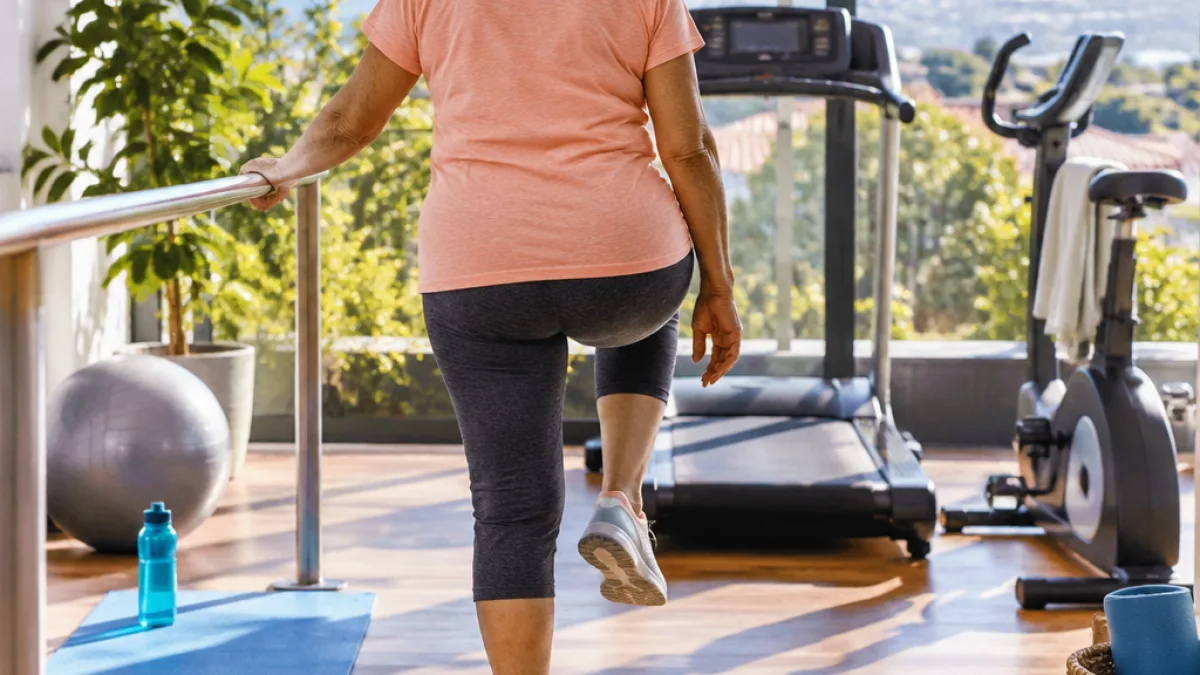
Fonda has described walking as her preferred form of cardio, or cardiovascular exercise. Depending on the weather, she uses a treadmill or an indoor bicycle, while outdoor walks — including routes through woods and over hills — remain a particular preference. Walking is a relatively low-impact activity and, according to the account, supports heart health while placing less stress on the joints than running.
Her routine also includes resistance exercise, divided between upper- and lower-body sessions on different days. Strength training becomes especially relevant with age because muscle mass naturally declines over time. Maintaining stronger muscles can assist with ordinary tasks such as climbing stairs or rising from a chair.
| Activity | Purpose described in the account |
|---|---|
| Walking | Cardiovascular exercise and outdoor movement |
| Strength training | Supports muscle strength for everyday activities |
| Balance work | Challenges coordination and may help with fall prevention |
| Stretching | Helps maintain joint mobility |
| Controlled movement | Reduces the emphasis on speed and intensity |
Balance is a separate part of fitness, rather than simply a by-product of walking. Hills and uneven outdoor ground can test coordination, while simple activities such as standing on one foot or walking heel to toe can provide an additional challenge at home. The source material links balance work with fall prevention, although it does not present results from a specific clinical trial or quantify the size of any benefit.
Flexibility is the fourth element. Fonda has continued to include stretching and has led a stretching class for the Supernatural virtual-reality fitness application on Meta Quest. Stretching is presented as a way to help keep joints mobile and make everyday movement more comfortable.
Why pace matters
The central change in Fonda’s routine is not necessarily the exercises themselves, but their tempo. She has said that she performs many of the movements she used to do, only more slowly and with greater control. This approach places less emphasis on competition, speed or exhaustion and more on sustaining movement over time.
For older adults, the five broad categories described are:
- Walking, outdoors where conditions allow, or on a treadmill or bicycle indoors.
- Strength work for the upper and lower body.
- Balance exercises that challenge stability and coordination.
- Stretching to support comfortable movement.
- Slower, controlled repetitions instead of automatically pursuing high intensity.
Fonda’s example should be understood as a personal routine, not as a universal prescription. People differ in their fitness, mobility and health needs, and an exercise programme that is comfortable for one person may not suit another. Even so, the account makes a clear point: staying active in later life can involve adapting familiar activities, reducing the pace and concentrating on movements that support everyday independence.