OpenAI has announced that its large AI models have produced what the company describes as new scientific results in mathematics, computer science and physics, including a claimed proof of a long‑standing mathematical statement known as the local smoothing conjecture.
What OpenAI announced
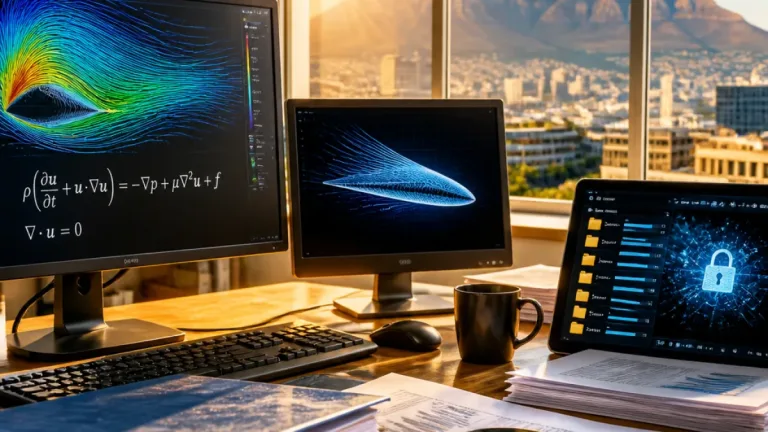
The technology firm said on Monday that its models produced discoveries in three areas: harmonic analysis, complexity theory and quantum field theory. In harmonic analysis — the branch of mathematics that studies how complex signals and functions break down into simpler wave components — OpenAI said its work settled the local smoothing conjecture in every spatial dimension for the first time. Previously, proofs had been established only up to three dimensions.
- Harmonic analysis: Claimed proof of the local smoothing conjecture across all spatial dimensions.
- Complexity theory: New results reported that relate to fundamental questions about computational difficulty (details released by OpenAI).
- Quantum field theory: Model outputs said to bear on problems in theoretical physics.
Reaction from the academic community
The announcement has prompted a mix of excitement and careful scrutiny in the international mathematics community. Alex Iosevich, a professor of mathematics at the University of Rochester who specialises in harmonic analysis, described the result as a "historic development" and said OpenAI appeared to have "cracked" the conjecture. Iosevich noted the emotional weight of the advance because the conjecture was formulated by his PhD supervisor.
"The conjecture was formulated by my PhD adviser, Chris Sogge, so it is near and dear to my heart, and the news was a shock at first," Iosevich said. "Now I am filled with joy and optimism, because the scientific enterprise as a whole is going to make giant leaps as a result of the AI revolution."
Such reactions underline two points often raised when AI systems claim contributions to fundamental science: independent verification and the distinction between conjecture, computer‑assisted evidence and human‑verified proof. Historically, breakthroughs in pure mathematics have required rigorous peer review and formal checks, including verification of every logical step where necessary.
Why this matters for South Africa
If independently verified, results of this kind could alter how mathematicians and theoretical scientists work in South Africa and elsewhere. Practical implications include:
- New directions for university research programmes and postgraduate projects in mathematics, computer science and theoretical physics.
- Potential shifts in how computational tools and AI are integrated into research methods, teaching and supervision.
- Questions for research funders and policy makers about investment in AI tools that assist discovery and about ensuring access to such tools for publicly funded researchers.
South African institutions — universities, research councils and funding bodies — will need to weigh how to support responsible adoption of AI methods while maintaining rigorous standards of verification and reproducibility.
Limits and the need for verification
OpenAI’s statement is the latest in a sequence of high‑profile claims that AI systems can contribute to scientific discovery. These claims require careful interpretation. A model producing a proof or a conjecture does not immediately translate into accepted mathematical truth. The academic process of validation involves peer review, replication and, where appropriate, formal checking of proofs.
Researchers will examine the details of OpenAI’s outputs, reproduce any constructions and determine whether the work meets existing standards for publication and acceptance. The announcement will also intensify discussion about the roles of humans and machines in creative scientific work, and the safeguards needed when relying on complex models whose internal reasoning is often opaque.
For South African scientists and science policy makers, the event is both an opportunity and a prompt to engage: to support local skills in AI and mathematical research, to set expectations for verification, and to consider how advances driven by powerful private laboratories fit into publicly accountable research agendas.