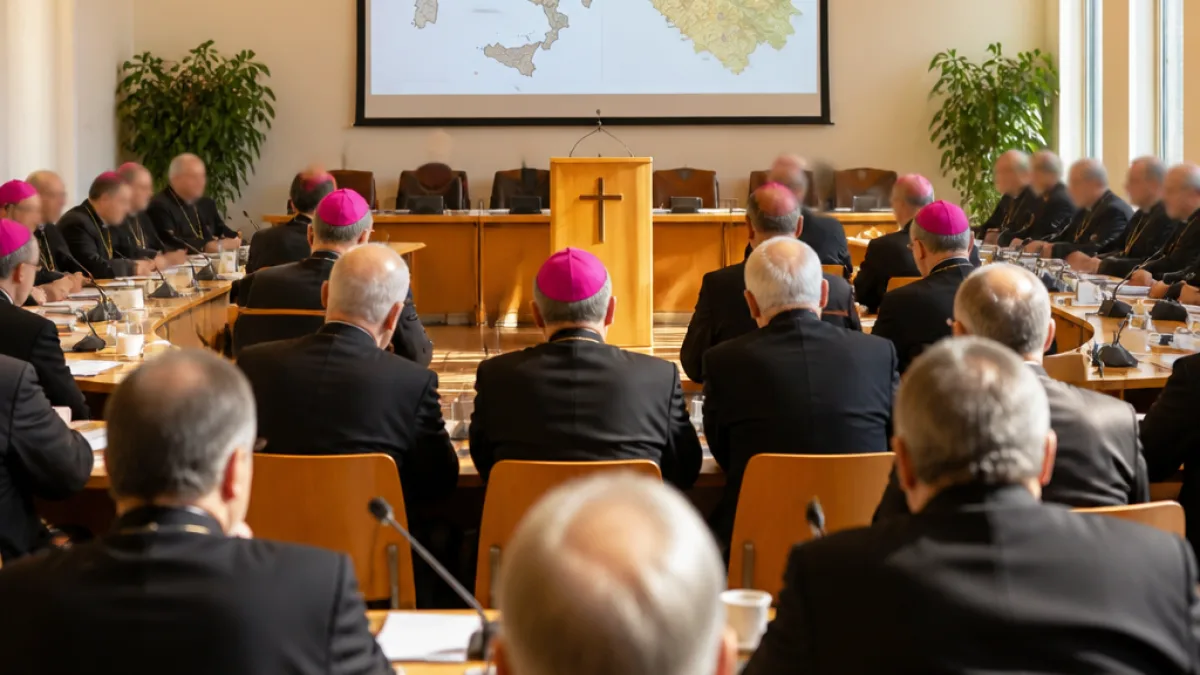
The Society of Catholic Social Scientists (SCSS) held its 34th national meeting on 23–24 October at John Carroll University in University Heights, Ohio, bringing together scholars who aim to integrate Catholic social teaching with academic research across the social sciences and humanities.
What the meeting set out to do
Founded in 1992 by political scientist Stephen M. Krason, SCSS describes itself as an organisation that encourages scholars to bring a Catholic worldview to their disciplinary work. The meeting's programme included papers and talks on pressing public-policy and ethical issues — notably artificial intelligence (AI), immigration policy, just war doctrine and euthanasia — alongside sessions on Catholic history in the United States timed to the 250th anniversary of the signing of the Declaration of Independence.
According to the organisation’s materials, papers are solicited from members ahead of the conference and often form the basis for articles in the group’s scholarly journal, the Catholic Social Science Review (CSSR). Before presentation, papers undergo review to ensure they align with the group's stated commitments to Catholic teaching.
"To bring Catholic teaching and a Catholic understanding and a Catholic worldview to the work they do in their disciplines," Krason said of the group's principal aim.
Membership and governance
SCSS maintains different categories of membership and sets clear expectations for full members. To be a full member, applicants are required to sign a profession of faith confirming acceptance of the Church’s teachings. The society also admits associate members who are not Catholic and student members who are working towards master’s degrees.
| Membership type | Requirement |
|---|---|
| Full member | Profession of faith accepting Church teaching |
| Associate member | No Catholic requirement |
| Student member | Postgraduate students (master's level) |
Why this matters for science and public policy
Academic conferences are one of the mechanisms through which ideas shape research priorities, pedagogy and public debate. When an organisation explicitly grounds its scholarly work in a religious framework, several practical effects follow:
- Research framing: Topics such as AI or euthanasia are considered not only on technical or empirical grounds but also in light of moral principles derived from Catholic social teaching.
- Publication pathways: The society’s review process and its journal provide venues that favour work consonant with its doctrinal commitments.
- Community formation: The membership rules create an intellectual community with shared starting assumptions about ethics and authority, while still allowing participation by non-Catholics and students.
For scientists, policymakers and ethicists engaging with such work, it is important to recognise both its potential contributions and its normative commitments. Papers presented in this environment may highlight ethical constraints, human dignity and common good considerations that are central to Catholic social thought — perspectives that can illuminate debates over algorithmic governance, migration policy and end-of-life care.
Limits and context
The meeting represents a particular strand within the broader landscape of religion and scholarship. The society’s requirement that full members formally accept Church teaching distinguishes it from secular academic associations and from faith-based groups that do not impose doctrinal assent. That membership rule also shapes the sort of scholarship likely to be advanced and peer-reviewed within the society’s venues.
While the conference agenda touches on topics of wide public concern, the proceedings reflect a specific interpretive framework. Readers and policymakers should therefore attend to how conclusions are derived — whether from empirical evidence, theological premises, or a combination of both — before generalising findings for pluralistic, secular policy settings.
By convening scholars at the intersection of faith and social science, the Society of Catholic Social Scientists continues to influence conversations where moral reasoning and technical expertise meet. The immediate outputs of the meeting — conference papers and subsequent journal articles — will show how those influences play out in concrete academic arguments about AI, immigration, just war doctrine and euthanasia.