For many people, being without a phone now feels less like a break and more like a problem waiting to happen. A call could arrive at any moment, an internet notification could interrupt the day, or a message might demand an immediate response. Yet constant connection brings its own unease, creating a cycle in which people become increasingly uncomfortable whenever they are out of reach.
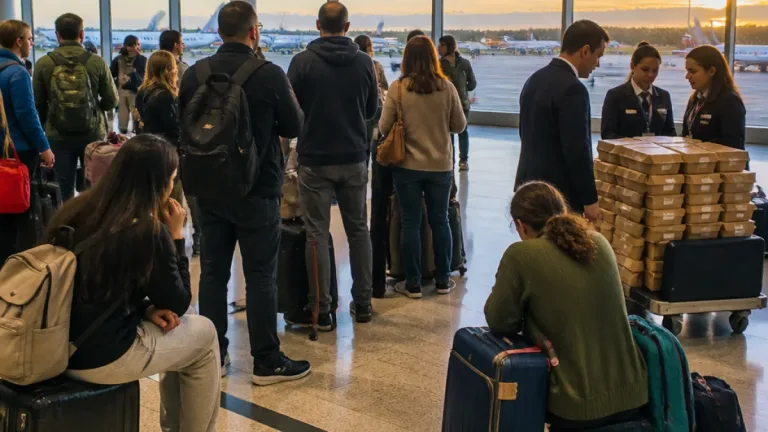
That tension is becoming more visible as travel moves further towards permanent connectivity. EasyJet is making internet access available on its flights, allowing passengers to remain in contact even during a short journey. The change is intended to ease the discomfort of being offline, but it also raises a more familiar question: if people are almost never disconnected, will they still know how to rest?
When connection becomes pressure
The modern telephone offers convenience, reassurance and access to other people. It can also create the expectation that every call should be answered and every message should be checked. The result is a form of pressure that continues even when there is no urgent reason to respond.
Some people now keep their phones beside them while they sleep because they fear missing something during the night. That habit reflects more than practical concern. It can also suggest an inflated sense of personal importance: the belief that the world, or at least one’s immediate circle, cannot continue without instant access.
There is an irony at the heart of this behaviour. The more directly people try to remove the anxiety of being unreachable, the less able they may become to tolerate a period without electronic contact. What begins as reassurance can therefore create a stronger dependence on reassurance.
A different kind of African journey
In the mid-1980s, before continuous digital communication became part of everyday life, the writer spent six months travelling across Africa by public transport. For most of that time, contacting friends and family was impossible, and they could not contact the traveller either.
Rather than producing distress, the separation brought happiness. The experience offered a rare period of being incommunicado while still remaining engaged with the people encountered along the route. The friendships left behind survived the journey, suggesting that relationships do not necessarily weaken simply because messages stop for a while.
The return home brought another surprise. The news was described as being much the same as it had been before the journey began. The traveller had not missed much, and the news had not missed the traveller. It is a modest observation, but one with an important implication: much of what feels urgent in the moment may not remain urgent for long.
Time to notice the world around you
Being out of contact also created time for activities that might otherwise have been postponed. During the journey, the writer read Moby-Dick, a book they suspected would never have been completed under different circumstances. Without the continual pull of messages and updates, attention became available for something slower and more demanding.
That does not mean every traveller should abandon communication altogether, or that modern technology has no value. Phones can help people stay connected and make travel easier. The point is simpler: disconnection can be a useful choice, rather than a failure of planning or an inconvenience to be eliminated at all costs.
- Constant contact can create anxiety instead of removing it.
- Friendships can remain intact during a temporary period of silence.
- Time offline can make space for reading, observation and rest.
- Being unreachable for a while may help put everyday urgency into perspective.
For travellers today, the lesson is not necessarily to imitate a six-month journey across Africa. A quieter step may be enough: leaving the phone aside during part of a trip, resisting the urge to check every notification, or allowing a journey to unfold without documenting every moment.
In an age when internet access is being extended into more parts of travel, the ability to switch off may become an increasingly valuable form of personal freedom. Being unreachable is not always a loss. Sometimes, it is the space in which attention returns to the journey, the people nearby and the life happening beyond the screen.