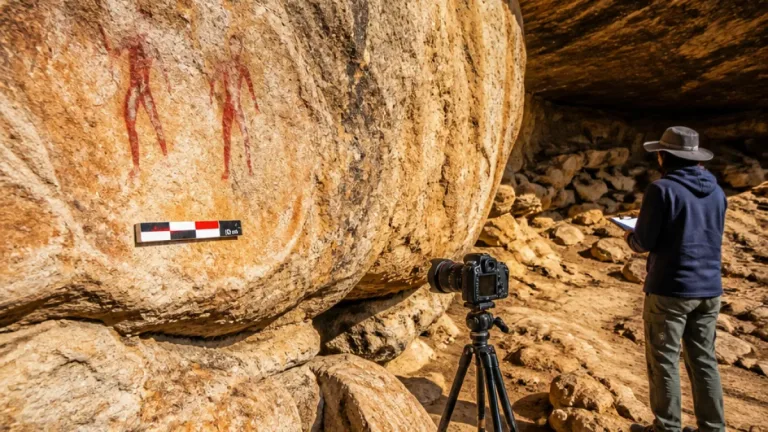
Scientists have sequenced the genomes of three people who lived in Europe during the Gravettian period and report closer genetic connections between western and eastern populations than previously recognised. The work, published on 23 October in Science Advances, includes the genome of a woman from Isturitz Cave in southwestern France and individuals from sites now within Spain and Italy.
Gene flow across Europe during the Gravettian
The Gravettian culture spread across much of Europe after Neanderthals disappeared and is conventionally dated to about 34,000–25,000 years ago. Previous reconstructions of population structure in this period were limited by the small number of high‑quality ancient genomes. By adding three new sequences from around 30,000 years ago, the authors provide evidence that groups in western and eastern Europe were not as isolated from one another as earlier datasets implied.
Most notably, the DNA of the woman recovered from Isturitz Cave was genetically closest to other known Western European genomes but also carried ancestry components associated with Eastern and Central European groups. Using genetic dating methods, the researchers estimate that the eastern‑derived ancestry present in the Isturitz individual arrived in the region around 31,500–32,500 years ago. The team interprets this as the result of movement of people from the east into western parts of the continent during the Gravettian.
What the genomes reveal about appearance and social structure
All three genomes analysed in the study showed biological traits that, according to the genetic markers examined, are consistent with dark skin, dark hair and dark eyes. The paper also examined kinship: the genetic data showed no evidence that these individuals’ parents were closely related, which the authors suggest could indicate social practices that avoided close‑kin unions.
- Samples analysed: three individuals from sites in present‑day Spain, France and Italy.
- Period: Gravettian, roughly 34,000–25,000 years ago; the new genomes date to about 30,000 years ago.
- Key finding: detectable eastern European ancestry in a southwestern French individual dated to about 31,500–32,500 years ago.
Why these results matter
The study strengthens an archaeological hypothesis that certain sites — Isturitz Cave among them — acted as long‑standing hubs of contact. Isturitz lies on a natural route between continental Europe and the Iberian Peninsula. Genetic evidence of eastern influence at that location supports the idea that the cave was part of a broader network of movement and exchange during the Late Stone Age, affecting both culture and biology over tens of thousands of years.
Importantly, these conclusions rest on a limited number of new genomes. While the results reshape aspects of the late Pleistocene European population map, the authors and other specialists are likely to emphasise that more ancient genomes from diverse locations are needed to refine the timing, scale and directionality of population movements.
| Site (modern country) | Approximate age | Notable genetic signal |
|---|---|---|
| Isturitz Cave (France) | ~30,000 years; eastern influx dated ~31,500–32,500 years ago | Western affinity with Eastern/Central connection |
| Unspecified site (Spain) | ~30,000 years | Close ties with Western European groups |
| Unspecified site (Italy) | ~30,000 years | Close ties with Western European groups |
By combining ancient DNA with archaeological context, the paper contributes to a growing picture of dynamic human landscapes during the late Pleistocene. It demonstrates how even single well‑dated genomes can alter interpretations of population structure and mobility. Future work that increases the geographic and temporal coverage of ancient genomes will be essential to test whether the patterns seen here were local phenomena or part of wider continental shifts during the Gravettian.