One weed, several pressures
Hartbeespoort Dam’s continuing struggle with invasive water hyacinth is drawing attention to how other regions manage the fast-growing aquatic plant. Experiences from Europe and North America suggest that no single intervention is likely to resolve the problem, with successful control depending on a combination of prevention, biological measures, physical removal and ongoing monitoring.
Water hyacinth, scientifically known as Pontederia crassipes and formerly as Eichhornia crassipes, originated in South America before spreading to waterways in Africa, Asia, Europe and North America. It is regarded as one of the world’s most invasive aquatic plants because it can multiply rapidly when conditions are favourable.
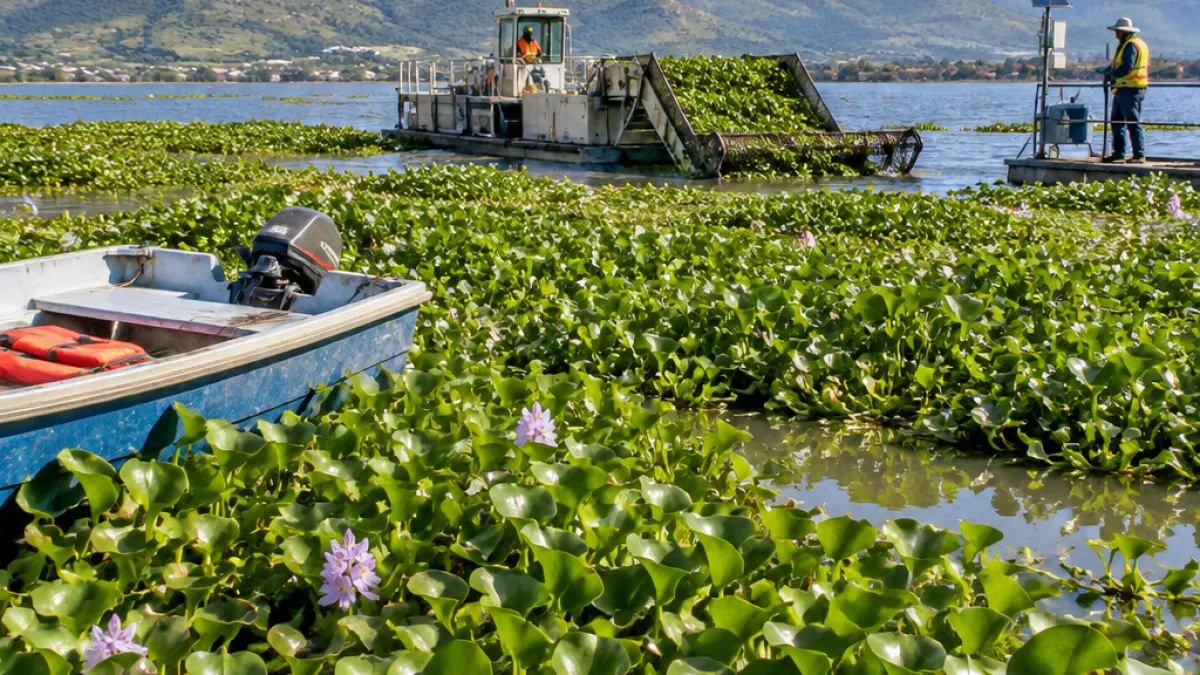
Once established, the plant can form dense floating mats across the water’s surface. These mats block sunlight, reduce oxygen levels and interfere with activities such as boating and fishing. They can also disrupt aquatic ecosystems, placing additional pressure on the natural functioning of the dam and on the people who use it.
“There is no single solution to water hyacinth.”
Lessons from Europe
Europe’s response places strong emphasis on preventing the plant from spreading in the first place. The approach is supported by colder winters across much of the continent, which make it more difficult for water hyacinth to flourish everywhere as easily as it does in warmer regions. However, serious infestations have occurred in parts of southern Europe, including Spain and Portugal.
The European Union added water hyacinth to its list of invasive alien species of Union concern in 2016. Under the related regulations, restrictions apply to importing, selling, cultivating, keeping and releasing the plant into the environment. This reflects a central principle of invasive-species management: stopping new introductions can be more effective than trying to remove an established infestation.
A wider control strategy
The international experience outlined in the report points to several measures relevant to Hartbeespoort’s situation:
- Prevention: limiting the introduction and movement of water hyacinth;
- Biological control: using organisms that target the plant, as shown by the release of bugs by CBC;
- Mechanical harvesting: physically removing plants from affected water;
- Monitoring: tracking the spread and condition of infestations over time;
- Nutrient reduction: addressing the nutrients that encourage excessive plant growth.
These measures address different parts of the problem. Physical removal can clear sections of water, while biological control works against the plant itself. Monitoring is needed to identify changes in the infestation, and prevention reduces the risk of further spread. Without action on the nutrients that promote growth, however, cleared areas may remain vulnerable to renewed expansion.
Implications for Hartbeespoort
For Hartbeespoort residents, the issue is not limited to the appearance of the dam. Dense mats can affect access for boaters and anglers, alter conditions for aquatic life and reduce the quality of a shared environmental and recreational resource. The problem therefore cuts across environmental management, local use of the water and the protection of the dam’s wider ecosystem.
The European example also highlights the value of clear rules governing invasive plants. Restrictions on importing, selling, cultivating, keeping and releasing water hyacinth are intended to deal with the pathway by which the plant can spread, rather than relying only on clean-up operations after an infestation has taken hold.
There is no indication that one measure alone will provide a lasting answer at Hartbeespoort Dam. The international comparison instead supports a coordinated programme that combines removal with biological control, monitoring and efforts to reduce the nutrients driving excessive growth. For a community living alongside an increasingly affected dam, that integrated approach is the clearest lesson offered by overseas experience.