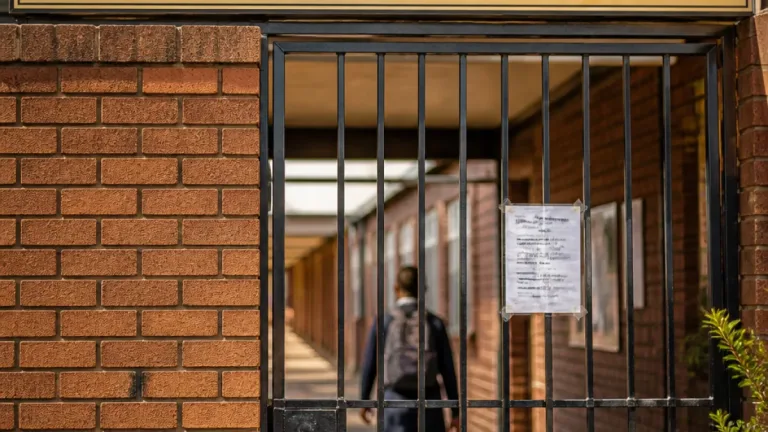
The Free State Department of Education has suspended the principal of Selelekela Secondary School in QwaQwa after a matric learner was allegedly refused entry to an English question paper on 15 October because of unpaid school fees. The department moved swiftly to ensure the learner continued with the exam timetable and to reinforce examination protocols across the province.
Immediate departmental response
The department confirmed the learner was denied access to the exam room where the principal also served as chief invigilator. In response, officials provided the learner with psychosocial support and have ensured the candidate continues to write remaining papers. The deputy principal at Selelekela has been appointed chief invigilator for the remainder of the examination period.
“The department has convened an urgent virtual meeting with chief invigilators from all public, private and independent schools to reiterate that no candidate may be denied access to an examination room on grounds of outstanding school fees or any matter unrelated to eligibility to write,”
The department spokesperson, Howard Ndaba, warned that non‑compliance with examination instructions would not be tolerated and stressed the responsibility of principals and chief invigilators to protect eligible candidates’ right to write.
What the suspension means
The principal’s suspension signals a formal administrative step while the department investigates the allegation. It separates the individual from their school duties pending the outcome of enquiries and is consistent with ensuring the integrity of the investigation and the safety of learners during the examinations.
Provincial education authorities also convened an urgent virtual meeting with chief invigilators from public, private and independent schools to reiterate examination rules and the prohibition on denying examination access for reasons unrelated to eligibility.
Impact on the learner and community
The department’s provision of psychosocial support recognises the acute stress such incidents can place on a candidate during final-year examinations. Matric exams are consequential for a learner’s future options, and disruption or exclusion can have long-term consequences for progression to tertiary study or employment.
Local parents and schools are likely to watch the department’s investigation closely. The swift appointment of the deputy principal as acting chief invigilator is aimed at restoring order and confidence at the school for the remainder of the examination cycle.
Actions taken so far
- Principal suspended pending investigation.
- Learner provided with psychosocial support and permitted to continue with exams.
- Deputy principal appointed as chief invigilator for the remaining papers.
- Urgent virtual meeting convened with chief invigilators across public, private and independent schools to reiterate rules.
| Issue | Action taken |
|---|---|
| Alleged denial of exam access | Principal suspended; learner allowed to continue; psychosocial support provided |
| Examination protocol | Virtual meeting with chief invigilators convened; instructions reiterated |
| On-site management | Deputy principal appointed chief invigilator |
What learners and parents should know
The department has reiterated that no eligible candidate may be denied access to an examination room because of outstanding school fees. Parents and learners who believe a learner has been unlawfully prevented from writing an exam should raise the matter immediately with the school and the provincial education department so urgent remedial steps can be taken.
Schools remain responsible for upholding examination rules, ensuring impartial invigilation and protecting candidates’ rights. The department’s emergency meeting underlines that officials expect strict compliance and will take disciplinary measures where instructions are breached.
The investigation at Selelekela is ongoing. The department has not released details of any further disciplinary process or timeline for the inquiry.
Local communities in the Free State will be watching how the department balances swift corrective action with a full administrative inquiry, particularly given the high stakes of the matric exams for learners’ futures.