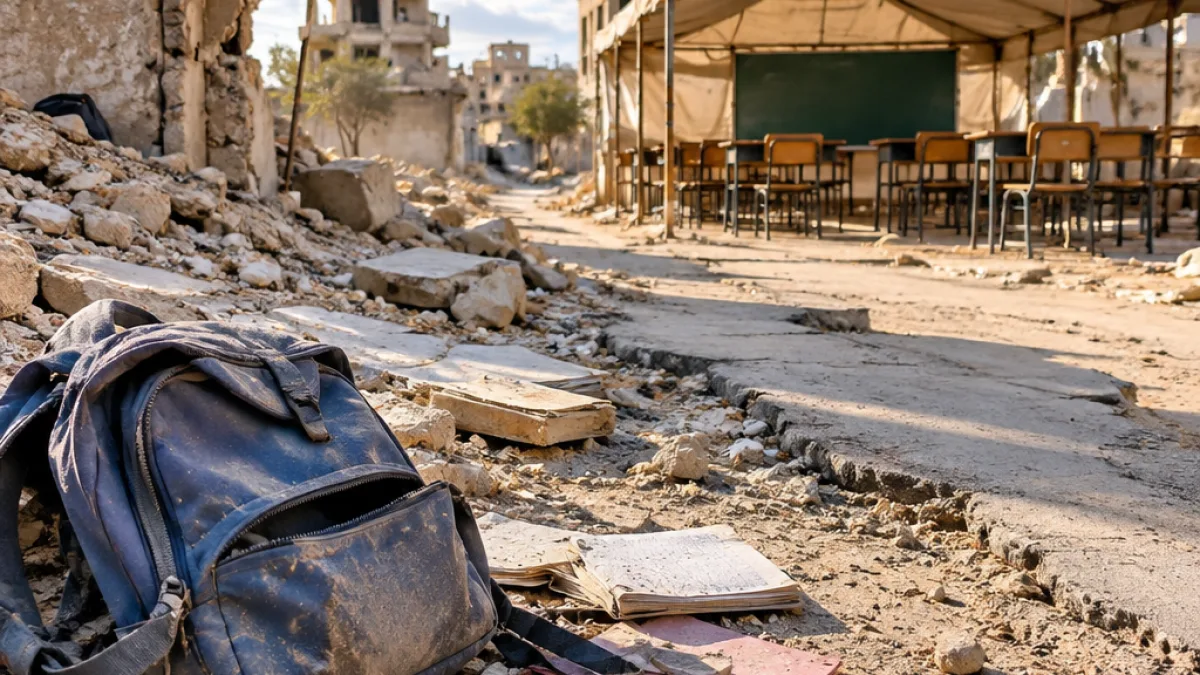
The killing of a 14-year-old boy as he returned from a makeshift school in Deir el-Balah has underscored the danger facing children in Gaza, where families are trying to restore some form of education despite continuing air raids and sniper fire.
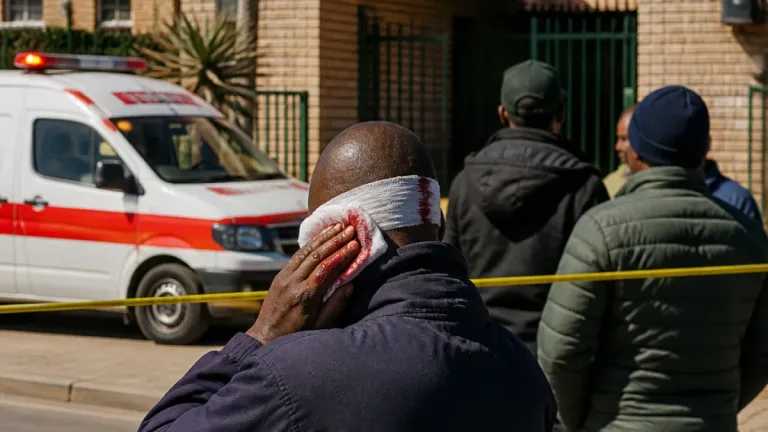
Mohammed Hamad was walking through the al-Baraka neighbourhood with his 10-year-old brother, Abdullah, on 17 October when an Israeli strike hit the road they were using. Mohammed was killed alongside another man, while Abdullah survived. The incident has left the younger boy fearful of returning to school without his brother, according to their father, Riyad Hamad.
| Student | Age and schooling | What happened |
|---|---|---|
| Mohammed Hamad | 14; eighth grade | Killed while returning from school |
| Abdullah Hamad | 10 | Survived the strike and is afraid to travel to school alone |
A family’s loss reaches beyond the classroom
Mohammed had been among the strongest learners in his class. For his family, his school performance had represented both achievement and hope during a period in which education has repeatedly been disrupted. His father described the boy as more than a son, saying he had also been his friend.
“He was not just my son, he was my friend.”
The death has also changed Abdullah’s relationship with the journey to school. The brothers had travelled together each day, but Abdullah is now struggling with the idea of making that trip alone. His father said the child is frightened that he could lose him as well, a fear that illustrates how violence can affect a learner’s education even when the child survives an attack.
Education offered a fragile sense of normality
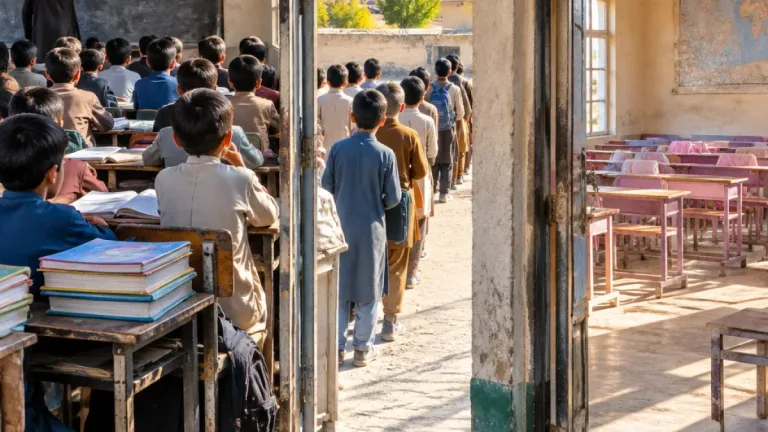
Children had begun returning to learning spaces, including temporary classrooms and tents. For families living through prolonged disruption, that return offered more than lessons. It created a daily structure and a limited sense of normality, while giving children an opportunity to remain connected to their peers and studies.
That fragile progress is now being tested by the continuing threat along roads and in neighbourhoods. A school may provide a place for learning, but children still have to reach it and return home. The danger described in Deir el-Balah means that the education system’s challenge extends beyond classrooms, teachers and materials. It includes the safety of every route taken by learners and the psychological burden carried into school.
- Physical safety: Children remain exposed while travelling between home and temporary learning spaces.
- Interrupted learning: Repeated disruption makes it difficult for learners to maintain continuity in their studies.
- Emotional wellbeing: The death of a classmate, sibling or family member can make attendance itself a source of fear.
- Family support: Parents are required to help children cope with grief while also deciding whether it is safe for them to attend lessons.
Fear becomes another barrier to attendance
For Abdullah, the question is no longer simply whether school is available. It is whether he can reach it without the brother who previously accompanied him. His father described a household living with fear in the streets, in vehicles and even while sitting still. Such anxiety can shape whether children attend, how well they concentrate and whether families feel able to send them out at all.
The account also highlights the unequal meaning of a return to school in a conflict zone. In more stable circumstances, attendance is usually treated as a routine part of childhood. In Gaza, according to the report, reaching a classroom can involve decisions about routes, companionship and immediate security. The loss of Mohammed shows the consequences when that basic routine becomes dangerous.
Hamad said the death had overturned what families expect from the generations, expressing the pain of a parent burying a child. His words capture the human cost behind the broader education crisis: each disrupted lesson may also represent a child grieving, a parent calculating risk or a sibling losing the confidence to walk to school.
As Gaza families continue trying to keep children learning in makeshift settings, the central requirement remains clear: education cannot be restored in a meaningful way without protecting learners on their way to and from school. The experience of Mohammed and Abdullah’s family demonstrates how quickly a school routine can be shattered, and how long the effects may remain for those who survive.