
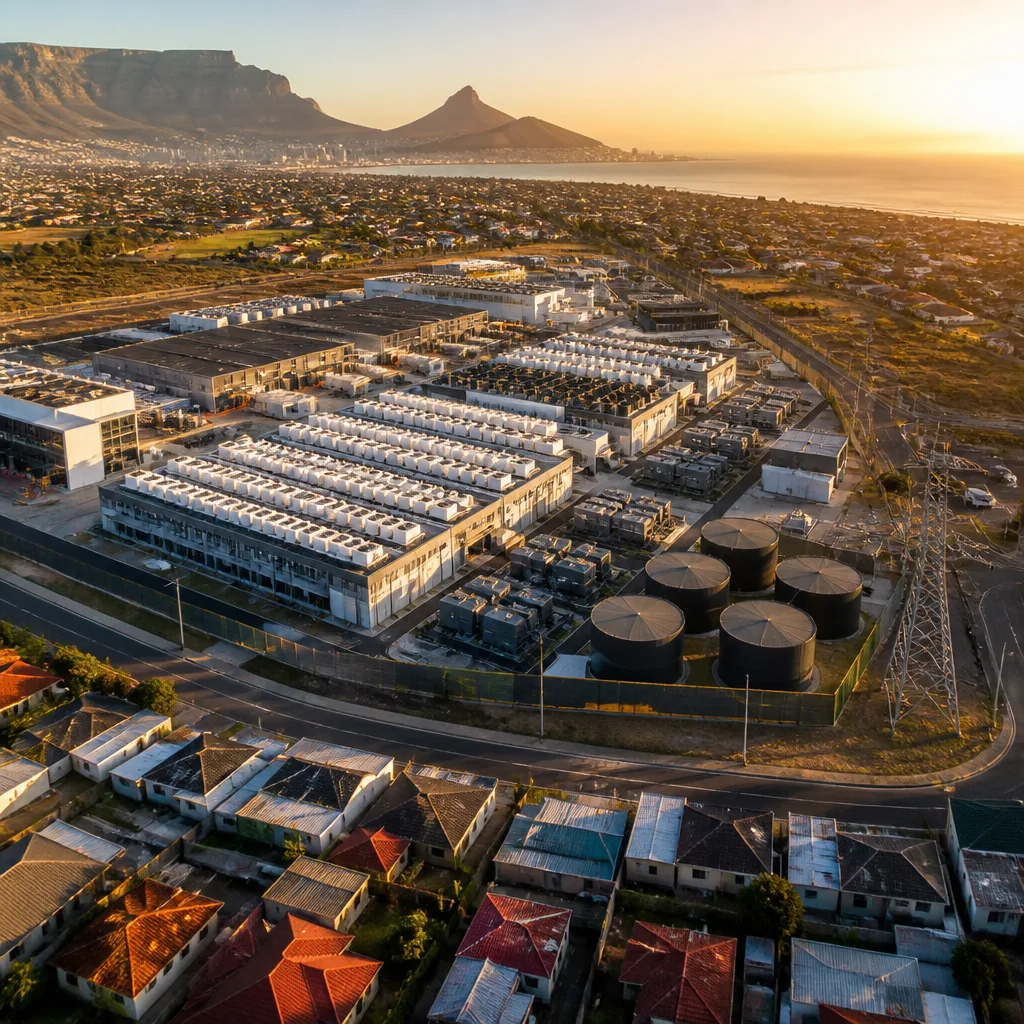
Civil rights organisations across South Africa are asking for a moratorium on new data‑centre projects while authorities investigate the sector’s demands on scarce resources, according to recent reporting. The appeal focuses on the availability and transparency of information about electricity and water consumption, land use, infrastructure needs, environmental effects and impacts on adjacent communities.
Why the pause is being sought
The South African Human Rights Commission (SAHRC) received more than 250 submissions after inviting public comment in May 2026, the commission said. The volume of input reflects growing unease about how approvals are handled and whether the long‑term needs of residents and municipal services are being weighed against private investment.
“A key issue emerging from the process is precisely the availability, consistency and transparency of information relating to matters such as electricity and water demand, land use, infrastructure requirements, environmental impacts and impacts on surrounding communities,” Dr Eileen Carter, who leads the commission’s preliminary process, said.
Proponents of the pause point to Cape Town’s recent history of water stress as a cautionary example. The city narrowly avoided the so‑called “Day Zero” scenario in 2018, when taps were expected to run dry, and that memory is shaping local resistance to proposals perceived as heavy consumers of municipal resources.
How big is South Africa’s data‑centre footprint?
President Cyril Ramaphosa has said South Africa hosts about 70% of Africa’s total data‑centre capacity, a concentration the presidency presents as an economic opportunity. International technology firms — including Amazon, Microsoft and Equinix — have expanded facilities in the country in recent years, attracting debate about the balance between foreign investment, job creation and public resource use.
| Item | Figure |
|---|---|
| Share of Africa’s data‑centre capacity located in South Africa | 70% |
| Estimated power requirement for one Equinix hyperscale facility in Cape Town | 160 megawatts |
| Submissions received by SAHRC on the issue | 250+ |
One contested proposal cited in the commission’s process is an Equinix hyperscale facility planned for Cape Town. That single project is estimated to require roughly 160 MW of electricity — a figure that has revived anxieties about supply amid the country’s ongoing load‑shedding challenges.
Broader context and international parallels
Calls for moratoria or stronger oversight are not unique to South Africa. The same pattern of community and regulatory pushback has emerged recently in countries such as Thailand and the United States, where residents and local authorities have raised similar questions around transparency and environmental impact.
Advocates of a pause urge the government and regulators to publish consistent, accessible data showing projected resource demands of new facilities and to clarify how approvals fit into municipal and national infrastructure planning. They also want rigorous environmental and social impact assessments before construction proceeds.
- Transparency: Civil groups want clearer public information on water and electricity use forecasts.
- Resource planning: Authorities should assess cumulative impacts on municipal supplies and grid stability.
- Community impact: Local residents require meaningful consultation and mitigation plans for environmental and service pressures.
Government has framed South Africa’s data‑centre concentration as an advantage for the country’s digital economy, but the emerging debate highlights a trade‑off between attracting large‑scale investment and protecting constrained public resources. How the SAHRC process informs the next wave of approvals will be consequential for energy managers, water planners and municipalities already grappling with demand pressures.
As the matter proceeds, the key questions for policy‑makers will be whether existing regulatory frameworks are fit for purpose and whether national and local authorities can produce the timely, comparable data communities need to judge whether proposed facilities are in the public interest.