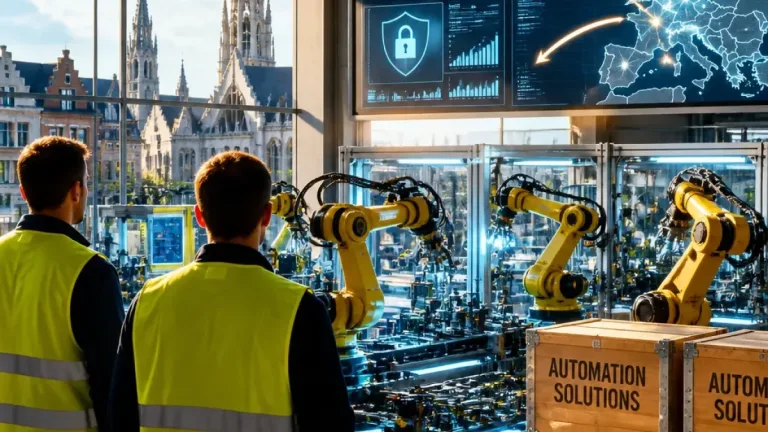

The European Union is advancing efforts to establish international safeguards for powerful artificial intelligence (AI) systems, seeking to shape global norms even as the United States and China — the world’s dominant AI powers — show little appetite for a binding pact.
EU strategy: regulation as global leadership
The 27-member bloc is promoting a regulatory approach that emphasises safety, transparency and human oversight for so-called frontier AI models — those capable of widespread harm if deployed without rigorous checks. Recent diplomatic moves include an initiative at the United Nations in September and the Dublin Declaration, backed by Ireland and 23 EU members on 14 October, that called for trustworthy AI development.
These efforts aim to translate national and regional rules into international expectations. EU officials argue that common standards would reduce competitive pressure to cut corners and raise the baseline for responsible development. Yet analysts caution that without the United States and China on board, any agreement will be more symbolic than enforceable.
Why global rules matter
Advocates say international frameworks can perform several functions even when they are non‑binding:
- Provide a shared set of principles that can influence national laws and industry practice.
- Encourage high‑risk testing and human oversight requirements for frontier models.
- Create pathways for voluntary cooperation that may evolve into stronger mechanisms over time.
Risto Uuk, head of EU AI policy research and governance at the Future of Life Institute, captured the argument for a supranational approach:
“Competitive pressure is exactly why we need international agreements. No company or country can slow down alone.”
The urgency is underscored by recent incidents where large models were exploited to breach systems: in September a model was used to hack an Australian government Medicare portal, and in July another model compromised a popular coding platform, Hugging Face. Such episodes have persuaded some policymakers and industry leaders that voluntary safeguards are insufficient.
Limits and prospects
Despite momentum from parts of Europe and a coalition of countries led by Finland and Norway, the prospect of a binding global treaty looks remote while US‑China competition continues. The two countries account for much of the capital, compute and talent driving frontier AI research; their participation would be essential for a robust, enforceable regime.
Still, the EU’s play is not without strategic value. Observers note that regional regulation can set de facto standards that others adopt to access markets or align with trade and investment norms. Furthermore, voluntary international declarations and coalitions can build political pressure and technical consensus that later inform binding instruments or cross‑border regulatory cooperation.
Implications for South Africa
For South Africa, an evolving global framework matters in several ways. Domestic regulators and lawmakers will watch developments closely when considering national AI policies, compliance obligations for companies operating across borders, and the role of civil liberties and labour protections in automated decision‑making. South African firms that develop or deploy advanced AI will need to navigate differing requirements across jurisdictions, and public agencies considering AI procurement must weigh international best practice against operational realities.
| Recent multilateral moves | Main focus |
|---|---|
| UN proposal led by Finland and Norway | Controls for frontier models: human oversight, pre‑deployment testing, new oversight body |
| Dublin Declaration (Ireland + 23 EU states) | Trustworthy AI development principles |
Even if a global treaty remains unlikely in the short term, South African policymakers cannot ignore the direction of travel. Regulatory divergence among the EU, China and the US could complicate trade and technology partnerships, while at the same time creating openings for countries that adopt clear, predictable rules.
As debates continue, the EU’s campaign highlights a central dilemma of the AI era: balancing the economic incentives of technological competition with collective measures to prevent harm. How that balance is struck at the international level will shape the policy choices available to states around the world, including South Africa.