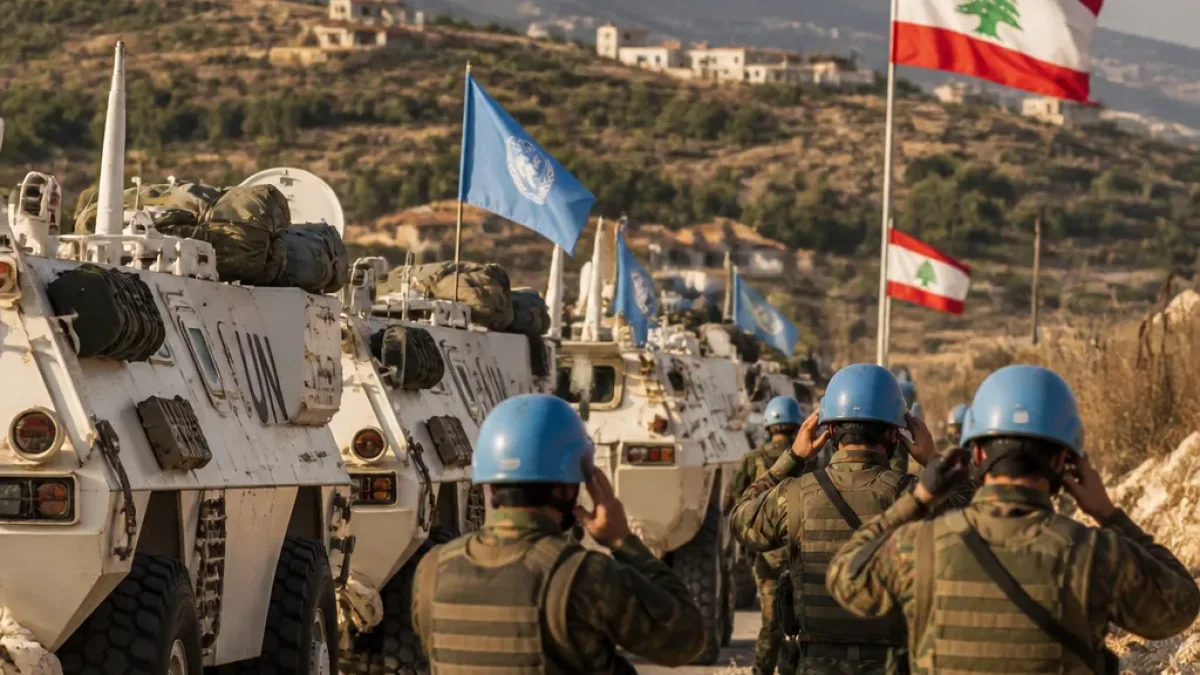
Lebanon’s president welcomed discussions on an international security presence in the country’s south during a meeting on Saturday with visiting French Foreign Minister Jean‑Noël Barrot, underscoring Beirut’s concern about a possible vacuum if the United Nations Interim Force in Lebanon (UNIFIL) does not have its mandate renewed before the end of the year.
Paris‑Beirut talks focus on post‑UNIFIL arrangements
President Joseph Aoun met Barrot in Beirut for talks described by Lebanese officials as centred on “mechanisms for an international presence” in southern Lebanon — a strip of territory that has repeatedly been the theatre of hostilities between Israel and Hezbollah. The meeting came amid growing diplomatic activity to avert a security lapse when UNIFIL’s mandate is due to expire.
In a statement, Aoun said Lebanon preferred an extension of UNIFIL’s mandate but indicated openness to alternative arrangements if renewal proved impossible. He expressed particular concern about avoiding direct confrontation between the Lebanese Armed Forces and the Israeli military.
“If this proves impossible, Lebanon welcomes any arrangement that ensures an international presence in the south, prevents a vacuum, and avoids placing the Lebanese army in direct contact with the Israeli army.”
New round of talks with Israel set for Florida
Separately, Lebanese authorities said a new trilateral meeting with Israel will be held in Tampa, Florida, on 20 October. A Lebanese military delegation will attend to present demands aimed at halting Israeli military operations in Lebanon, the presidency reported on the social platform X.
The talks are part of a recent series of US‑brokered negotiations intended to reduce cross‑border hostilities that have escalated since a broader conflict began on 2 March. Under previous agreements reached in these talks, Beirut committed to efforts to disarm Hezbollah over time, a development meant to prompt a gradual Israeli withdrawal from positions it holds inside Lebanese territory. Those commitments have been complicated by persistent refusal from Hezbollah to disarm while Israeli forces remain on Lebanese soil, and by continued Israeli strikes in southern Lebanon.
- Key players: Lebanese presidency, French foreign ministry, UNIFIL, Lebanese Armed Forces, Israel, Hezbollah, US mediators.
- Immediate actions: Talks in Tampa on 20 October; diplomatic engagement in Beirut with France over post‑UNIFIL options.
- Main concern: Preventing a security vacuum in southern Lebanon and avoiding direct LAF–Israeli confrontation.
Implications and risks
The discussions signal Lebanese willingness to consider non‑UN arrangements to secure the south if UNIFIL cannot be extended. That stance acknowledges the reality that a unilateral withdrawal of peacekeepers, without a credible substitute, risks heightened confrontation along the Blue Line and could place the Lebanese Armed Forces in the difficult position of policing a frontier where they would be expected to face Israeli forces.
France’s involvement reflects European concern about spillover from the wider regional conflict and an interest in stabilising a sensitive frontier. Any arrangement that includes an international presence would require negotiation with multiple stakeholders, including troop‑contributing countries and regional actors wary of shifting balances on the border.
For Israel and Lebanon, the Tampa talks are another attempt to convert diplomatic engagements into concrete steps that will reduce cross‑border attacks and constrain Hezbollah’s military posture. Yet the core obstacle remains Hezbollah’s declared condition that it will not disarm while Israeli forces are present on Lebanese soil — a stance that keeps the cycle of strikes and retaliations intact.
As the year‑end deadline for UNIFIL’s mandate approaches, international actors will be watching whether a political compromise can be found that preserves some form of multilateral security presence in the south, or whether the withdrawal of UN peacekeepers will create a security vacuum with regional repercussions.
| Event | Date |
|---|---|
| Start of wider conflict involving Hezbollah and Israel | 2 March |
| Tampa trilateral meeting (Lebanon–Israel–US) | 20 October |
| UNIFIL mandate due to expire | End of year |