Lebanese Prime Minister Nawaf Salam on Wednesday condemned what he described as the systematic destruction of southern Lebanon, saying recent operations by Israeli forces violated international law, while Israel's defence minister said the military was dismantling subterranean infrastructure and preparing for a long-term presence.
Allegations of damage to civilian infrastructure
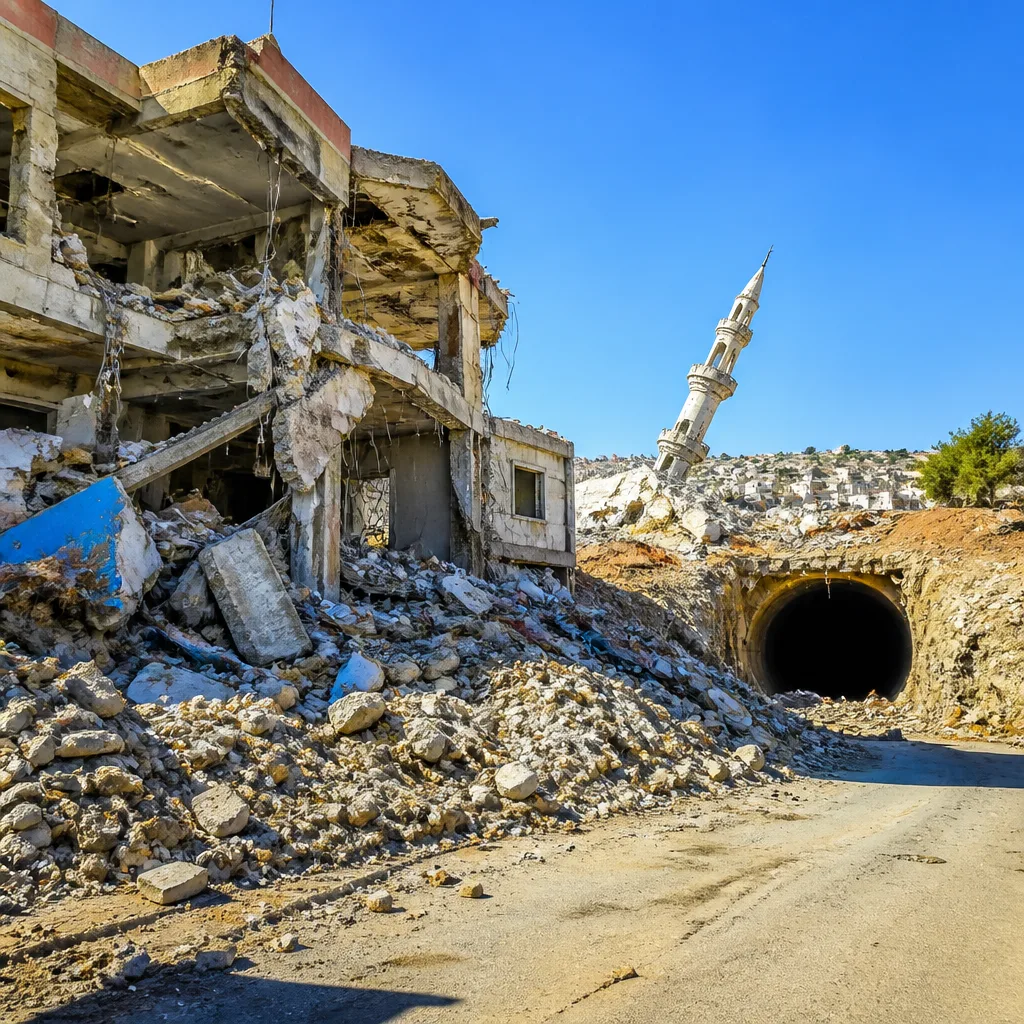
Lebanon's statement said Israeli actions in the south involved "attacks, incursions, demolitions and the systematic destruction of homes, infrastructure, government buildings and places of worship," and characterised those acts as a serious breach of international humanitarian law. The Lebanese state news agency reported detonations in several southern villages, including Zawtar al-Shariqya.
Lebanon's army said that Israeli forces had blown up a range of public facilities in Zawtar al-Shariqya, listing a municipal building, a public school, a health clinic, a children's nursery and a number of private homes.
| Location | Reported damage |
|---|---|
| Zawtar al-Shariqya | Municipal building, public school, health clinic, children's nursery, multiple homes |
Israeli statements and military posture
Israel's Defence Minister Israel Katz visited southern Lebanon on Wednesday and was reported to have said the Israel Defence Forces (IDF) were "destroying the underground infrastructure" in the area and "destroying all the houses in the area." The Defence Ministry said Katz had instructed the IDF to take steps to prepare for a prolonged deployment in the zone commonly referred to as the IDF buffer area along the Lebanese border.
"We are here above and they are below," Katz said, according to the Defence Ministry.
Dispute over combatants and civilian areas
Lebanese authorities rejected the argument that whole towns and villages could be characterised as military facilities. The prime minister said applying such a label to entire communities could not justify their destruction, the displacement of residents or measures preventing returns. Lebanon's position highlights the legal and humanitarian tensions that arise when armed groups are reported to be embedded within civilian areas.
The Lebanese government also pointed to the presence of Hezbollah in southern Lebanon. The Iran-backed group is widely reported to be intermingled with civilian infrastructure and has rejected a framework deal reached in June that aimed to stem fighting in the south, address Hezbollah's disarmament and open the path to a possible withdrawal of Israeli forces and a future peace accord.
Humanitarian and regional implications
Claims of demolition of schools, clinics and other public services raise immediate concerns about civilian safety, displacement and access to essential services. The Lebanese account of destroyed municipal and educational infrastructure underlines the wider humanitarian consequences should hostilities continue or expand. International humanitarian law prohibits indiscriminate attacks on civilians and civilian objects; whether particular actions meet that threshold is a matter of legal and factual assessment.
- Legal questions: Lebanon says actions violate international humanitarian law; Israel maintains military necessity in targeting underground infrastructure and sites associated with armed groups.
- Humanitarian impact: Reported damage to schools and clinics risks disrupting essential services for local civilians.
- Regional stability: A sustained IDF presence in southern Lebanon and Hezbollah's opposition to the June framework increase the risk of prolonged confrontation.
The unfolding situation in southern Lebanon will be watched closely by the international community for its legal, humanitarian and security consequences. Further independent verification will be required to substantiate the competing claims about the nature and scope of the destructions and the presence of fighters within civilian areas.