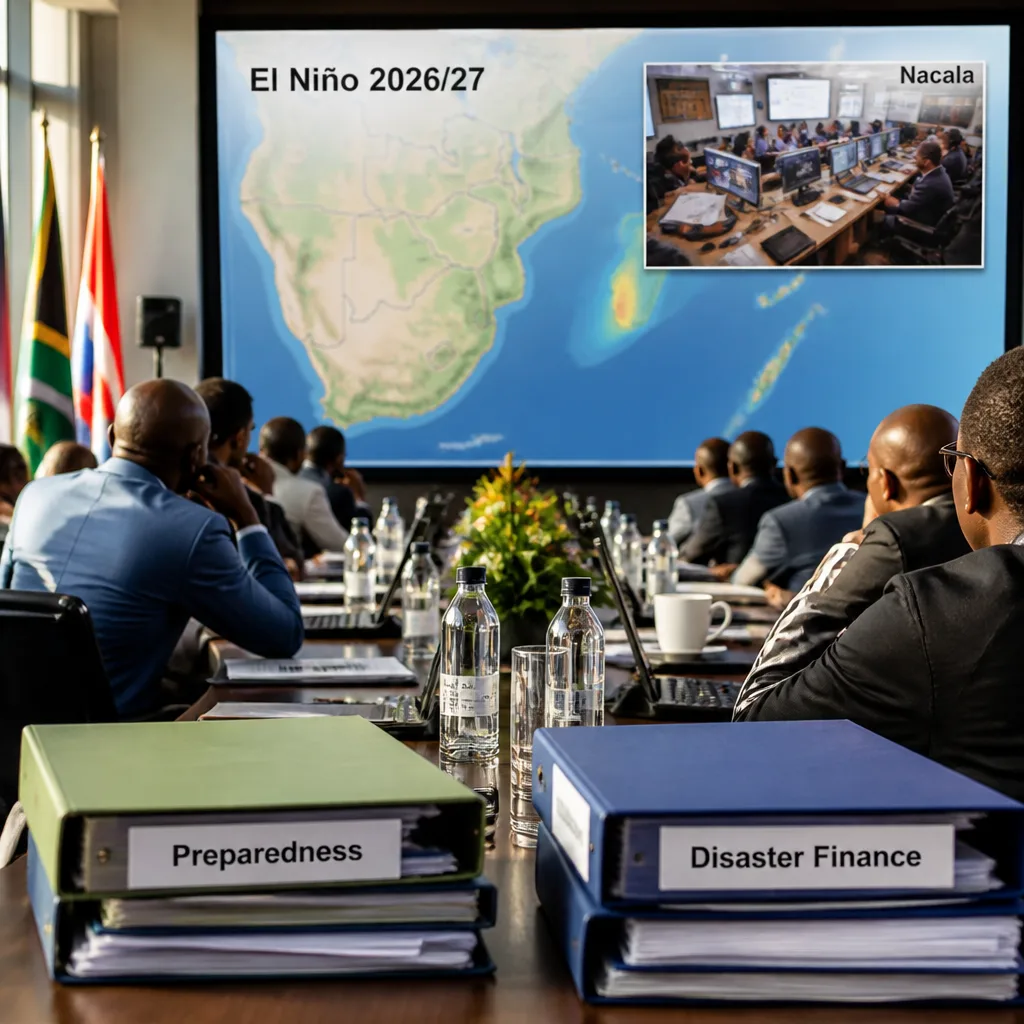
The Southern African Development Community (SADC) has sounded a stark warning that a likely El Niño event in the 2026/27 season could intensify humanitarian needs and fiscal pressures across the region. The alert came from SADC Executive Secretary Elias Magosi as ministers met in Durban for the SADC Council of Ministers.
From response to resilience, SADC says
Addressing the opening of the meeting, Magosi emphasised that seasonal forecasts point to a high probability that the coming El Niño could exceed the intensity of the 2023/24 event. He said the region could not continue to rely on reacting to disasters once they had happened and must instead invest in preparedness and resilience.
“We must therefore move from reacting to disasters to investing in resilience through strengthened early warning systems, anticipatory planning and action, climate-resilient infrastructure, disaster risk financing and resilient recovery efforts,”
Magosi highlighted several ways a severe El Niño could cascade through national economies: worsening food and nutrition insecurity; higher fertiliser and energy prices; increased pressure on government finances; and overall growth in humanitarian needs. He also drew attention to the damage already wrought earlier this year when floods claimed lives, damaged critical infrastructure, displaced communities and disrupted trade in parts of the region.
Practical measures and institutional role
At the meeting, Magosi pointed to concrete areas where SADC and member states should focus their efforts. These included:
- Strengthening early warning systems so governments and regional bodies can anticipate emergencies;
- Anticipatory planning and action to enable pre-emptive responses rather than post-disaster relief;
- Investing in climate-resilient infrastructure to reduce future damage to roads, energy and other critical assets;
- Developing disaster risk financing to provide liquidity and support rapid recovery;
- Resilient recovery efforts that rebuild in ways that reduce vulnerability to future shocks.
Magosi also identified the SADC Humanitarian Emergency Operations Centre in Nacala, Mozambique, as an important component of the region’s response architecture.
| Preparedness area | Intended outcome |
|---|---|
| Early warning systems | Faster, anticipatory action to reduce loss of life and assets |
| Disaster risk financing | Immediate funds for relief and recovery without deepening budgets |
| Climate-resilient infrastructure | Reduced long-term repair and replacement costs |
Political and fiscal consequences
The warning has direct implications for national governments across southern Africa, including South Africa. Higher fertiliser and energy costs and worsening food insecurity can translate into increased welfare and humanitarian spending, tighter fiscal space and greater pressure on social stability. For politically sensitive portfolios — agriculture, social development, energy and national treasury — the prospect of additional, unplanned expenditure will be a key concern.
For opposition parties and civil society groups, the SADC alert presents a yardstick against which to measure domestic preparedness and spending plans. For finance ministries, it raises the question of whether contingency funds and insurance instruments are adequate. For infrastructure planners, it is a reminder that future projects must account for climate extremes.
While the SADC statement does not prescribe policy for individual states, it underscores a shift in emphasis from emergency response to pre-emptive investment. How quickly and comprehensively member states act — and how much fiscal and technical support is mobilised at regional and international levels — will determine whether the anticipated El Niño becomes a manageable shock or a driver of deeper humanitarian and economic strain.