Swiss voters have emphatically rejected a hard‑right initiative that would have written a more restrictive form of neutrality into the constitution, a decision that preserves Bern’s ability to cooperate with partners and to impose sanctions on a case‑by‑case basis.
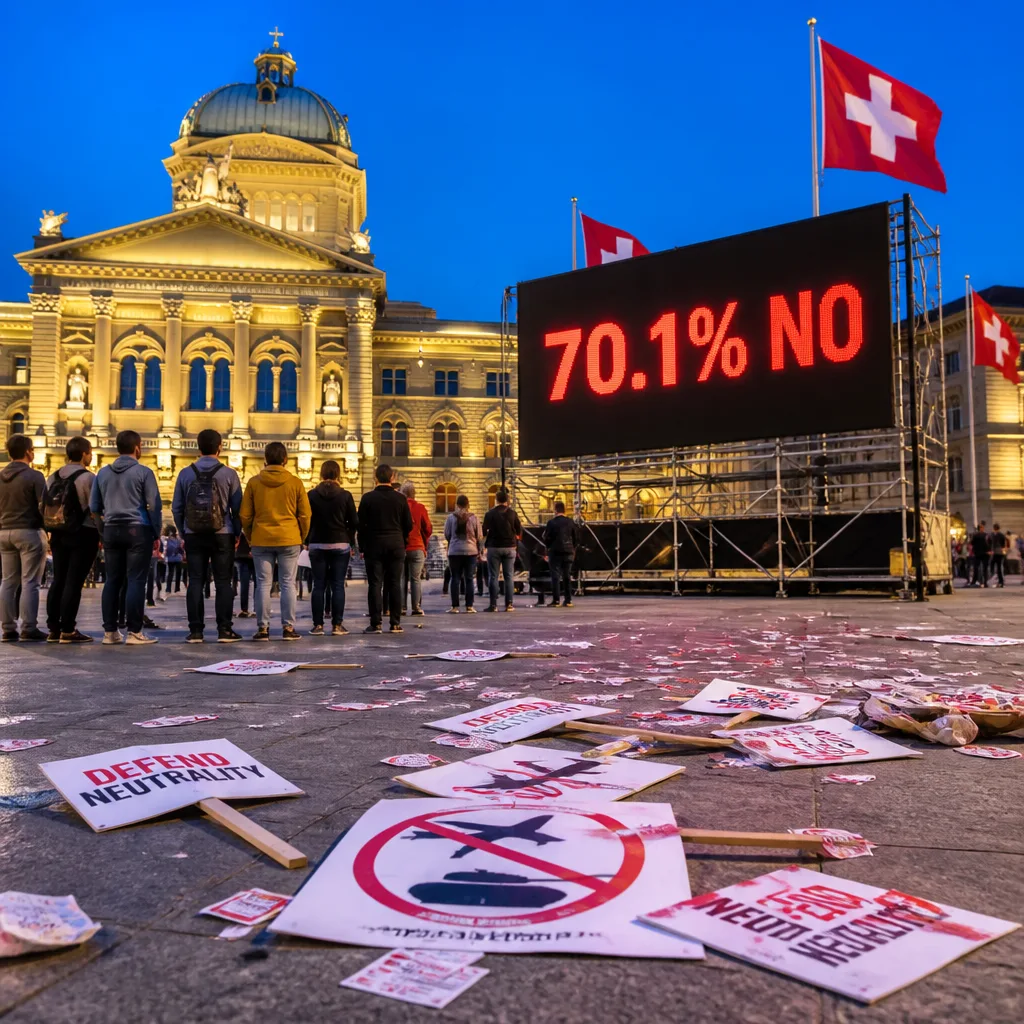
According to official tallies reported on 28 September 2026, the proposal was rejected by 70.1% of voters. The initiative, put forward by the pro‑sovereignty group Pro Switzerland and supported financially by the Swiss People’s Party (SVP), would have enshrined neutrality as "armed and perpetual" and barred Switzerland from closer ties with NATO and from imposing sanctions unless authorised by the United Nations.
"This result is not a vote against neutrality. Switzerland was neutral yesterday, it is neutral today, and it will remain neutral in the future," Foreign Minister Ignazio Cassis said following the outcome.
What the vote would have changed
The rejected proposal sought to make explicit in the constitution that Swiss neutrality must be permanent and armed. Under its terms, Switzerland would have been forbidden from entering military alliances except in direct defence of the country and would have been prevented from participating in sanctions regimes unless the UN required them.
Opposition to the initiative cut across most of the Swiss government and a majority of political parties, who argued the change would have limited the government's flexibility when responding to modern conflicts and threats. The government and opponents said the current formulation of neutrality — a position dating back to the end of the Napoleonic wars in 1815 — deliberately leaves implementation to the executive and parliament.
International context and consequences
The debate over neutrality has intensified following Russia’s full‑scale invasion of Ukraine, which has prompted questions in many countries about how neutral states should act when democratic norms and territorial integrity are under attack. In recent years Switzerland has taken part in some sanctions against Russia, a practice critics of the initiative said would have been constrained by the new text.
Foreign Minister Cassis framed the result as preserving Switzerland’s room for manoeuvre on foreign policy and security. He said the rejection allows Bern to continue to decide on economic sanctions on a case‑by‑case basis and to cooperate with partners when such cooperation strengthens Swiss security, stressing that Switzerland’s security is connected to that of its European neighbours.
Political fallout at home
The SVP, which funded a campaign in favour of the amendment and ran posters urging "No war, yes to neutrality", accepted the defeat and said it had no immediate plans for further action. Pro Switzerland had gathered sufficient signatures to force the referendum, reflecting growing domestic debate about sovereignty, neutrality and the risks of entanglement in international conflict.
- Vote result: Rejected by 70.1%.
- Proponents: Pro Switzerland group; supported by the Swiss People’s Party (SVP).
- Government position: Opposed; argued the proposal would limit operational flexibility.
| Item | Implication |
|---|---|
| Constitutional change proposed | Would have enshrined "armed and perpetual" neutrality; limited sanctions without UN mandate; ruled out NATO cooperation |
| Result | Proposal rejected by 70.1% of voters; status quo preserved |
For South Africa and other countries that engage with Switzerland diplomatically and financially, the outcome matters because Bern’s approach to neutrality affects how it participates in multilateral responses to conflicts and in international sanctions regimes. Switzerland’s discretion to coordinate with partners — including through intelligence sharing, banking measures and humanitarian action — remains intact.
Observers will watch how Switzerland balances its traditional stance of armed neutrality with pressures arising from collective security challenges. The referendum reinforced that the Swiss model — deliberately flexible since 1815 — continues to enjoy broad public support when tested at the ballot box.
The vote provides a reminder that debates about neutrality are not purely historical: they shape how states choose to respond to aggression, protect economic interests and cooperate with allies. In the Swiss case, voters have again preferred a pragmatic, government‑led interpretation over a constitutional straitjacket that could have limited policy options in an uncertain international environment.