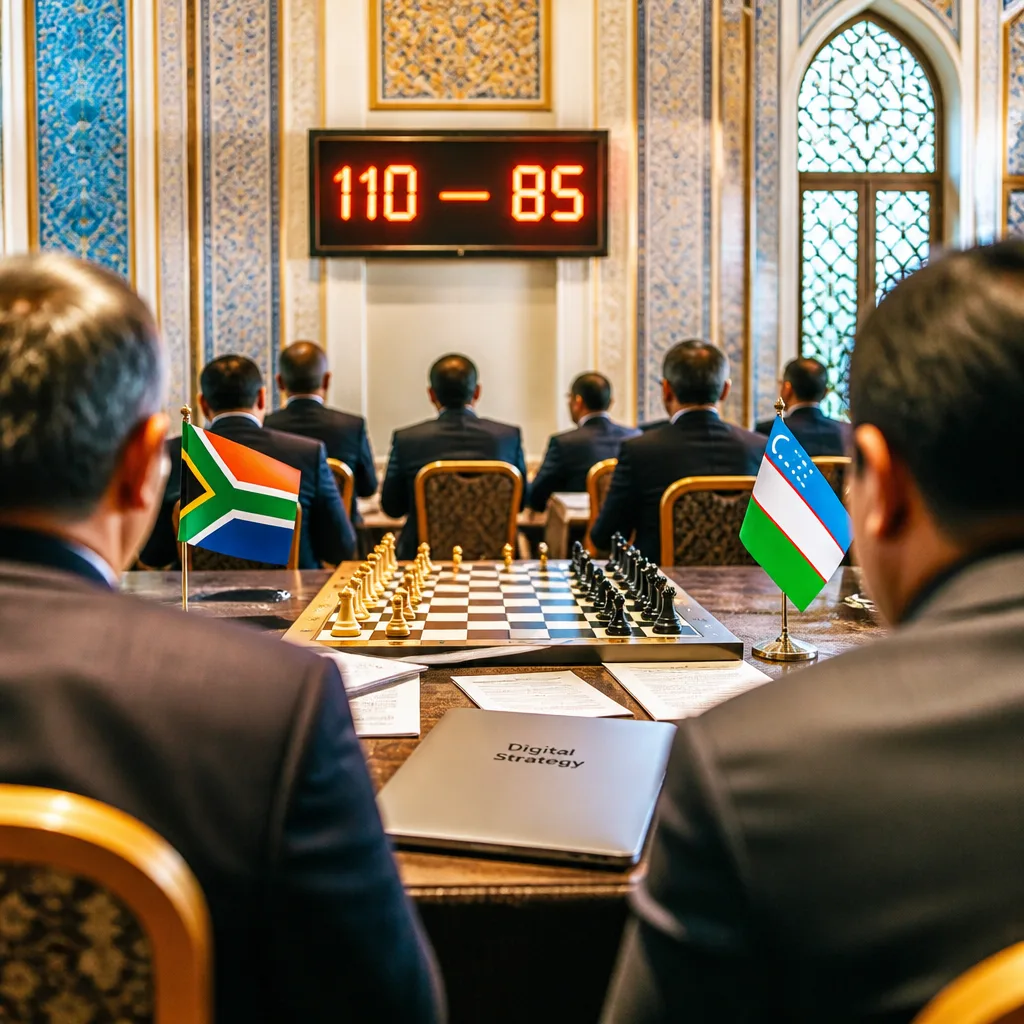
Timur Turlov was elected president of the International Chess Federation (FIDE) by the organisation’s General Assembly in Samarkand on Saturday, receiving 110 votes in the second round against Wadim Rosenstein’s 85 votes, according to reporting from the meeting.
New leadership and a high‑profile ticket
The vote followed the elimination of Jan‑Henrik Büttner after the first round. Turlov ran on a ticket that included five‑time world champion Viswanathan Anand, who was elected FIDE deputy president, the reports said. At the time of the election Turlov was serving as president of the Kazakhstan Chess Federation and president of the International School Chess Federation (ISCF).
In his programme for FIDE, Turlov proposed drawing on business experience and prior roles in chess administration to upgrade FIDE’s digital infrastructure, expand chess education and strengthen support for national federations. He outlined a plan to attract more commercial resources and increase the federation’s investment capacity.
“To achieve truly large‑scale results, we need to attract more resources and think strategically. I plan to increase the volume of investment in FIDE to $7 million and personally guarantee the fulfilment of these financial commitments,” the report quoted Turlov as saying.
Priorities and promises
Key elements of Turlov’s stated priorities, as set out in the material presented at the General Assembly, include:
- Digital transformation — creation of a unified platform and greater access for national federations to digital tools.
- Commercial development — new partnerships and a media fund to raise profiles of national federations.
- Education and outreach — expanded chess education initiatives and support for youth programmes through school and national structures.
The reports noted Turlov’s intention that part of the increased investment would be allocated to a media fund to help federations strengthen their reputations and reach wider audiences. He said new commercial partnerships would help stabilise FIDE’s finances while maintaining the organisation’s non‑commercial mission.
Vote details and immediate implications
The election results, as recorded at the Samarkand General Assembly, were as follows:
| Candidate | Round | Votes |
|---|---|---|
| Timur Turlov | Second | 110 |
| Wadim Rosenstein | Second | 85 |
| Jan‑Henrik Büttner | First (eliminated) | Eliminated |
For national federations, including Chess South Africa, the new leadership’s practical impact will hinge on how soon promised digital tools and funding mechanisms are put in place and how accessible they are to smaller federations. Enhanced media support and a centralised digital platform could make it easier for federations to promote events, attract sponsors and deliver training resources.
Observers at the General Assembly noted that Turlov brings a background that mixes private‑sector experience with recent federation leadership. Whether that blend translates into measurable improvements for developing chess nations will depend on follow‑through, transparency in funding allocation and equitable access to new platforms.
What to watch next
In the coming months, federations and stakeholders are likely to monitor several signals from the new FIDE administration:
- the timing and scope of any unified digital platform rollout;
- details of the proposed media fund and how national federations can apply for support;
- initial commercial partnerships announced and contractual terms affecting events and broadcasts.
The Samarkand vote represents a shift in leadership at the top of world chess administration. For South African chess players, organisers and sponsors, the administration’s early actions on digital tools and funding will determine whether the new leadership delivers practical benefits at grassroots and elite levels.