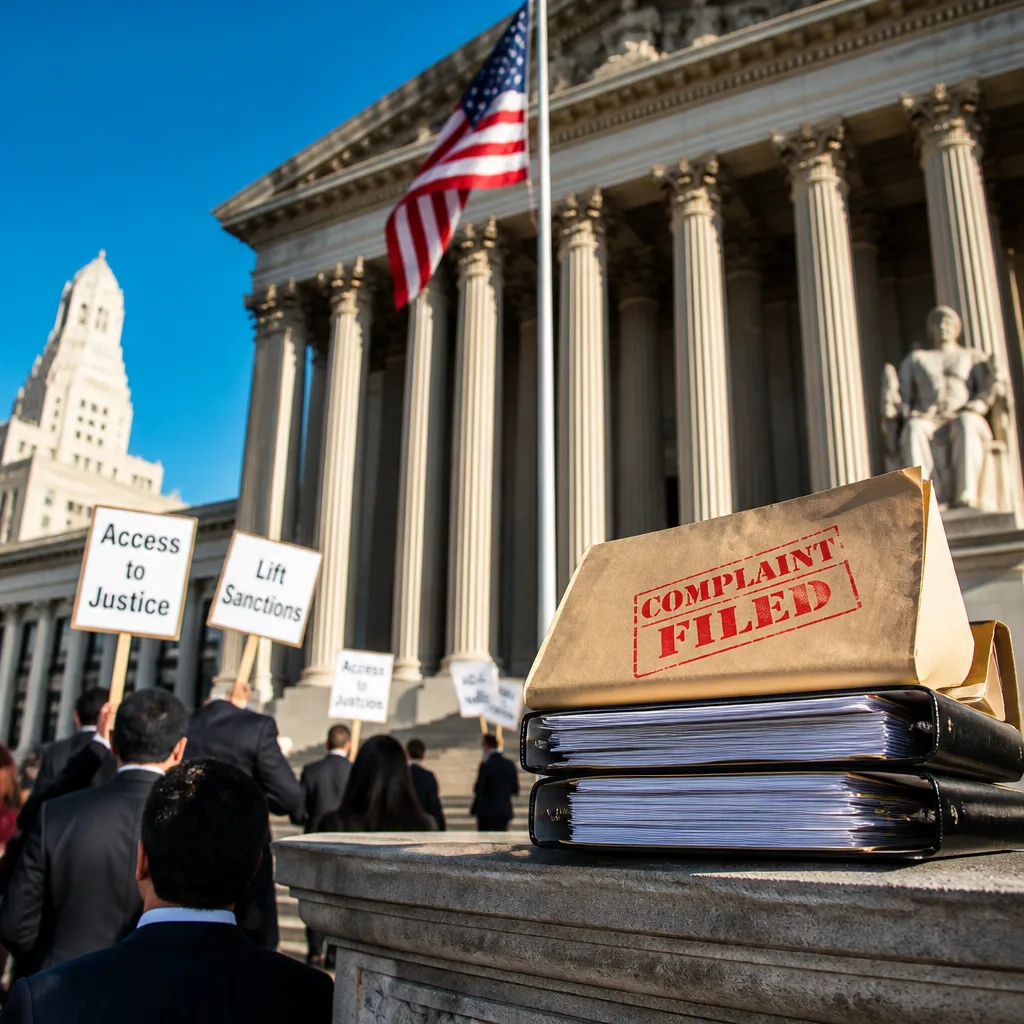
Human Rights Watch and three allied organisations filed a federal lawsuit on 11 August 2026 against US President Donald Trump and senior administration officials, challenging sanctions imposed on the International Criminal Court and its staff.
Legal bid seeks to lift travel bans and asset freezes
The complaint, lodged in New York, asks a court to declare unlawful measures the administration issued under an executive order introduced in February 2025. The plaintiffs say the restrictions — which include travel bans and asset freezes — have been applied against a range of ICC personnel and affiliates and are obstructing the court’s work.
The 101-page filing was submitted by Human Rights Watch, the American Friends Service Committee, the Center for Constitutional Rights and the Open Society Institute. It names, alongside President Trump, senior officials identified in the complaint as responsible for enforcing the sanctions.
“This is an unlawful abuse of power constituting a frontal attack on the rule of law, the independence of judges, prosecutors, and lawyers, basic precepts undergirding the international legal order, and the principle of equal access to justice,”
— language taken directly from the complaint and cited in the plaintiffs’ court filing.
Who has been targeted
The administration has said it rejects the ICC’s jurisdiction. According to the complaint and reporting, the sanctions package has affected individuals and organisations linked to ICC investigations, notably those related to Israel and Afghanistan.
- Eight judges targeted
- Three prosecutors
- One UN expert
- Three human rights organisations
Many of the measures were tied to an arrest warrant issued by the Hague-based court for Israeli Prime Minister Benjamin Netanyahu over alleged conduct in Gaza, and Washington has also taken issue with ICC activity linked to alleged abuses during the US-led campaign in Afghanistan.
| Measure | Scope (as cited in complaint) |
|---|---|
| Travel bans | Targeted ICC judges, prosecutors and others |
| Asset freezes | Applied to named individuals and organisations |
| Executive order | Signed February 2025 |
Claims and wider reaction
The plaintiffs argue the sanctions violate US law, including First Amendment protections, and inflict what they describe as "profound and irreparable harm". The complaint says the groups have curtailed engagement with the ICC out of fear of civil or criminal penalties or of being designated for sanctions themselves.
International actors have previously pressed the US to reverse the penalties. The United Nations and the European Union urged Washington to withdraw measures that they said undermined the court’s independence.
Why this matters — and what could happen next
Legal proceedings will test the reach of US executive power when it comes into conflict with institutions of international criminal justice. If a court finds the sanctions unlawful, that could constrain future US actions against international bodies and restore some access for victims and civil society actors seeking to engage with the ICC.
Conversely, if the administration’s measures are upheld, the ruling could embolden further unilateral steps aimed at influencing or penalising international investigations — with consequences for victims’ ability to pursue redress and for diplomatic relations with states and organisations that support the ICC.
For South Africa, which has in the past supported international justice mechanisms, the case is particularly pertinent. The outcome may affect how states, civil society and victims interact with the ICC and could influence global debates about accountability for war crimes and crimes against humanity.
The lawsuit names Secretary of State Marco Rubio, Treasury Secretary Scott Bessent, Attorney General Todd Blanche and other senior officials as respondents. The filing seeks judicial relief from the measures and a declaration that the sanctions are inconsistent with US law.
Courts will now consider the legal arguments advanced by the rights groups, and any ruling will carry implications beyond the immediate parties, shaping the relationship between national executive power and international judicial institutions.