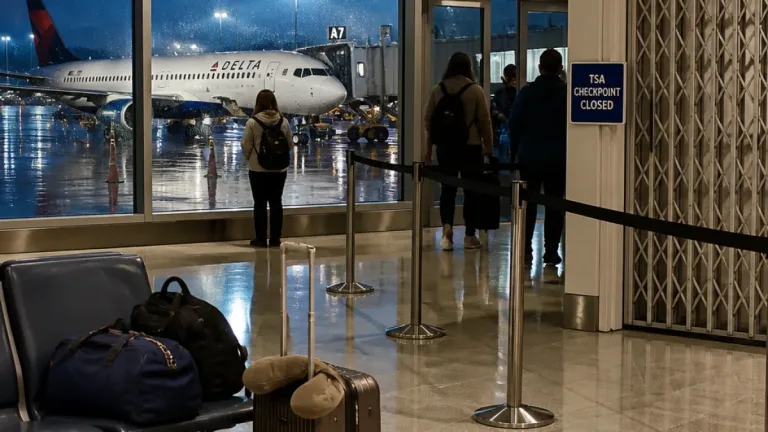
The collision between a South African Airways Airbus A320 and a parked Safair Boeing 737-800 at OR Tambo International Airport on 11 November 2022 was caused by a distracted tug driver and inadequate communication between SAA Technical personnel, the Minister of Transport said in a parliamentary reply.
Parliamentary disclosure and immediate effects
In response to a question from National Assembly member Adil Nchabeleng, Minister Barbara Creecy set out the findings of the SAA Technical Safety Department’s internal investigation into the incident. The SAA Airbus, while being towed, struck the Safair aircraft, damaging the A320’s wingtip and causing significant damage to the 737-800’s empennage. Both airframes were removed from service.
Safair instituted a damages claim against SAA Technical that was reported in parliamentary records as amounting to R21.1 million. According to the material provided to Parliament, Safair initially claimed repair costs of US$446,059 for damage to its 737-800 and sought a further US$3.227 million for loss of income while that aircraft was out of service. While repairs were under way, Safair deployed a Boeing 737-400 to maintain capacity.
| Item | Reported amount |
|---|---|
| Safair claim (reported to Parliament) | R21.1 million |
| Reported repair costs (Safair) | US$446,059 |
| Reported loss of income claim (Safair) | US$3.227 million |
Investigation findings and consequence management
The SAA Technical investigation concluded the immediate cause was human factors: staff engaged in unrelated tasks while an aircraft was under tow, producing distraction; and communication between the tug driver and the supervising engineer was inadequate, the minister’s reply said.
Following the probe, SAA Technical implemented remedial actions and applied consequence management to those involved, the Minister reported. The parliamentary answer did not set out the specific disciplinary steps taken or the detailed remedial measures, but confirmed the company had acted after the internal review.
- Cause identified: distraction during towing and poor communication between tug driver and engineer.
- Operational impact: both aircraft removed from service; Safair temporarily used a 737-400.
- Financial claim: Safair lodged a damages claim reported as R21.1 million and cited specific US dollar amounts for repair and loss of income.
Context and implications for South African aviation
The incident highlights persistent safety-management challenges in ground handling and aircraft maintenance operations. Towing incidents, while uncommon, can have outsized operational and financial effects: aircraft taken out of service affect airline schedules, fleet utilisation and revenue, and can prompt costly repairs and compensation claims.
For state-linked entities such as South African Airways and its technical arm, the episode underscores the need for robust human factors training, clear communication protocols during ground movements, and visible record-keeping of remedial and disciplinary outcomes. In a sector already under scrutiny for financial and operational strain, avoidable incidents that result in multimillion-rand claims risk eroding public and stakeholder confidence.
Parliamentary oversight of incidents involving national transport infrastructure is central to accountability. The minister’s disclosure provides a public account of cause and immediate response, but it leaves unanswered questions that stakeholders and the travelling public are likely to press for: what specific procedural changes were introduced, how the effectiveness of those changes will be measured, and whether the damages claim has been settled.
Given South Africa’s role as a regional aviation hub, airport ground safety and maintenance standards have implications beyond individual operators. Disruptions at OR Tambo reverberate across the network of domestic and regional services that use the airport as a primary node.
The minister’s response to Parliament provides the basic facts established by SAA Technical’s internal review: the collision was the product of human error and communication failure, and remedial action followed. Further clarity will depend on subsequent reporting from SAA Technical, the airlines involved and any legal or commercial settlement of the claim.