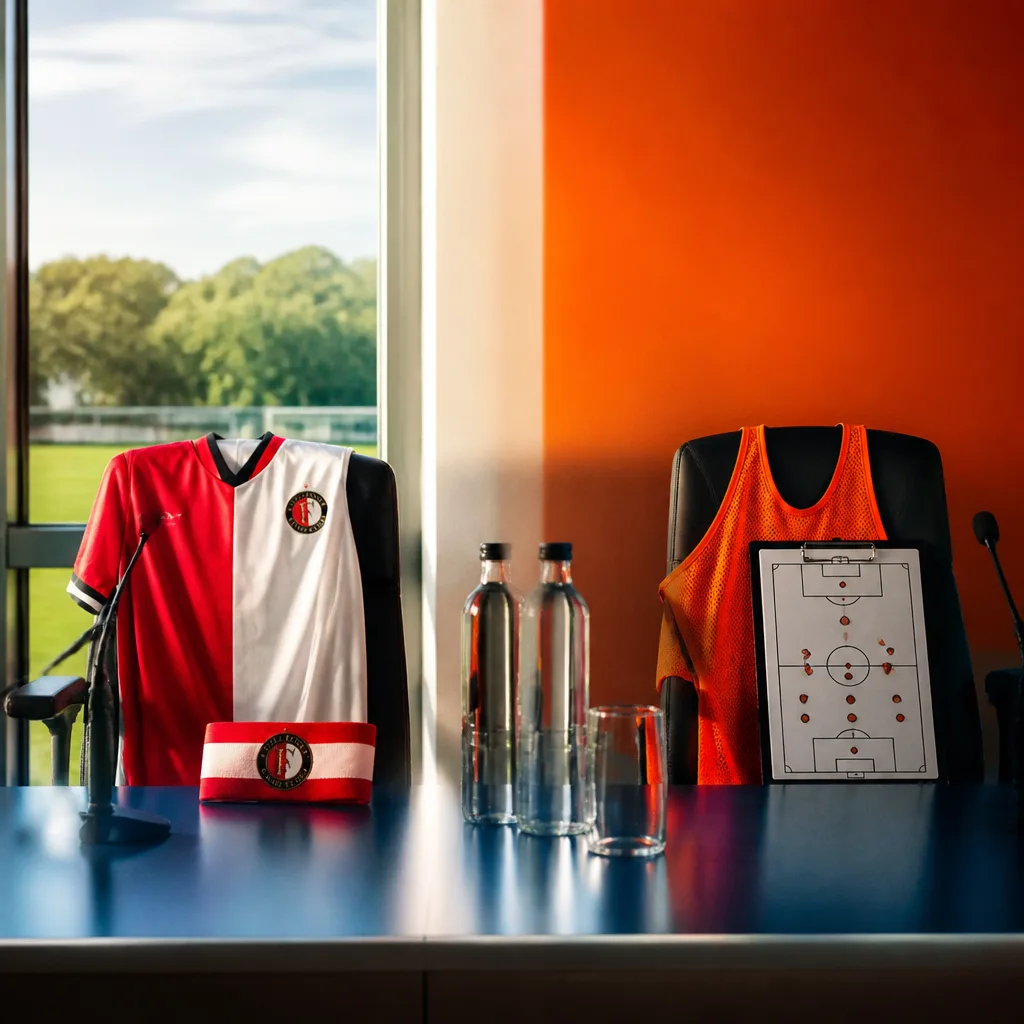
Luciano Valente, captain of Eredivisie side Feyenoord, was omitted from Xavi Hernández's first Netherlands squad as the head coach signalled he sees Valente as an attacking midfielder rather than a left winger. The decision, announced at a press conference in Zeist, highlights a recurring tension between club role and national-team selection that may complicate Valente’s international prospects.
Position, not form, the deciding factor
Valente has enjoyed a strong start to the season for Feyenoord, contributing to the club’s recent emphatic results. Despite that form — and his captaincy — Xavi did not include him in the squad for the upcoming Nations League fixtures. At Feyenoord, manager Arne Slot’s use of Valente predominantly on the left flank conflicts with Xavi’s preferred deployment of the player centrally.
“I would actually rather not go into individual players, but yes, we are following Valente. He is a good, potential player for us. The door to the Netherlands is open for him too. It's just that we already have a lot of very good midfielders. I really see him as an attacking midfielder and not as a left winger.”
The quote, given by Xavi at the Zeist press briefing, was reported alongside commentary from Dutch journalists Valentijn Driessen and Verweij, who have both argued that the positional mismatch reduces Valente’s chances. Verweij was particularly blunt: “As long as Valente plays in that position, he will not be selected.”
Why the omission matters
The episode illustrates two interlocking dynamics in modern international football:
- Managerial role clarity: National coaches often have a specific tactical mould for a player; if a club places that player elsewhere, the coach may doubt their suitability for the national system.
- Competition for places: Xavi noted the Netherlands already possess several high-quality attacking midfielders, making it harder for Valente to break in without playing in the role Xavi envisages.
That competition also shaped substitute call-ups when Donyell Malen and Justin Kluivert withdrew from the squad: rather than turn to Valente, Xavi selected Mexx Meerdink and Guus Til — players the coach apparently views as more aligned with his tactical needs.
Player reaction and immediate consequences
Valente publicly displayed his disappointment after Feyenoord’s 5-0 win over FC Utrecht, telling ESPN that he had hoped to be selected. He added that he would respond on the pitch — a familiar line from players seeking to force national recognition through club performances.
Journalist Valentijn Driessen warned the omission could be lasting if Valente remains deployed on the left at Feyenoord. The club’s management, and current utilisation under manager Arne Slot, therefore become central to whether he can force a rethink at international level.
Context for South African readers
For supporters in South Africa who follow European football, this is a reminder that strong club form is sometimes not enough: how a player is used tactically can determine international fate. It underlines the influence national coaches exert over selection policy, and why many players adjust their club roles to align with national-team expectations — a dynamic present across major footballing nations.
Valente’s case will be watched over the coming weeks. If Feyenoord revert him to a central attacking role, Xavi has left the door open. If not, the Netherlands’ depth in attacking midfielders could keep him on the outside looking in.
| Key names | Relevance |
|---|---|
| Luciano Valente | Feyenoord captain; omitted from Xavi’s squad |
| Xavi Hernández | Netherlands head coach; views Valente as an attacking midfielder |
| Mexx Meerdink, Guus Til | Called up as replacements for Malen and Kluivert |
This selection episode is a modest but telling example of how tactical interpretation and managerial preference can shape international squads, sometimes more decisively than headline-grabbing club performances.