
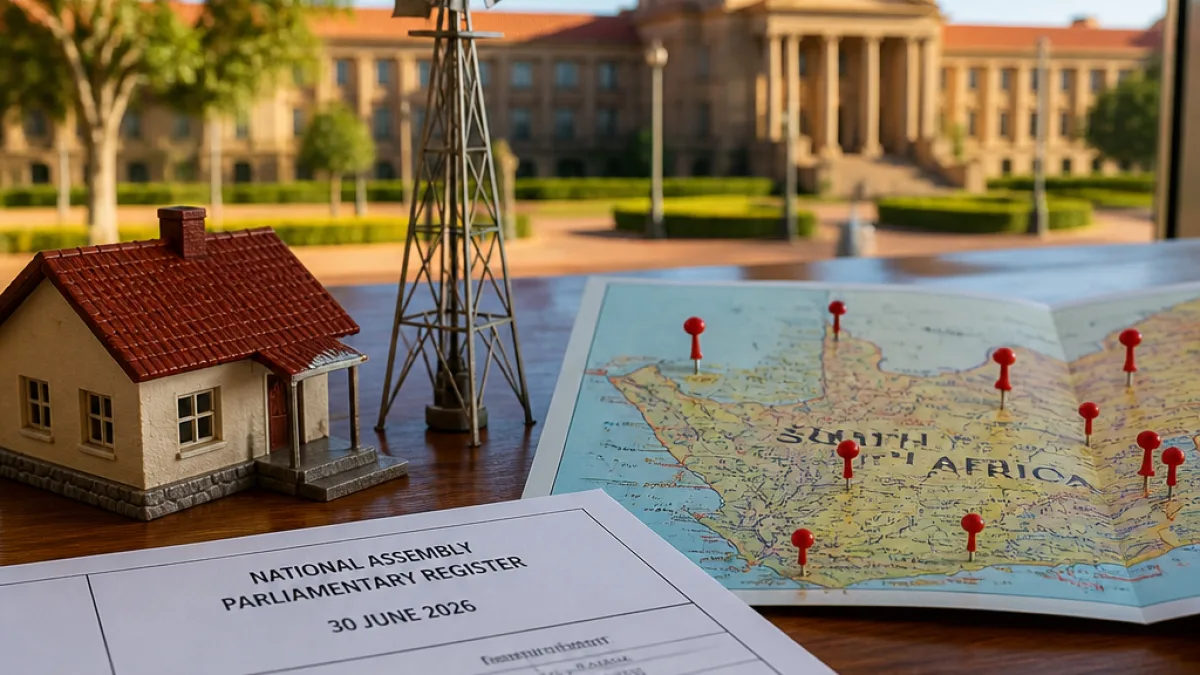
Parliament’s Register of Members’ Interests for 30 June 2026 records that ANC MP and former North West Premier Supra Mahumapelo owns 24 properties around the country, including multiple houses, a farm and a tourism lodge. The publication of the register has prompted fresh scrutiny of wealthy asset holdings by senior politicians and renewed calls for clear explanations about potential conflicts between private holdings and public duties.
Background and political career
Mahumapelo served as Premier of the North West from May 2014 until his resignation on 23 May 2018, a period that ended amid widespread protests and labour unrest in the province, particularly in Mahikeng. Before becoming premier he was Speaker of the North West Provincial Legislature (April 2012 to May 2014), Provincial Secretary of the ANC in the North West (2005–2009) and Provincial Chairperson (2011–2018).
After the 2019 general election he entered the National Assembly as an ANC Member of Parliament. He held the chair of the Portfolio Committee on Tourism from July 2019 until August 2021 and was appointed chair of the Portfolio Committee on International Relations and Cooperation in August 2021. The register indicates he retained leadership in parliamentary committees into the seventh Parliament following the 2024 general election.
What the register shows and why it matters
The Register of Members’ Interests is administered by the Office of the Registrar of Members’ Interests and is designed to promote transparency, reduce conflicts of interest and bolster public trust in elected officials. The register’s latest publicly available snapshot, dated 30 June 2026, lists Mahumapelo’s material property interests but does not, in itself, indicate any illegality.
Nonetheless, disclosures of sizeable personal asset portfolios by sitting MPs frequently prompt questions in communities where service delivery remains a pressing concern. In the North West, memories of the 2018 protests — which revolved around alleged financial mismanagement and poor service delivery — are still fresh for residents and labour groups.
- Register date: 30 June 2026
- Number of properties disclosed: 24
- Types of properties listed: houses, a farm, a tourism lodge (as recorded in the register)
Local reaction and wider implications
Labour organisations, community activists and opposition parties have previously used asset disclosures to question whether public officeholders have clear boundaries between private interests and the exercise of state power. The record of protests in 2018 — which culminated in Mahumapelo’s early resignation as premier — means such disclosures attract particular attention in the North West.
For communities that continue to press for reliable basic services and local employment, the appearance of large private holdings by politicians raises questions about priority-setting and accountability. At the same time, MPs are required to declare their interests; the register is the mechanism that allows the public to scrutinise holdings and seek explanations where necessary.
Chronology of Mahumapelo’s public roles
| Role | Dates |
|---|---|
| Provincial Secretary, ANC North West | 2005–2009 |
| Speaker, North West Provincial Legislature | April 2012–May 2014 |
| Premier, North West | May 2014–23 May 2018 (resigned) |
| Member of the National Assembly | From May 2019 |
| Chair, Portfolio Committee on Tourism | July 2019–August 2021 |
| Chair, Portfolio Committee on International Relations and Cooperation | Appointed August 2021; retained into seventh Parliament after 2024 election |
What’s next and public accountability
The publication of a register entry is not, by itself, an allegation of wrongdoing. However, it provides a starting point for questions from voters, oversight bodies, civil society and the media about whether there are any conflicts between private assets and public responsibilities.
Requests for further detail typically go to the Office of the Registrar of Members’ Interests, relevant parliamentary committees or to the MP concerned. In the North West, where the labour movement and community groups remain vocal, the register is likely to prompt renewed calls for robust oversight and for explanations of how declared assets relate to declared income and business interests.
Mahumapelo is also known as a gospel and cultural music performer and songwriter, a detail listed alongside his political career in the register. The disclosure of artistic pursuits alongside property holdings is part of the broader public record maintained to help citizens assess the interests and qualifications of their representatives.
For residents in towns such as Mahikeng and labour communities across the province, the register’s revelations will be measured against longstanding demands for improved services, transparency and accountability from those who have held or currently hold public office.













