
The City of Matlosana in the North West has been placed under a financial recovery plan after auditors and residents exposed years of mismanagement, mounting debt and deteriorating basic services affecting about 430,000 people across Klerksdorp, Jouberton, Orkney, Kanana, Stilfontein, Khuma, Hartebeesfontein and Tigane.
Municipal records show unauthorised, irregular, fruitless and wasteful expenditure reached R10.8-billion in 2024/25, while the municipality takes roughly 600 days to pay creditors. The Auditor‑General found the council spent 85% of its allocated budget but met only 58% of basic service and infrastructure targets. Water losses hit 57% and electricity losses 44%.
Communities bear the cost
Residents across townships describe daily hardship. In Khuma, east of Stilfontein, Gideon Matseke summed up his community’s experience:
“Forgotten.”
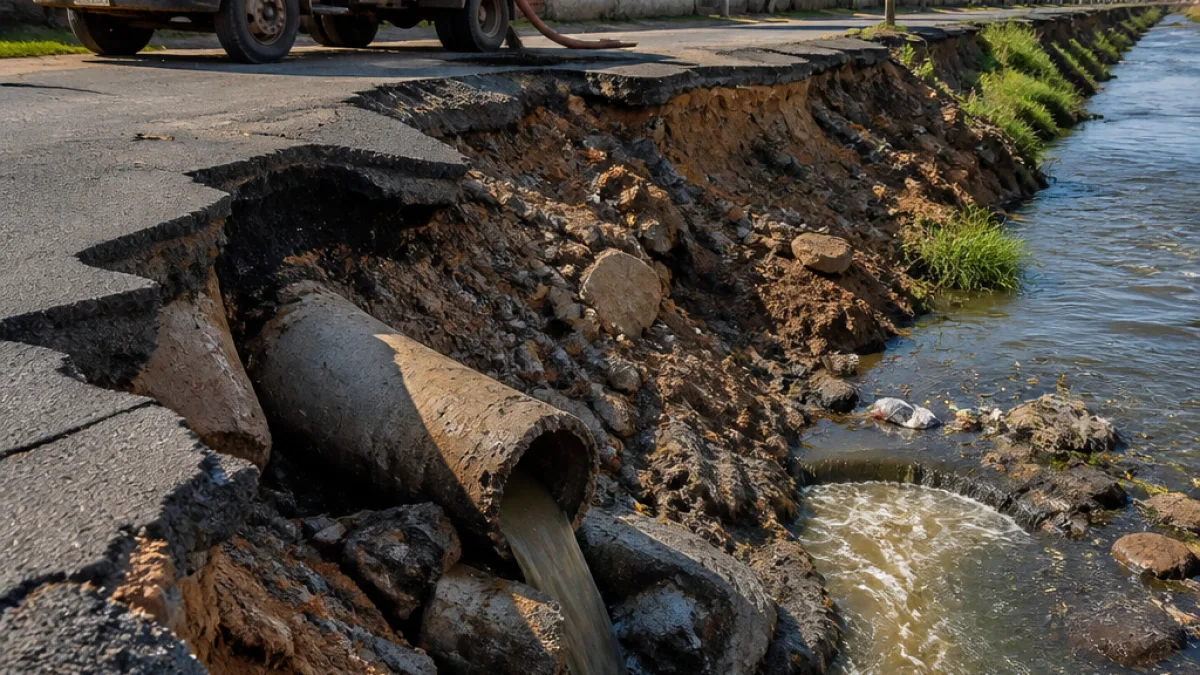
When visited, several roads in Khuma were flooded and stormwater pipes lay on the roadside, reportedly untouched for two years. In Klerksdorp a road has partially collapsed near a stormwater drain, and in Kanana residents say sanitation is a persistent threat.
Richard Ndlovu of Kanana said a local pump station has not worked for years. Raw sewage has overflowed from that station, eroded a channel and now runs into the Skoonspruit River, which feeds into the Vaal. Residents also report taps running dry and frequent electricity interruptions.
Municipal performance and accountability
The municipality’s annual report states certain projects are complete — including the stormwater project — even as residents point to unfinished work and infrastructure left in disrepair. The gap between reported completion and lived reality has deepened mistrust in municipal planning and reporting.
Matlosana has been placed under administration, a measure that seeks to stabilise governance and finances. The financial recovery plan aims to address debt, service delivery failures and long creditor payment cycles, but the scale of the fiscal shortfall and the backlog of repairs make turnaround difficult.
Immediate effects and longer-term risks
Persistent water and sanitation failures carry public‑health and environmental risks. Sewage spills into tributaries of the Vaal pose threats downstream; meanwhile, extended periods without reliable water or electricity disrupt households, clinics and local businesses.
- R10.8-billion reported wasteful and irregular expenditure (2024/25)
- 600 days average time to pay creditors
- 57% water losses; 44% electricity losses
Local residents continue to face immediate costs: time spent sourcing water, damage to homes from flooding, and health concerns from sewage contamination. The economic decline of the area, once buoyed by gold mining, has reduced the municipal revenue base and compounded service problems.
Where the money and services are failing
| Issue | Reported figure / condition |
|---|---|
| Unauthorised, irregular, fruitless and wasteful expenditure | R10.8-billion |
| Creditors' payment time | ~600 days |
| Budget spent vs targets met | 85% spent; 58% of basic targets achieved |
| Water losses | 57% |
| Electricity losses | 44% |
Municipal officials have publicly acknowledged the need for recovery but residents say progress is slow. Stormwater pipes left beside township roads for two years and pump stations out of commission point to problems in project planning, procurement and execution.
What residents need to know
Households affected by service interruptions should document outages, leaks and sewage spills and report them to the municipality’s service centre or ward councillor. If problems are not addressed, residents can lodge complaints with the provincial department responsible for local government or pursue recourse through public protector or oversight bodies.
For now, communities continue to shoulder the immediate burden of failing infrastructure. Rebuilding trust and restoring basic services will require clear action on the recovery plan, faster creditor payments to secure contractor support, and transparent reporting that matches conditions on the ground.
Unless turnaround measures produce visible improvements, Matlosana’s fiscal and service challenges are likely to deepen, with further consequences for household health, local businesses and environment downstream.















