
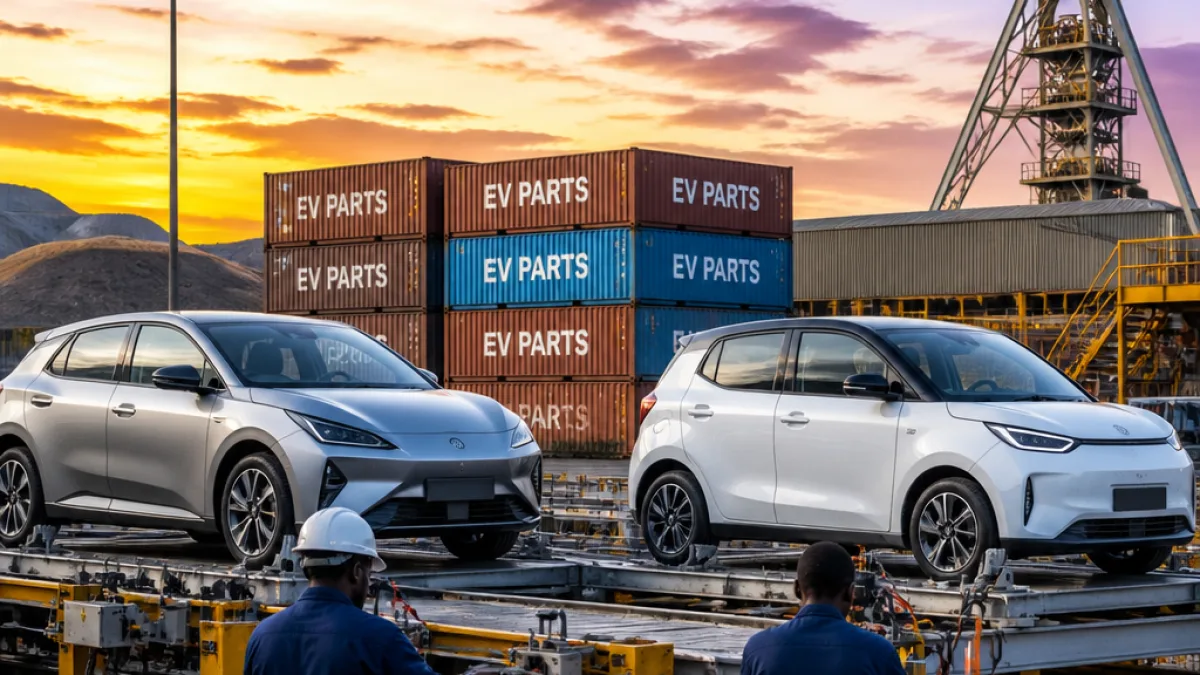
The era in which China simply followed Europe and North America in car design and technology is coming to an end. A closer operational relationship between the multinational Stellantis group and Chinese electric vehicle maker Leapmotor illustrates how the balance is changing, with knowledge flowing both ways and a fresh round of competition arriving in international markets.
Stellantis and Leapmotor: a two‑way learning process
Stellantis, the conglomerate that houses marques such as Alfa Romeo, Fiat, Peugeot, Citroën, Maserati, Jeep and Opel, has held a stake in Leapmotor since 2023. Initially, the partnership brought Chinese models into some overseas markets and gave Stellantis access to lower‑cost electric vehicle (EV) technology. The relationship is evolving: engineering teams from Stellantis are spending time at Leapmotor facilities, while Leapmotor is adapting product lines for buyers outside China.
“For what concern Leapmotor, what we are seeing is that there are, in this moment, more and more interactions in terms of vehicle customisation,” said Francesco Giacalone, Leapmotor International Head of Product and Marketing. “They are as a Stellantis team acquiring experience about how Leapmotor develop the products and in concrete terms, helping Leapmotor to be more efficient and fit to the customer in overseas markets.”
The collaboration has already produced more internationally focused models, including the B05 hatchback and the B03X compact SUV. According to Giacalone, Stellantis teams — particularly chassis and dynamic performance engineers — regularly visit Leapmotor to refine ride, handling and other features to meet European and other overseas expectations.
What Europe teaches China — and what China offers Europe
The exchanges are practical. European engineers show Leapmotor how to tune vehicles for the expectations of buyers used to certain safety, comfort and performance benchmarks. At the same time, Stellantis engineers are identifying components and systems developed by Leapmotor that can be integrated into Stellantis platforms — sometimes as straightforward, cost‑saving parts and sometimes as more complex subsystems.
This arrangement is significant because it combines two strengths: European brands’ long experience with regulation, crash‑testing and consumer preferences; and Chinese manufacturers’ rapid progress on EV architecture, manufacturing efficiency and value pricing. The result could be vehicles that match European driving expectations while undercutting rivals on price.
- Product adaptation: Leapmotor models are being changed for overseas markets.
- Technical exchange: Stellantis engineers share chassis and dynamic tuning expertise while learning efficient component design from Leapmotor.
- Market impact: New, competitively priced EVs from China may intensify competition in Europe, Australia and elsewhere.
Implications for global markets — and South Africa
For importers, dealerships and consumers, this shift may mean greater choice at lower prices. For established manufacturers it raises pressure to streamline costs, accelerate EV programmes and reassess supplier contracts. In South Africa, where the automotive industry contributes significantly to manufacturing employment and exports, continued Chinese competitiveness will be watched closely by vehicle assemblers, parts manufacturers and labour organisations.
Local vehicle manufacturers and component suppliers that serve export value chains may need to accelerate productivity improvements and pursue closer collaboration with global partners. Labour stakeholders will be attentive to how new supplier relationships and assembly strategies influence jobs and skills development.
Models to watch and the next steps
The more European‑focused Leapmotor B05 and the compact B03X will act as benchmarks for how quickly Chinese models can be adapted and accepted overseas. If these cars achieve sales success, they will likely encourage further platform sharing and joint ventures between established Western manufacturers and Chinese OEMs.
| Partner | What each brings |
|---|---|
| Stellantis | Regulatory knowledge, chassis tuning, brand recognition |
| Leapmotor | EV architecture, manufacturing efficiency, competitive pricing |
The Stellantis–Leapmotor relationship is a practical example of how global automaking is reorganising itself around EVs. For consumers it promises lower prices and broader choice; for industry it raises the bar on efficiency and cross‑border collaboration. For policymakers and labour leaders in South Africa’s automotive provinces, the coming months and years will be a period to reassess how skills, incentives and industrial policy can respond.
Closer technical cooperation between Western OEMs and Chinese brands is likely to be a feature of the sector for the foreseeable future — changing how cars are designed, built and sold worldwide.














