A Hereford heifer in Brown County, Minnesota, was confirmed rabies‑positive after being observed acting abnormally, the Minnesota Board of Animal Health (MBAH) and the Minnesota Department of Health (MDH) reported. The animal was humanely euthanased and its head submitted for laboratory testing on 8 September 2026, which returned a positive result.
Timeline and exposures
The animal’s behaviour was first noticed on 1 September 2026, when the owner found the heifer lying flat with its head down. A veterinarian examined the animal the same day and the owner administered oral medication with bare hands. A second veterinarian also provided oral medication without gloves on 2 September. By 3 September a third veterinarian reported uncoordinated hind legs, high‑stepping gait, vocalisation, hypersalivation and fever. The animal was euthanased and the head sent for rabies testing.
- 1 September 2026 – First observation and initial veterinary exam; owner handled the animal without gloves.
- 2 September 2026 – Second veterinary exam; oral medication administered without gloves.
- 3 September 2026 – Third veterinary exam noting neurological signs; animal euthanased.
- 8 September 2026 – Head submitted for testing; confirmed rabies.
Human health response and risk
The MDH recommended that nine people receive rabies post‑exposure prophylaxis (PEP) because they may have been exposed to saliva from the infected animal. Rabies PEP consists of human rabies immune globulin and a series of rabies vaccinations given at specified intervals to prevent disease after a possible exposure.
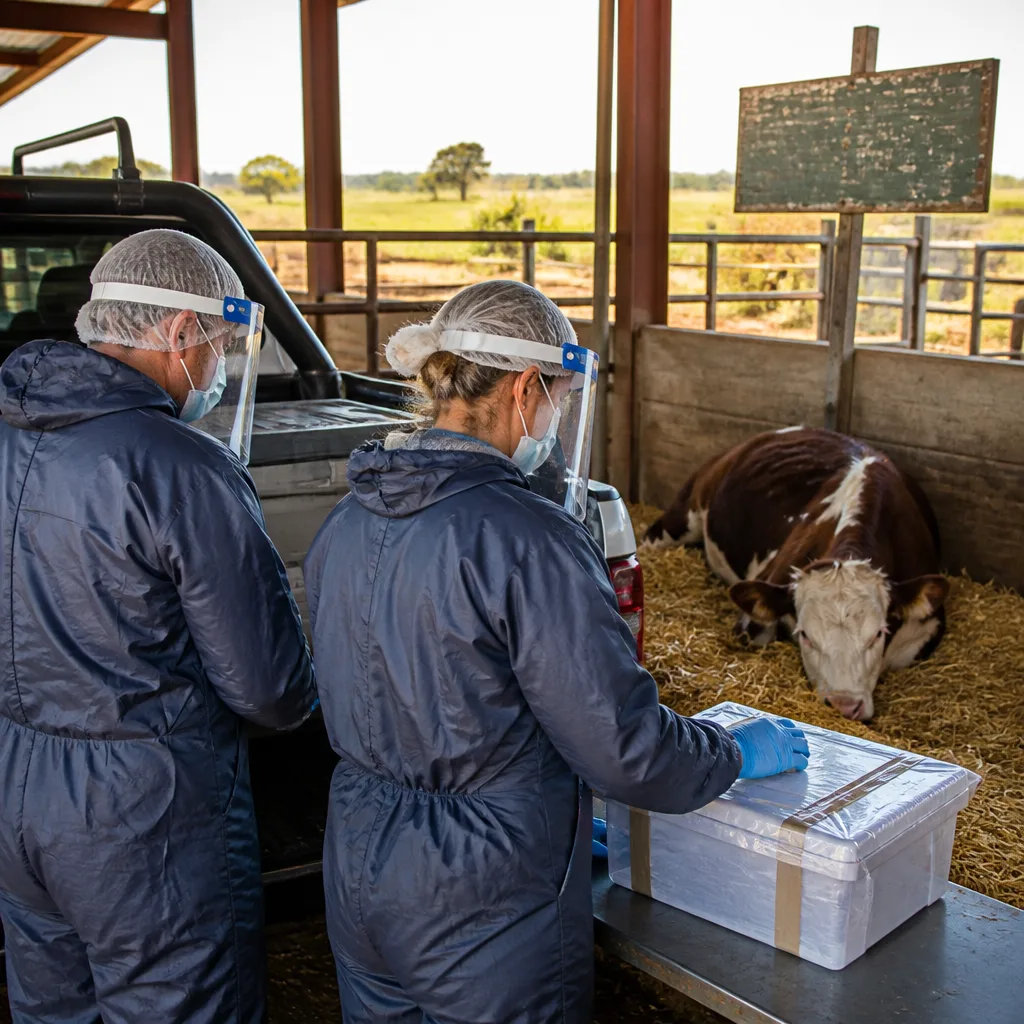
“Given the severity of the disease, it’s better to assume an animal is infected until proven otherwise and to be sure to take the proper precautions and use the correct personal protective equipment when working with a rabies suspect animal,”
said Steve Kivisto, senior veterinarian leading the rabies programme at the Minnesota Board of Animal Health, according to the Board’s statement.
Why this matters
Rabies is a preventable viral disease that affects the central nervous system and is almost always fatal once clinical signs appear. Transmission typically occurs through the bite of an infected mammal, or when saliva from an infected animal comes into contact with mucous membranes or broken skin. The case in Minnesota highlights several important public‑health and veterinary lessons relevant to livestock handlers and clinicians:
- Use appropriate personal protective equipment (PPE)—gloves, eye protection and other barriers—when handling animals with unknown illnesses.
- Assume the worst—treat neurological or unusual behaviour in mammals as a potential rabies case until proven otherwise by laboratory testing.
- Pursue prompt public‑health follow‑up—identify potentially exposed people quickly so PEP can be started without delay.
Public‑health advice
Health authorities recommend that anyone who may have been exposed to the saliva or tissues of a suspect rabid animal seek urgent medical assessment. PEP is most effective when started promptly; decisions on PEP are made by public‑health officials and clinicians based on exposure risk.
| Item | Detail |
|---|---|
| Species | Hereford heifer (cattle) |
| County | Brown County, Minnesota |
| Lab confirmation | Minnesota Department of Health Public Health Laboratory |
| People advised to get PEP | 9 |
Veterinarians, farm workers and animal owners should ensure their routine biosecurity includes up‑to‑date rabies vaccination for at‑risk animals where applicable, correct use of PPE, and rapid notification of public‑health or animal‑health authorities when animals display neurological signs. Healthcare workers assessing potential exposures should consult public‑health guidance and specialists to determine the need for and timing of rabies PEP.
If you suspect you have been exposed to a potentially rabid animal, contact your nearest clinic or public‑health service immediately rather than attempting home remedies or waiting for symptoms. Early assessment and treatment can prevent a fatal outcome.