Gauteng health officials have appealed to residents to stop sharing prescription medicines with family, friends or neighbours, saying what works for one person can seriously harm another. The warning was issued on Monday by the Gauteng Department of Health (GDoH).
Individual prescriptions, individual risks
GDoH spokesperson Steve Mabona said prescriptions are written for a single person, taking into account that person’s specific health condition, medical history and treatment needs. He emphasised that similar symptoms do not necessarily require the same treatment.
“Every prescription is based on an individual’s specific health condition, medical history and treatment needs,”
Mabona warned that a medicine that helps one patient may be harmful to another. He listed people receiving care for conditions including HIV, TB, hypertension, diabetes, asthma, epilepsy and mental-health disorders as groups that must be particularly careful about correct use of medicines.
Risks of incorrect use and missed doses
The department warned that skipping doses, taking medication the wrong way or stopping treatment without professional advice can reduce effectiveness and place patients at risk of serious complications. This is especially critical for long-term therapies where interruption can lead to treatment failure.
The GDoH also highlighted the danger of misusing antibiotics. Antibiotics do not treat viral illnesses such as the flu or the common cold, and unnecessary use contributes to antimicrobial resistance, making some infections harder to treat and increasing the risk of complications.
Storage and safe disposal
Mabona advised that medicines should be kept in their original packaging and stored away from children, sunlight, heat and moisture. He noted that not all medicines require refrigeration and encouraged people unsure about storage to speak with a pharmacist.
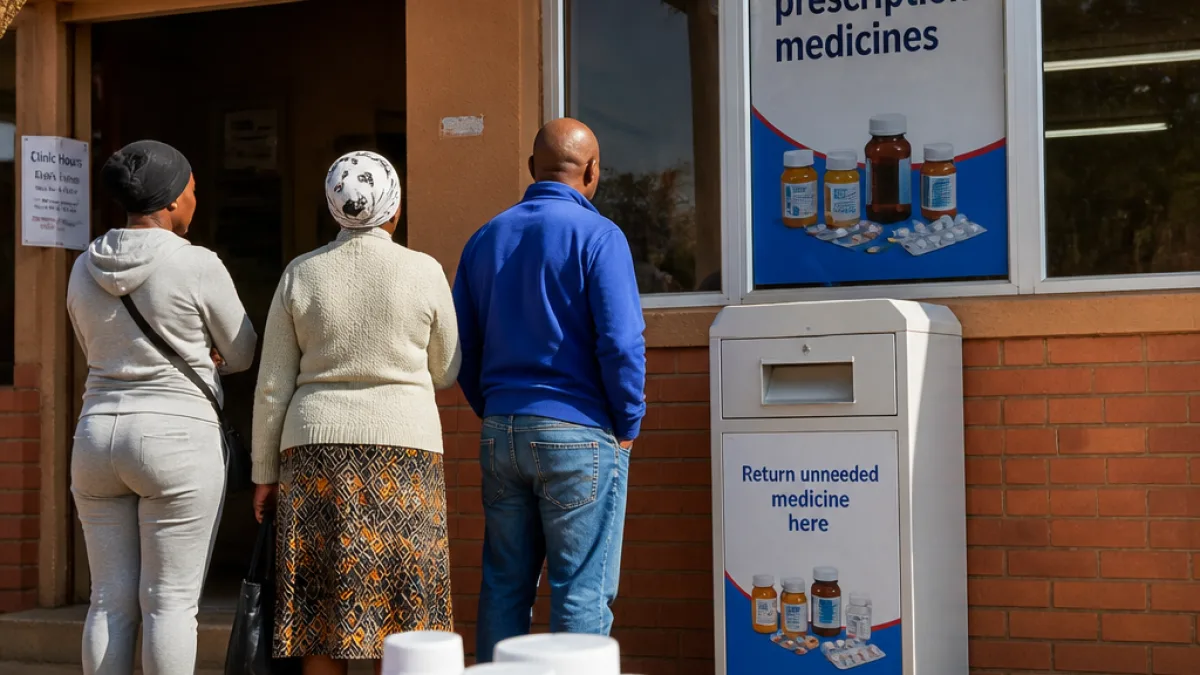
On disposal, the department said expired or unwanted medicines should be returned to a pharmacy, clinic or hospital. Members of the public were told not to discard medicines into toilets, sinks or drains because of the potential public-health and environmental hazards.
- Keep medicines in original containers.
- Store away from children, sunlight, heat and moisture.
- Finish antibiotic courses even if you feel better.
- Return expired or unwanted medicines to a pharmacy, clinic or hospital.
- Ask a pharmacist if unsure about refrigeration or other storage needs.
Practical implications for Gauteng households
In practical terms, the advisory affects ordinary households across Gauteng where sharing medicines is sometimes driven by convenience, cost or the assumption that similar symptoms mean the same condition. The department’s statement aims to correct that assumption and reduce avoidable harm.
Pharmacists and clinic staff are the designated first points of contact for questions about dosage, storage and potential side-effects. Patients who are uncertain about their treatment should consult the clinician who prescribed the medicine or visit their nearest public clinic for guidance.
| Issue | Recommended action |
|---|---|
| Accidentally sharing medication | Stop immediately and seek advice from a pharmacist or clinic. |
| Running out of medication | Return to the clinic or pharmacy for a refill; do not borrow from others. |
| Expired or unwanted medicines | Take back to a pharmacy, clinic or hospital for safe disposal. |
The GDoH’s message is a reminder that small, everyday choices about medicines can have wide-reaching effects — from an individual patient’s recovery to the broader public-health challenge of antimicrobial resistance. Residents who remain unsure about any aspect of their treatment are urged to contact their healthcare provider rather than rely on shared medicines.
Reporting from Johannesburg.