
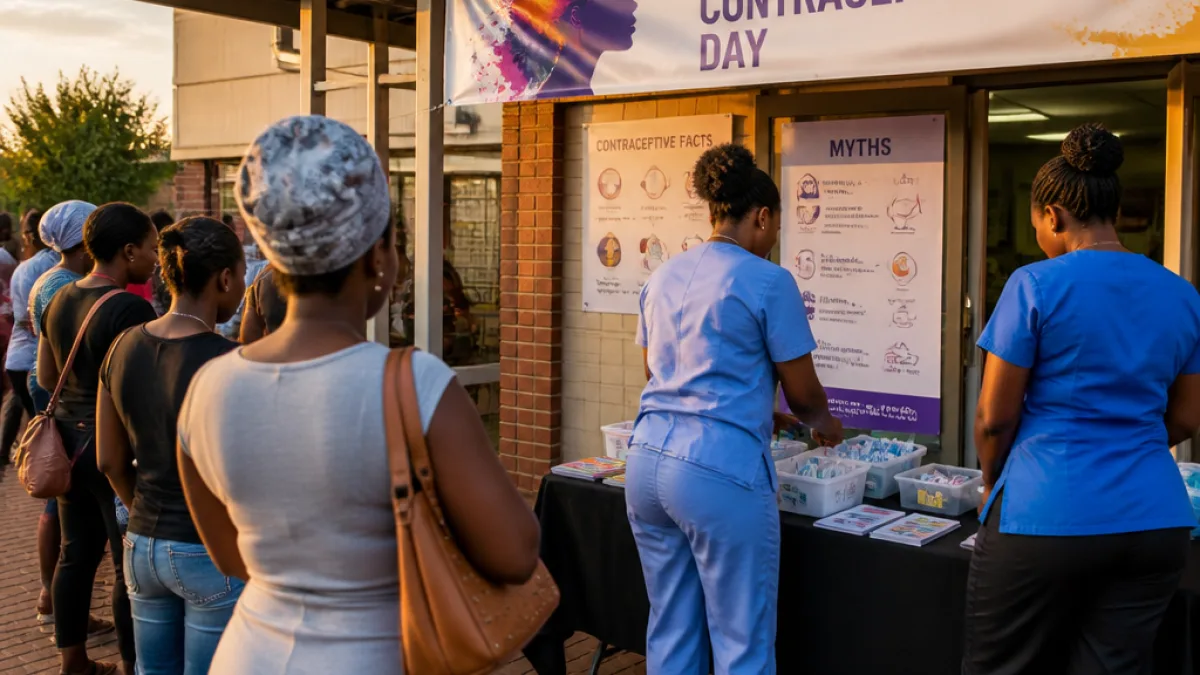
Gauteng Health has expressed alarm at what it describes as a persistently low uptake of contraceptive services among women of reproductive age across the province, saying the figure for the first quarter of the 2026/27 financial year fell short of provincial targets.
Official figures fall short of target
The department’s spokesperson, Steve Mabona, said on Friday that although contraceptives are provided free of charge at public healthcare facilities, only just over 32% of eligible women accessed contraceptive services during the first quarter. That is well below the department’s target of 43%.
“As the Gauteng Department of Health, we are concerned about the low uptake of contraceptives among women of reproductive age, which remains one of the leading causes of unintended pregnancies in the province,” Mabona said.
The statement came on the eve of World Contraception Day, a global observance aimed at raising awareness of contraception, dispelling myths and informing communities about reproductive rights.
What the department says
Gauteng Health pointed to persistent misconceptions about contraception, fears around side effects and fertility concerns as factors that discourage some women from using available services. The department emphasised that access to family planning services remains free at public clinics, community health centres, hospitals and mobile outreach units across the province.
Health officials said increasing uptake requires more than supply: information, counselling and community engagement are necessary to address doubts and misconceptions that act as barriers to use.
Local impact and what it means for residents
Low contraceptive uptake has direct consequences for women, families and health services. The department linked the shortfall to higher rates of unintended pregnancy and ongoing demand for termination-of-pregnancy services, both of which place additional pressure on primary healthcare resources.
For ordinary residents of Gauteng — from busy inner-city wards to sprawling townships and peri-urban settlements — the message is simple and practical: contraceptive services are free at public facilities, but more needs to be done to build trust and reliable information.
- Contraception is available free at public healthcare facilities across Gauteng.
- The department says misinformation and fear of side effects discourage some women from using contraception.
- Officials urge improved counselling, community outreach and education to increase uptake and reduce unintended pregnancies.
| Indicator | Value |
|---|---|
| Uptake of contraceptive services (Q1, 2026/27) | Just over 32% |
| Provincial target | 43% |
Why uptake matters
Family planning is a cornerstone of reproductive health. When uptake is low, women are more likely to experience unintended pregnancies, which can have social and economic consequences for individuals and households and increase demand on public health services.
The department’s public statement calls for stepped-up efforts to reach women where they are, including tailored counselling and community dialogues to tackle myths — a familiar challenge in many parts of the province where rumours and fear of side effects can trump clinical advice.
What residents can do
Health workers in Gauteng encourage women of reproductive age to visit their nearest public clinic or community health centre to speak about family planning options. Counselling is provided free and is intended to help women choose methods that fit their needs and lifestyles.
Local non-profit organisations and community health teams often run outreach campaigns around key dates such as World Contraception Day. Residents who want clarity on services or need to book appointments should contact their local clinic or the Gauteng Health information lines where available.
As Gauteng enters the global day of awareness, the department’s figures are a reminder that having services on the shelf is not the same as having them used. Closing the gap between availability and uptake will require clear information, trust-building and consistent community engagement across the province.











