South African mines remain some distance from full compliance with the Mine Health and Safety Act’s automatic intervention requirement — commonly described as Level 9 — largely because implementation challenges, not missing technology, are slowing progress.
What Level 9 requires
The regulation, which took effect in December 2022, goes beyond detection and warning. Where a potential collision is detected, trackless mobile machinery (TMM) must be able to automatically slow and stop, moving to a safe state without human intervention. Industry guidance for testing and technical standards is consolidated in the MOSH Collision Prevention Systems Blueprint, which sets out how systems should perform.
Why adoption is lagging
Three years on, much of the industry is still engaged in verification processes against the MOSH blueprint, according to independent commentary and Minerals Council South Africa documentation referenced in the reporting. The core obstacles identified are operational and economic rather than technological.
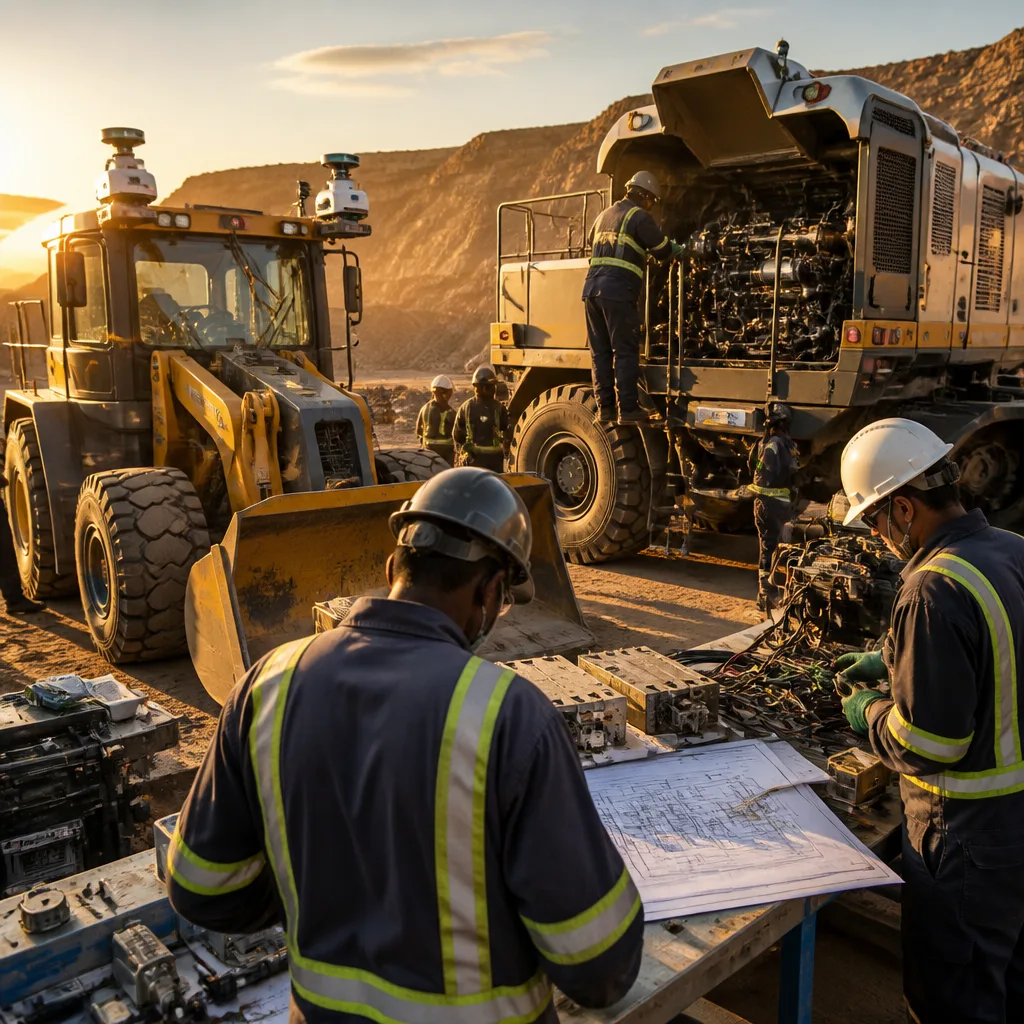
- Legacy fleet complexity: Many mines still run a substantial number of older TMMs. Retrofitting sensors, control interfaces and fail-safe logic to those machines is technically difficult and often expensive.
- Mixed-fleet interoperability: Ensuring reliable automatic intervention across a mix of new and old machines, and across both surface and underground environments, adds testing and systems-integration overhead.
- Implementation discipline: Sustainable Level 9 performance requires consistent installation, verification, maintenance and change management. The gap is described as one of practice — how technology is deployed and sustained — not merely procurement.
Where a TMM cannot be brought to a safe state automatically, Level 9’s intent is not met. Achieving that outcome repeatedly under real-world mining conditions — variable geology, dust, vibration and differing operator practices — has proved a demanding systems-engineering exercise.
Costs and life-cycle decisions
Retrofitting older machines is a recurring theme in industry assessments. When a machine has limited remaining useful life, the capital cost of bringing it up to Level 9 standards can be hard to justify. That economic calculus slows fleet-wide rollout and creates a patchwork of compliance across operations.
The result is that even where capable technology exists, mines must choose carefully which assets to upgrade, how to integrate systems across vendors and how to manage the ongoing verification that the MOSH blueprint demands.
What this means for safety and operations
The longer the implementation timeline, the greater the reliance on intermediate measures — improved detection and warning systems, administrative controls, training and operational procedures — to reduce risk until automatic intervention is reliably in place. These interim controls are necessary but do not replace the regulatory requirement for automatic braking and fail-safe behaviour where collisions are possible.
| Milestone | Detail |
|---|---|
| Regulation effective | December 2022 — automatic intervention obligations for TMMs |
| Verification status | Many operations remain engaged in verification against the MOSH Collision Prevention Systems Blueprint (industry commentary, Minerals Council documentation) |
Bringing the regulation into everyday operational practice therefore requires more than buying a product. It means disciplined implementation plans that consider whole-of-life costs, interoperability, maintenance and verification regimes.
How to move from procurement to practice
Industry assessments argue the path to sustainable Level 9 performance is multidisciplinary: combining engineering, procurement, operations, safety management and change control. Mines that treat compliance as a one-off purchase risk creating brittle systems that fail under dust, wear or software mismatch.
Practical steps that emerge from the reporting include careful selection of retrofit candidates, staged deployment with rigorous field testing, vendor-neutral verification against the MOSH blueprint and an emphasis on maintainability — all designed to avoid short-term fixes that create long-term liabilities.
The conversation underway in the sector reframes the problem: the technology for automatic intervention exists in many forms, but converting capability into consistent, reliable safety outcomes requires sustained implementation effort, resourcing and system-level thinking across the fleet.
This is a question of engineering discipline as much as it is of compliance — and the answer will shape mine safety outcomes for years to come.