
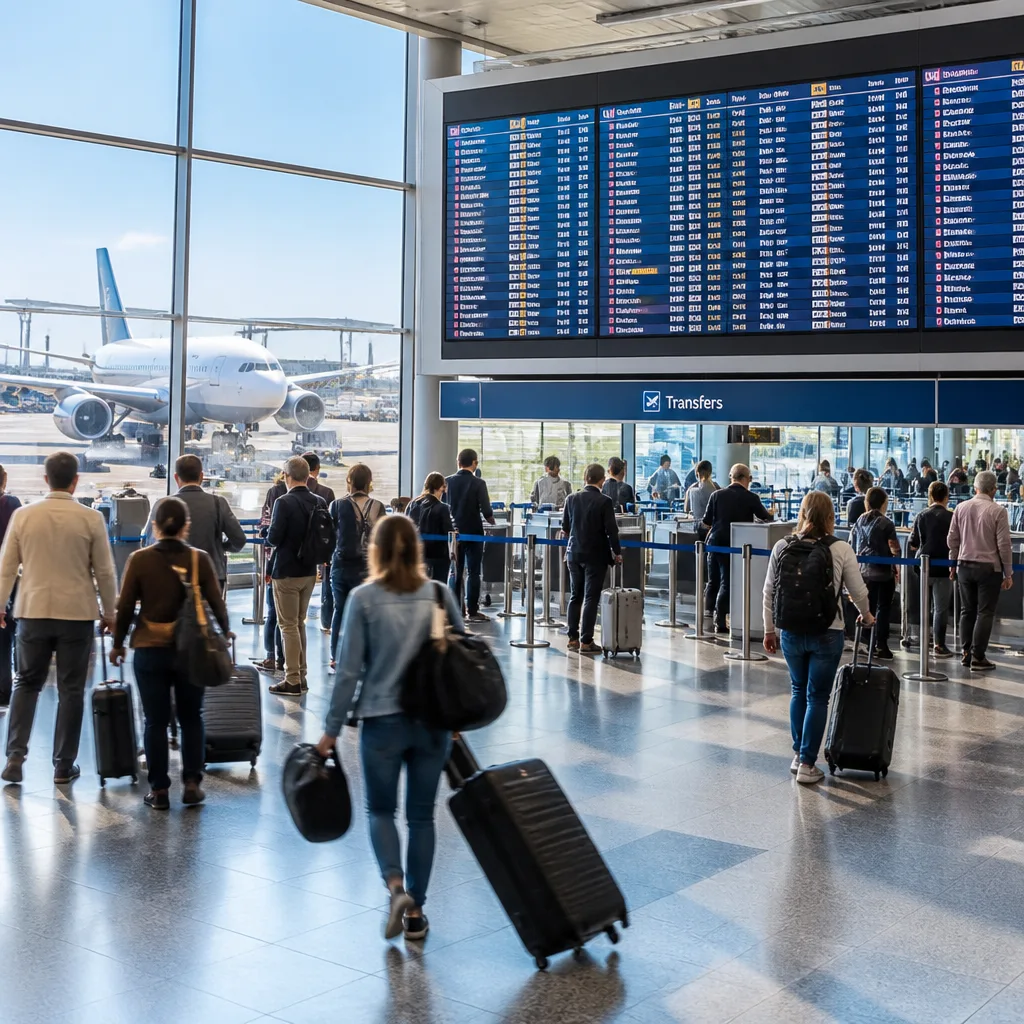
Incheon Airport in Seoul became the world’s busiest hub for international travel in the first half of 2026, displacing Dubai after more than a decade at the top, according to data published by Airports Council International (ACI).
Shift driven by regional conflict and rerouted connections
The change follows a marked decline in transfer traffic through the Middle East that began after the outbreak of the war in Iran in February. Dubai International Airport’s international passenger throughput fell from 7.4 million in February to 2.5 million in March, though it recovered partly to 4.7 million in June, the ACI figures show. By contrast, Incheon served 38.4 million international travellers in the first half of the year.
The New York Times reported that transfer traffic in the Middle East has halved since the conflict began. Much of that displaced connectivity is now moving through Asia: ACI data and industry commentary point to increased connecting flows through Incheon, especially on routes between Asia and Europe.
- Incheon: 38.4 million international travellers in H1 2026.
- Dubai: international transfer traffic plunged from 7.4 million (February) to 2.5 million (March); 4.7 million in June.
- Connecting traffic at Incheon rose in the first half of the year, with an 18% increase in passengers making a connection and a 63% rise in passengers connecting to Europe year-on-year.
What the data mean for airlines and passengers
The International Air Transport Association (IATA) reported weaker bookings for travel through the Middle East for the June–September period, while bookings in the Asia–Pacific region were up 33% year‑on‑year for the same months. Airlines and alliance partners that relied on Gulf hubs for long‑haul connections now face route adjustments, network re‑optimisation and potential commercial shifts toward Asian hubs such as Incheon.
For South African travellers and carriers, the trend could influence fare structures and flight options on routes between South Africa and Europe or Asia. Carriers that previously routed passengers via the Gulf may now seek alternative partners or increase capacity via Asian gateways, depending on demand, slot availability and commercial arrangements.
| Metric | Figure |
|---|---|
| Incheon international passengers (H1 2026) | 38.4 million |
| Dubai international passengers (February 2026) | 7.4 million |
| Dubai international passengers (March 2026) | 2.5 million |
| Dubai international passengers (June 2026) | 4.7 million |
Airport competition and passenger preferences are cyclical and responsive to geopolitics, safety perceptions and airline scheduling. In this episode, the conflict in the Middle East has created a rapid reallocation of connecting traffic, temporarily altering the established hierarchy of global hubs.
Implications and outlook
Industry watchers will monitor whether the shift is sustained or whether Gulf hubs recover as stability returns to the region. If transfers remain suppressed, the consequences include:
- longer-term network realignments by airlines and alliances;
- pressures on Gulf airports to regain market share or diversify services; and
- opportunities for Asian hubs and carriers to expand transit infrastructure and partnerships.
The data underscore how geopolitical events can swiftly alter global transport patterns. For South African travellers, the immediate impact will be felt in the choice of routings and potentially in ticket pricing as carriers and hubs adapt to the new distribution of international transfer traffic.