South Africa sits on the largest known reserves of platinum group metals (PGMs) — the raw materials that help power data centres, cloud infrastructure and artificial intelligence systems. Yet many of the communities that host those mines continue to lack the reliable internet and fibre infrastructure that would allow residents to participate in the digital economy, reporting shows.
Where the minerals are, the connectivity often is not
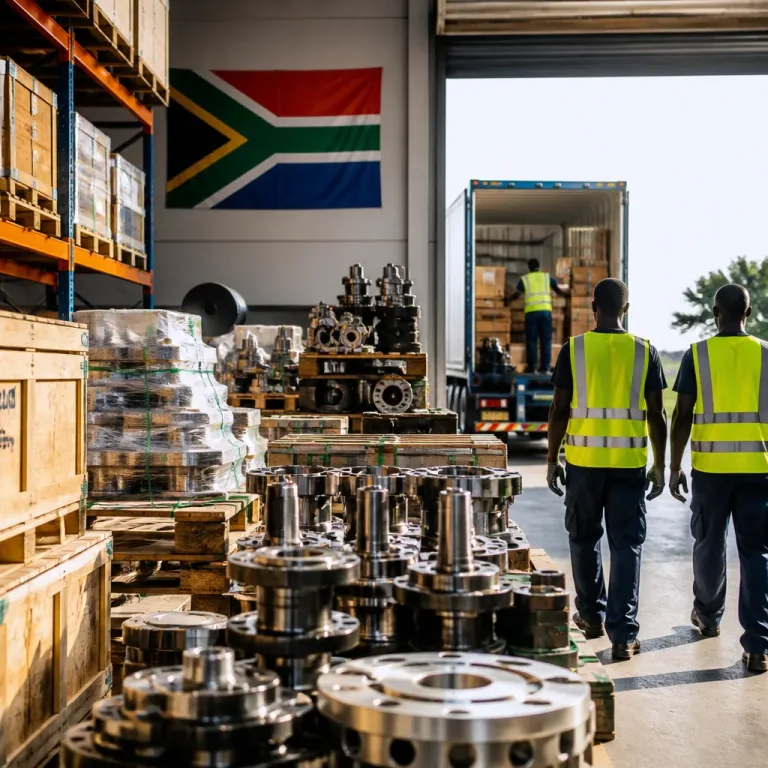
The Department of Mineral and Petroleum Resources estimates South Africa accounts for about 88% of the world’s known PGM reserves. These include key elements such as platinum, palladium, ruthenium and iridium, which have become important to the clean energy transition and to the physical systems that underpin the cloud and AI.
Yet digital infrastructure investment appears concentrated in cities that already enjoy good connectivity. Data centre capacity in South Africa has expanded rapidly: there are more than 50 data centres in operation, with a large share clustered in Johannesburg. Industry operators say their community investment tends to focus on the areas where their campuses operate rather than on remote mining towns.
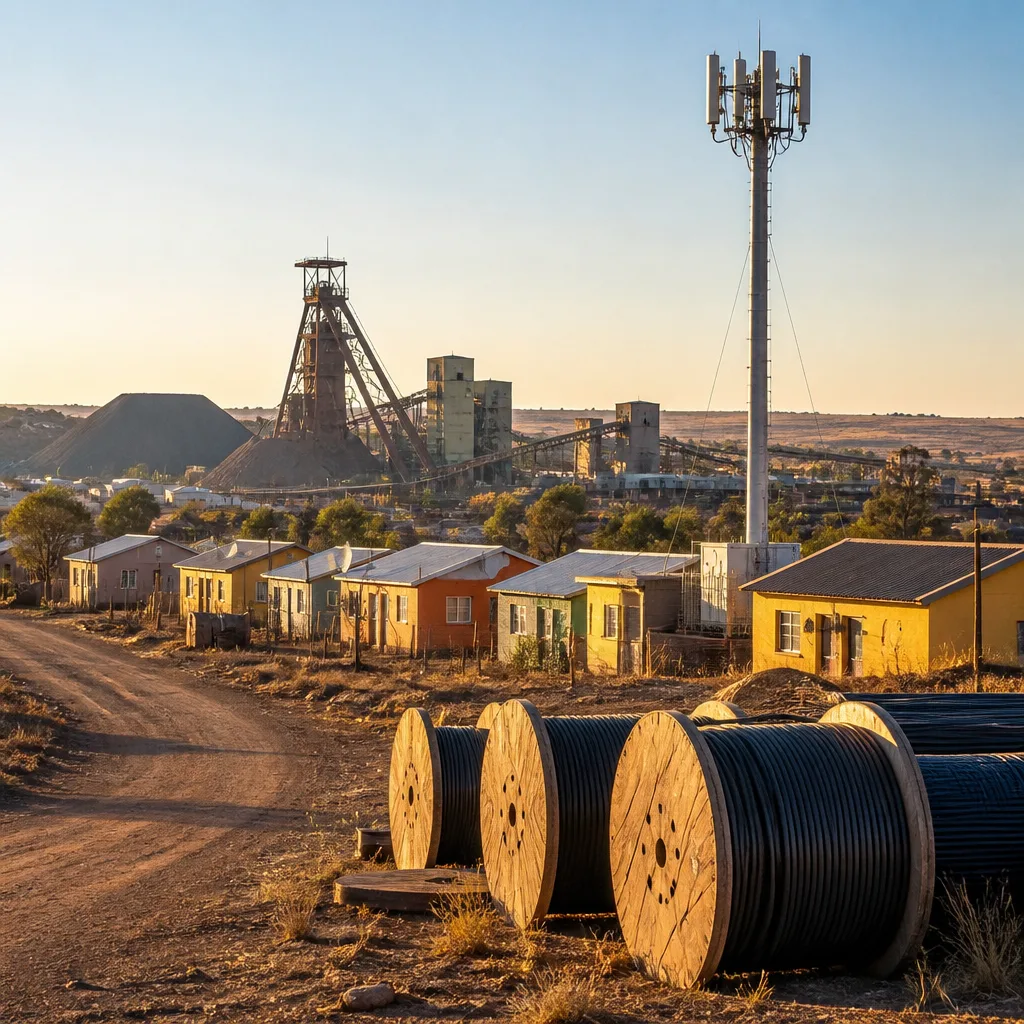
That mismatch is visible in parts of the North West province. Communities in and around Marikana and Kroondal — where PGMs are mined — largely rely on LTE mobile networks and face a limited fibre rollout, while cities such as Johannesburg, Cape Town and Durban benefit from more extensive fibre and mobile backbone infrastructure. As a result, local residents often lack the connectivity that would enable access to online job opportunities, training and services tied to the digital economy.
Investment choices and community outcomes
Data centre operators have said their community programmes are directed to the regions where their facilities operate. One example cited is a Johannesburg campus owned by Teraco, which the company’s communications division said channels community investment into the metros where it has a presence rather than mining communities in the North West.
Local development initiatives do exist: the Mineworkers Development Agency (MDA) runs an internet working space at the MDA Marikana Agri‑Hub. But such facilities do not always compensate for the broader absence of fibre and the higher bandwidth, lower-latency connections that modern digital jobs and services demand.
The unequal geography of connectivity also has environmental and economic angles. Data centres are energy-intensive and have expanded where power and network backhaul are secure. That has tended to favour urban centres over remote mining towns, even though the latter supply many of the metals that enable the global digital economy.
What this means for towns and policy
The disconnect has practical consequences. Without reliable high‑capacity internet, residents cannot easily access remote work, participate in online training for technology roles, or attract digital services and startups. For a country that exports minerals crucial to the digital transition, that gap raises questions about who benefits from those exports.
Addressing the disparity will require coordinated action across government, industry and local actors. Possible areas of focus include extending fibre networks beyond metropolitan hubs, incentivising operators to fund connectivity in mining municipalities, and aligning community investment from data centre operators with broader regional development plans.
Below is a quick reference to the PGMs central to the issue and their role in digital infrastructure:
| Mineral | Role in digital/energy systems |
|---|---|
| Platinum | Used in technologies supporting energy systems and components for data centre and network hardware |
| Palladium | Key in electronic applications and catalytic systems linked to clean energy systems |
| Ruthenium | Used in specialised electronics and high‑performance components |
| Iridium | Important for durable electronic contacts and niche technical uses |
- Production concentration: South Africa holds roughly 88% of the world’s known PGM reserves.
- Connectivity gap: Mining towns around Marikana and Kroondal are primarily served by LTE, with limited fibre rollout.
- Investment focus: Data centre community programmes are often targeted at metro locations where campuses operate.
For ordinary South Africans in mining communities, the result is a paradox: living on top of the raw materials that enable the global digital economy does not guarantee access to the digital jobs, services or infrastructure that flow from those same materials. Closing that loop will be crucial if South Africa is to ensure that the benefits of the digital transition are shared more broadly.