The United States has sanctioned International Criminal Court president Tomoko Akane, a move that the court called a "flagrant attack" on its independence and that prompted support for the ICC from Japan, the United Nations rights chief and senior European Union officials.
Sanctions and immediate effects
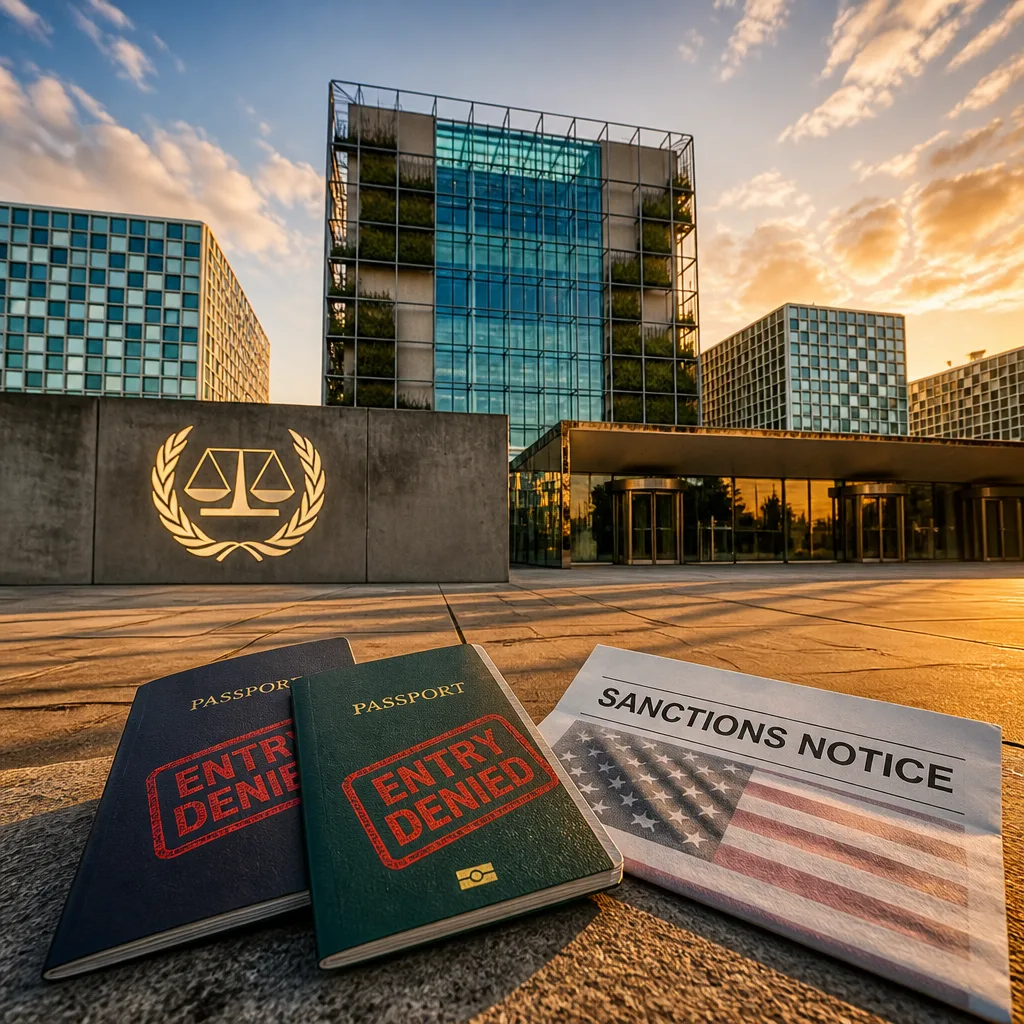
Washington announced travel and financial restrictions on Akane and trial lawyer Abdoulaye Seye of Senegal as part of a broader campaign by the US administration against what it describes as a "corrupt and fatally politicised" court. The measures bar the two from entering the United States and from conducting transactions in the US financial system.
| Subject | Restriction |
|---|---|
| Tomoko Akane | Prohibited from US entry; barred from US financial transactions |
| Abdoulaye Seye | Prohibited from US entry; barred from US financial transactions |
In a statement released on the social platform X by her publisher Bungei Shunju, Akane said she had anticipated the sanction to some extent and emphasised what she saw as the larger stakes.
“The sanction against me this time was something I had anticipated to an extent, so I’m not surprised. The important thing is not to let this be the beginning of the demise of international rule of law.”
International reactions and context
Japan — the ICC’s largest funder and a close ally of the United States — publicly objected to the sanctions, reaffirming its consistent support for the court’s efforts to prosecute the gravest crimes and to uphold international justice. The ICC itself described the US action as a direct affront to judicial independence.
Senior figures beyond Tokyo also expressed concern. The UN high commissioner for human rights, Volker Türk, and senior European Union officials threw their support behind Akane and the institution. The move follows previous US measures directed at several ICC officials, widely understood to be in reaction to the court’s investigations involving Israel, a close US partner.
US Secretary of State Marco Rubio was reported as saying — without providing examples — that the sanctioned individuals had "directly engaged in efforts by the ICC to investigate, arrest, detain, or prosecute officials whose government has not consented to ICC jurisdiction".
Why this matters for South Africa and the court
South Africa is a state party to the Rome Statute and has an active interest in the independence and effectiveness of the ICC as a last resort mechanism for prosecuting the gravest international crimes when national systems fail. The US measures raise questions about the ability of the court to operate free from political pressure and the willingness of powerful states to co-operate with, fund or otherwise support multilateral institutions.
- Independence risk: Targeting senior court officials could undermine judicial independence and deter ICC staff and judges from pursuing sensitive investigations.
- Diplomatic strain: The sanctions place US policy at odds with important ICC backers such as Japan and with statements from UN and EU officials.
- Operational impact: Restrictions on travel and finances complicate the work of individuals essential to the court’s proceedings and administration.
The ICC, established in 2002 as a permanent international tribunal, prosecutes individuals accused of genocide, crimes against humanity and war crimes when national jurisdictions are unable or unwilling to act. The dispute with the United States follows long-standing tensions: Washington never ratified the Rome Statute and has previously criticised or resisted ICC activity it deems overreaching.
For South Africa, whose foreign policy has often emphasised multilateral institutions and international justice, the episode is likely to be watched closely. Any erosion of the court’s perceived impartiality or ability to function effectively would complicate efforts by ICC states parties to secure accountability for the gravest crimes globally.
How states and international bodies respond in the coming days will determine whether the sanctions are an isolated escalation or the opening of a broader contest between a powerful non-member state and an institution whose authority depends on collective political and financial support.