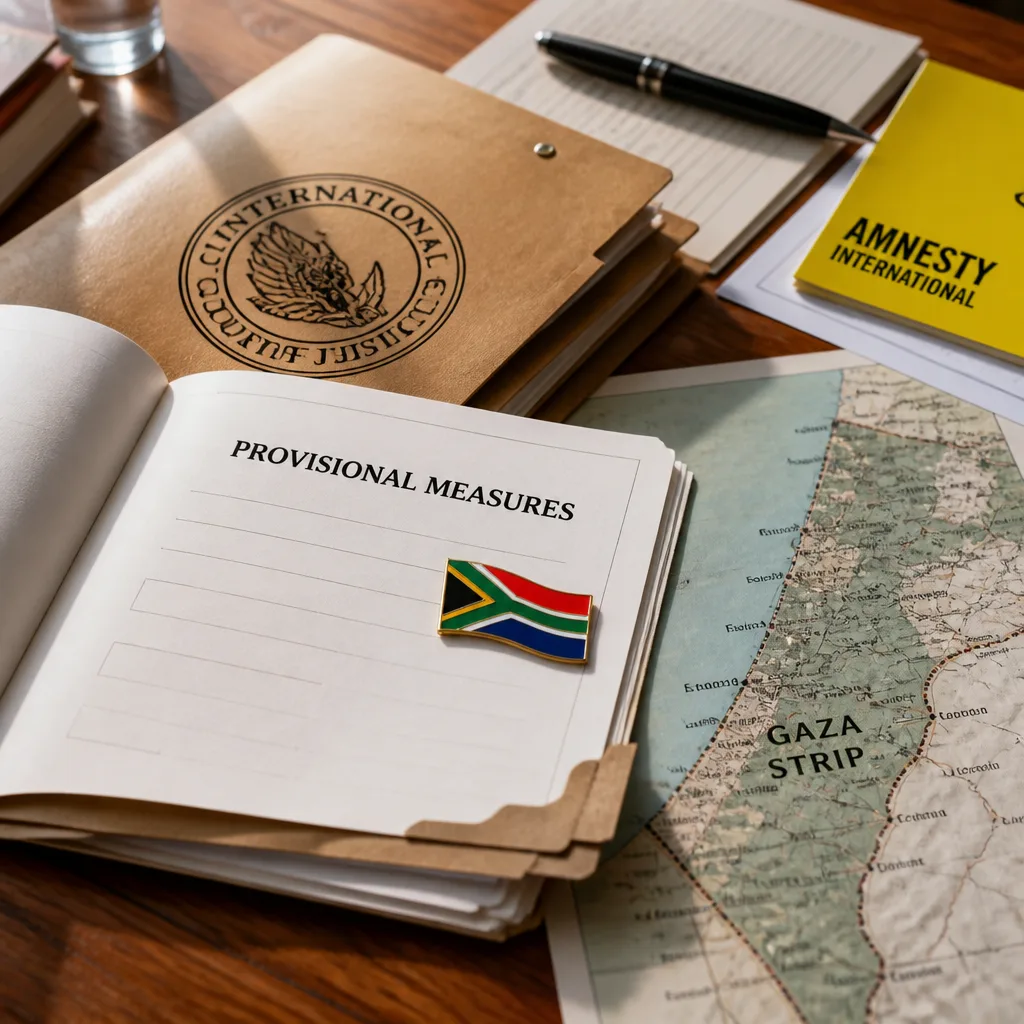
South Africa has formally told the International Court of Justice (ICJ) that Israel has not complied with legally binding provisional measures in the case about alleged genocide in the occupied Gaza Strip, and international rights group Amnesty International is calling on other states to use that submission to press Israel to implement the court’s orders.
Amnesty: submission should spur states to act
In its submission to the ICJ, the Republic of South Africa documents what it says is Israel’s failure to comply with measures the court earlier ordered. Amnesty International described those assertions as consistent with its own findings that Israeli authorities have failed to implement the measures and continue to commit what Amnesty characterises as genocide against Palestinians in Gaza.
“Since the ICJ issued its first set of provisional measures in January 2024, Israeli authorities have continued to inflict irreparable damage to the rights of Palestinians in Gaza protected under the Genocide Convention, in utter disregard of the court’s orders and its legal obligations under international law,”
The rights group added that, rather than complying, Israel is continuing actions that Amnesty alleges constitute genocide, including after the so‑called ceasefire of October 2025.
International response and accountability raised
Amnesty said South Africa’s submission stands out because many other states have not taken effective measures to enforce the ICJ’s binding orders. The organisation accused some states of enabling what it called Israel’s impunity — by failing to enforce the court’s measures, by providing diplomatic cover, or by supplying financial and material support.
The submission and Amnesty’s commentary highlight two intertwined issues:
- State compliance with ICJ orders: whether countries involved will implement the provisional measures the court issued.
- Third‑party responsibility: whether other states will take actions to pressure or withhold support from Israel to ensure compliance with international law.
Amnesty also linked the situation to broader allegations of unlawful occupation and policies it describes as apartheid, and to an ongoing campaign of forcible displacement in parts of the occupied Palestinian territory.
What South Africa’s legal action means at home and abroad
South Africa initiated the ICJ proceedings in 2023 over allegations of genocide in Gaza. The court issued provisional measures in January 2024. By submitting new evidence of non‑compliance, Pretoria seeks to keep the matter before the court and to demonstrate to the international community that the orders have not been implemented.
Legal experts say the ICJ’s provisional measures are binding on the parties. Enforcement, however, traditionally depends on political and diplomatic pressure from other states and international bodies, not on a separate enforcement mechanism of the court. Amnesty’s statement underscores that dynamic by urging third states to take steps to ensure compliance.
The submission and Amnesty’s response may intensify diplomatic debate in capitals that have so far refrained from strong public action. It could also influence discussions at multilateral fora about measures to ensure respect for the Genocide Convention and for the court’s authority.
Details still developing
Amnesty’s comments follow the filing by South Africa; the full content of the state’s submissions to the ICJ was set out in Pretoria’s legal documents. The rights group drew on the South African filing to call for a stronger international response. Further reactions from states, regional bodies or the ICJ itself were not included in Amnesty’s statement and remain pending.
South Africa’s move reinforces its long‑standing position on the Israel–Palestine dispute and its readiness to pursue remedies through international courts. How other states respond to the call for pressure and whether that will change the situation on the ground in Gaza are matters that observers say will unfold in the coming weeks and months.