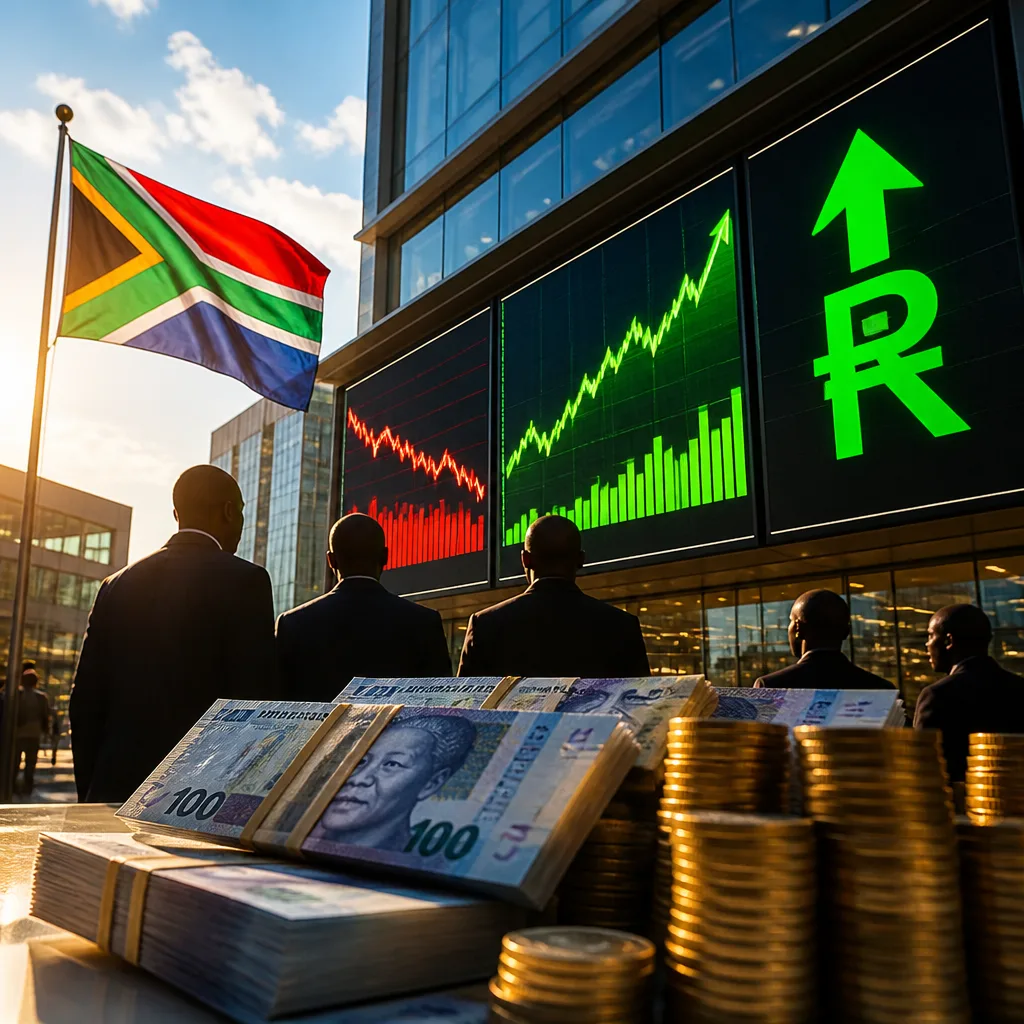
Markets are underestimating the chance that South Africa could regain an investment‑grade sovereign rating by 2028, a team at Goldman Sachs says, leaving scope for government bond yields, equities and the rand to rally if the outlook for growth and public finances improves.
Baseline projection and market gaps
In a note circulated by Goldman Sachs, economist Andrew Matheny and colleagues said their baseline expects South Africa to recover its first investment‑grade rating in 2028, though they acknowledged there are two‑sided risks around that timing. They argued market prices currently do not fully reflect this possibility.
The bank identified a number of specific market moves that could follow an upgrade:
- 10‑year local‑currency government yield could fall by more than 100 basis points to about 7.6%.
- Five‑year credit‑default swaps (CDS), recently around 116 basis points, may fall to approximately 100 basis points.
- The rand could appreciate by roughly 9% versus the US dollar based on Goldman’s fair‑value estimate, contingent on broader dollar moves.
Why a move to investment grade matters
Investment‑grade status would lower sovereign borrowing costs and could narrow the yield premium on dollar‑denominated bonds relative to US Treasuries. Goldman’s team suggested such a shift could improve returns across asset classes, with more structural upside for equities over time if macroeconomic gains persist.
They noted South Africa was downgraded to sub‑investment grade in 2017 amid slowing growth and rising public debt. The analysts said recent fiscal consolidation, improved growth indicators and a firmer policy backdrop are likely to underpin forthcoming credit upgrades.
“Our baseline is that South Africa regains its first IG rating in 2028, albeit with two‑sided risks to timing,”
The note also warned that realising upside for the rand depends in part on global dollar dynamics.
Immediate market indicators
Goldman compared current market prices to its upgrade scenario and highlighted where the largest potential moves lie. The bank pointed to a relatively larger rally seen so far in South African fixed income than in equities, implying more structural upside for stocks if macro improvements continue.
| Indicator | Recent level | Goldman projection (post‑upgrade) |
|---|---|---|
| 10‑year local‑currency yield | (implied) higher than 7.6% | ~7.6% |
| 5‑year CDS | ~116 bps | ~100 bps |
| Rand vs US dollar | (current spot) | ~9% appreciation (fair value basis) |
Risks and caveats
The analysts emphasised risks. An upgrade timeline is uncertain and depends on sustained improvements in growth and public finances. Goldman also flagged that external factors — notably the strength of the US dollar and global risk sentiment — will influence how much of the projected upside materialises.
Rating agencies currently assess South Africa at sub‑investment grade: S&P Global Ratings at BB and Moody’s at Baa2, according to the note. Goldman said further credit upgrades are likely over the next year if the fiscal and policy trajectory continues to improve.
How markets and policymakers react to any signs of an upgrade path will be watched closely. Lower borrowing costs could ease pressure on the budget, while a stronger rand would relieve inflation and import pressures — but those outcomes are conditional on the reforms and growth being durable.
This analysis frames a potential turning point for South Africa’s capital markets. It also highlights the interplay between sovereign ratings, domestic policy choices and global market conditions — and the narrow margin for disappointment if reforms falter.