More cameras, more evidence — Cape Town bets on tech to strengthen policing
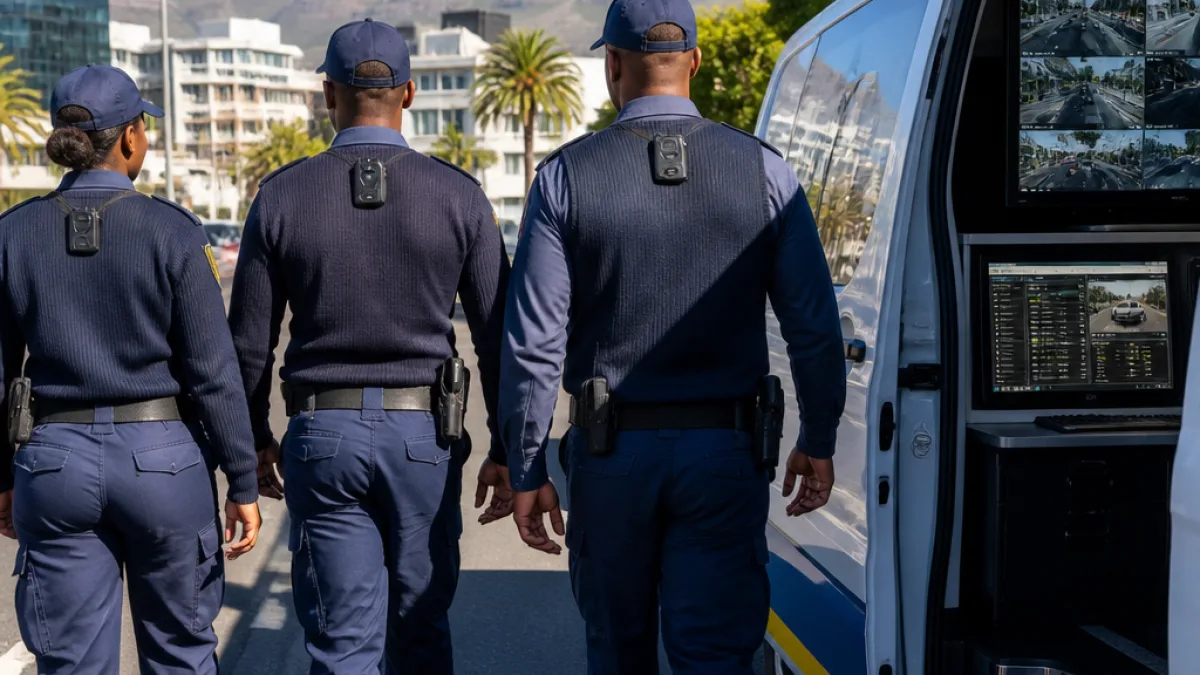
The City of Cape Town is set to increase the number of body-worn cameras (BWCs) used by metro police, law enforcement and traffic officers to 3,000, signalling a major escalation in its technology-driven approach to public safety. The move, officials say, aims to protect staff and the public, bolster evidentiary capacity and provide a live operational picture to improve decision-making.
City figures show 2,250 BWCs are currently deployed across enforcement services, with an additional 750 devices on order. The BWCs form part of a broader technology programme managed by the safety and security directorate that also includes in-vehicle cameras, automated number plate recognition (ANPR), drones and an expanding closed-circuit television (CCTV) network.
| Device | Currently deployed | Ordered / Total |
|---|---|---|
| Body-worn cameras | 2,250 | 3,000 (after 750 delivered) |
According to the City, the BWCs are producing thousands of hours of footage each month. There have been more than 450 requests for digital evidence to date. Footage has been used in internal disciplinary enquiries and shared with the South African Police Service (SAPS) for external investigations.
“The use of BWCs protects staff and the public,” said JP Smith, Cape Town’s mayoral committee member for safety and security. “More importantly, it and the other tech solutions we’ve introduced help create a real-time operational picture to improve situational awareness and inform decision-making.”
City officials highlighted practical benefits beyond investigations. During the anti-immigration protests on 30 June, officers were able to stream live body-cam footage to the operations centre, supplementing drone and CCTV feeds and providing imagery in areas without fixed cameras. The live streaming capability, the City says, improved commanders’ situational awareness as events unfolded.
What the expansion means for residents and officers
The rollout raises several immediate consequences for Cape Towners. First, wider BWC coverage should strengthen the evidentiary basis for traffic and law-enforcement actions, potentially reducing contested fines and allegations of misconduct. Second, the cameras can shield officers from false accusations while documenting encounters with the public. Third, live feeds can speed responses during large-scale incidents by giving control-room staff real-time visuals from the scene.
- Accountability: BWCs create contemporaneous records that can be used in internal reviews and criminal probes.
- Operational command: Live streaming adds a layer of situational awareness for incident management.
- Evidence requests: More than 450 requests for footage indicate active use in legal and administrative processes.
Despite the advantages, the deployment also raises questions that the City and oversight bodies must manage. Data storage, retention policies, access protocols and privacy safeguards are essential to ensure footage is handled lawfully and transparently. The source material provided by the City does not set out detailed policies on these matters, nor does it indicate how long footage will be retained or the processes for public access beyond the recorded number of evidence requests.
There are also budgetary implications. Investment in thousands of BWCs forms part of a wider tech programme involving drones, ANPR and CCTV. While proponents say the technologies improve efficiency and crime-fighting capacity, municipal finance constraints and competing service delivery priorities mean the City must demonstrate value for money and measurable outcomes.
For Cape Town residents, increased BWC coverage offers a clearer trade-off: a stronger paper trail for enforcement actions and potentially better protection for officers, set against the need for strict governance of sensitive digital records. How the City balances operational advantage with privacy and fiscal responsibility will determine whether the expanded programme delivers the public confidence it seeks to build.
The expansion to 3,000 BWCs is due to take effect once the ordered devices are delivered and commissioned. The City’s published commentary frames the rollout as one phase in an ongoing upgrade to enforcement technology intended to integrate BWCs with other surveillance and incident-management systems.