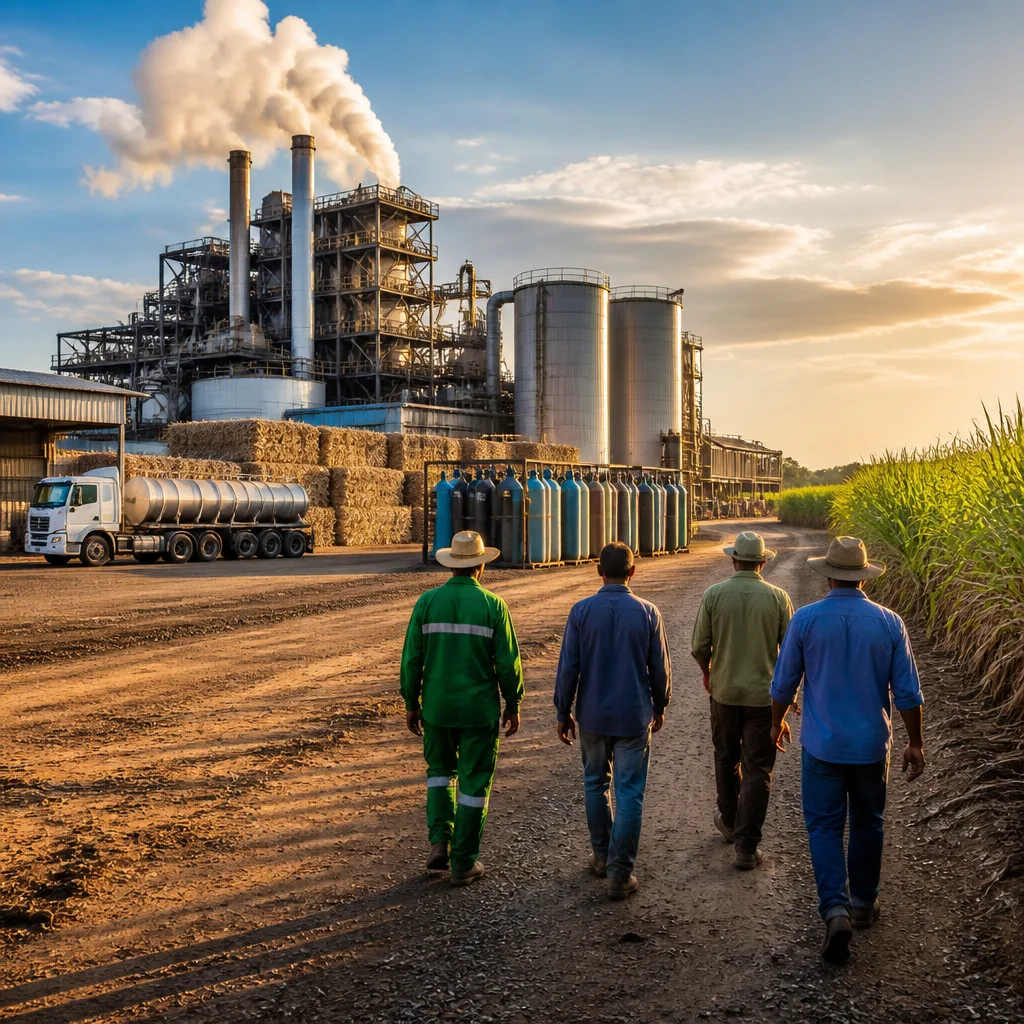
Vision Sugar, the consortium led by businessman Robert Gumede that acquired Tongaat Hulett in June, has proposed to transform the 134‑year‑old sugar business into an integrated sugar, energy and industrial gases operation, company representatives said after a briefing in Durban on Sunday.
Key elements of the plan
The scheme would repurpose sugarcane and its processing residues into three revenue streams:
- Electricity generated from bagasse — the fibrous residue left after cane crushing — to be sold to the national power utility, Eskom, and the eThekwini municipality.
- Ethanol produced from cane for blending into petrol, aligned with the national sugar master plan’s target of a 4.5% ethanol blend.
- Industrial gases derived from carbon dioxide produced during sugar processing, converted into medical oxygen and beverage‑grade gas.
Company representatives framed the strategy as a way to boost demand for cane from local growers in KwaZulu‑Natal and to expand employment tied to the business.
Grower and jobs targets; local land context
Vision Sugar intends to grow the supplier base from about 17,500 small‑scale farmers to more than 30,000. The consortium also said it aims to double the roughly 50,000 jobs currently linked to the business. The audience for the presentation — King Misuzulu kaZwelithini — was significant because much of the cane supplying Tongaat’s mills is grown on land overseen by the Ingonyama Trust, which administers a substantial portion of land in KwaZulu‑Natal.
| Item | Figure |
|---|---|
| Current growers (approx.) | 17,500 |
| Target growers | >30,000 |
| Jobs tied to Tongaat | ~50,000 (target: double) |
Market pressures and policy context
The push into energy and ethanol follows pressure on the conventional sugar business. Tongaat reported an operating loss of about $36 million last year, a shortfall the company and industry sources link to competition from cheaper Brazilian imports. More than 111,000 tonnes of imported sugar arrived in South Africa in the first three months of the 2026/27 season, according to industry figures cited by the company. The industry also argues the sugar tariff, unchanged since 2018, no longer shields domestic mills.
The commercial case for ethanol relies partly on the government’s sugar master plan, signed in April, which envisages using an annual domestic sugar surplus — estimated at roughly 300,000 tonnes — to support a 4.5% ethanol blend in petrol. That policy underpins plans by local producers to convert cane into fuel rather than sell sugar alone.
International precedent and technical model
The model proposed by Vision Sugar mirrors long‑established practice in other sugar‑producing countries. Producers in Brazil and India have for decades operated co‑generation plants that use bagasse to generate electricity, treating sugar and power as integrated outputs of the same business. In those systems, revenue from electricity and by‑product gases helps buffer sugar price volatility.
Under Vision Sugar’s outline, bagasse‑fired generation would feed both the national grid and municipal demand, while carbon dioxide from processing would be captured and upgraded for medical and beverage use. Details on planned capacity, timelines, financing and the regulatory approvals required for selling power to Eskom were not provided during the briefing and remain under development.
Implications and outstanding questions
If realised, the plan could have several national implications:
- Additional generation capacity from bagasse could contribute to localised relief for constrained municipal grids and add to Eskom’s supply, depending on dispatch and purchase agreements.
- Scaling ethanol production would support government fuel‑blending targets and reduce reliance on fossil petrol components, subject to refinery and distribution arrangements.
- Expanding the grower base on land administered by the Ingonyama Trust raises questions about land access, contract farming arrangements and benefit sharing for smallholders.
Company representatives presented the plan to the Zulu monarch to highlight those land and community linkages. Several technical, regulatory and commercial details remain to be clarified, including investments required, timelines and whether tariffs or other trade measures will be adjusted to protect domestic milling.
This account is based on the presentation reported after the Durban meeting. Further details and formal filings by Vision Sugar or Tongaat Hulett will be published when available.