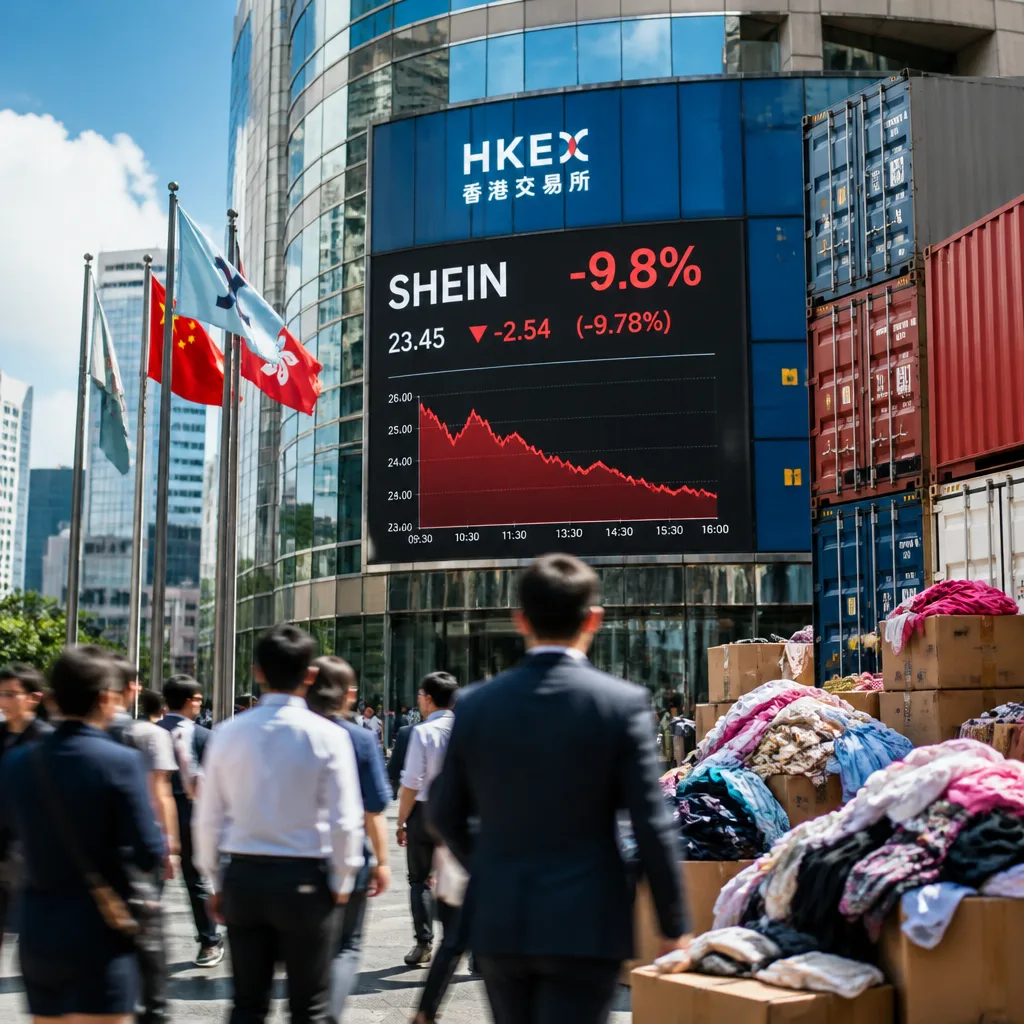
Shares in fast-fashion retailer Shein slipped by almost 10% in their long-anticipated Hong Kong market debut, signalling a cautious reception from investors as the company listed after earlier failed attempts in the United States and the United Kingdom.
What happened on listing day
Shein priced its shares at HK$48.56 each ahead of the listing and raised HK$13.6 billion in the initial sale, a figure that was reported as equivalent to about US$1.7 billion. Using a working benchmark of US$1 = R18, that equates to roughly R30.6 billion raised. The offering gave the company a market valuation of US$26.3 billion, or about R473.4 billion on the same rate.
In early trading the stock fell to around HK$43.90, a decline approaching 10% from the issue price. The muted debut puts the listing among the largest new share sales in Hong Kong this year but comes at a delicate moment for companies in the fast-fashion segment.
"Investors have learned to be sceptical," said Louise Deglise-Favre of research firm GlobalData, reflecting broader doubts about the sector's growth and sustainability.
Why investors are cautious
Market caution follows a string of concerns that have dogged Shein: allegations over labour practices, environmental impact, and intensified regulatory pressure on cheap imported goods in the US and European Union. The company — founded in China and now headquartered in Singapore — reported 281 million active customers and more than one billion orders in the year to the end of March 2026 in filings ahead of the listing.
Those scale metrics underscore Shein’s global reach, with sales across more than 150 countries. Yet the firm's past private valuations approached US$100 billion — roughly R1.8 trillion on the US$1 = R18 peg — meaning the listing values the company at about a quarter of its earlier peak private valuation.
Implications for retailers and consumers
For South African consumers and retailers the listing is a reminder of the competitive pressure from digitally native, low-cost global players. Cheaper imports can ease price pressure for households but also squeeze local apparel manufacturers and retailers, potentially affecting jobs in the textile and clothing value chain.
Investors will be watching whether Shein can fend off rivals, respond to regulatory tightening in major markets, and materially address sustainability and labour concerns — factors that could influence its ability to grow revenue and margins over time.
- Raised: HK$13.6 billion (about US$1.7 billion; ~R30.6 billion)
- Issue price: HK$48.56 per share
- Early trading: ~HK$43.90 per share (≈ down ~10%)
- Market valuation at listing: US$26.3 billion (≈R473.4 billion)
Numbers at a glance
| Metric | Figure |
|---|---|
| Issue price | HK$48.56 |
| Funds raised | HK$13.6 billion (about US$1.7 billion; ~R30.6 billion) |
| Market valuation | US$26.3 billion (~R473.4 billion) |
| Active customers (year to March 2026) | 281 million |
| Total orders (year to March 2026) | Over one billion |
The listing also acts as a barometer for investor appetite for e-commerce and fast-fashion names. Analysts say Shein’s standalone listing provides a rare opportunity to value a pure-play e-commerce-fast-fashion operator, but the reception shows investors are weighing business fundamentals against reputational and regulatory risks.
For South Africans, the event underlines two practical points: global competition can keep consumer prices low, but it also intensifies pressure on domestic manufacturing and retail employment. Policymakers and industry players will likely watch how Shein adapts to regulatory demands and shifting consumer preferences — developments that could filter through to import patterns, retail margins and jobs in South Africa.
WE NEWS does not provide financial advice. Investors and consumers should consult licensed advisers for decisions that affect their financial position.