Nationwide increases to petrol, diesel, paraffin and LP gas from 2 September
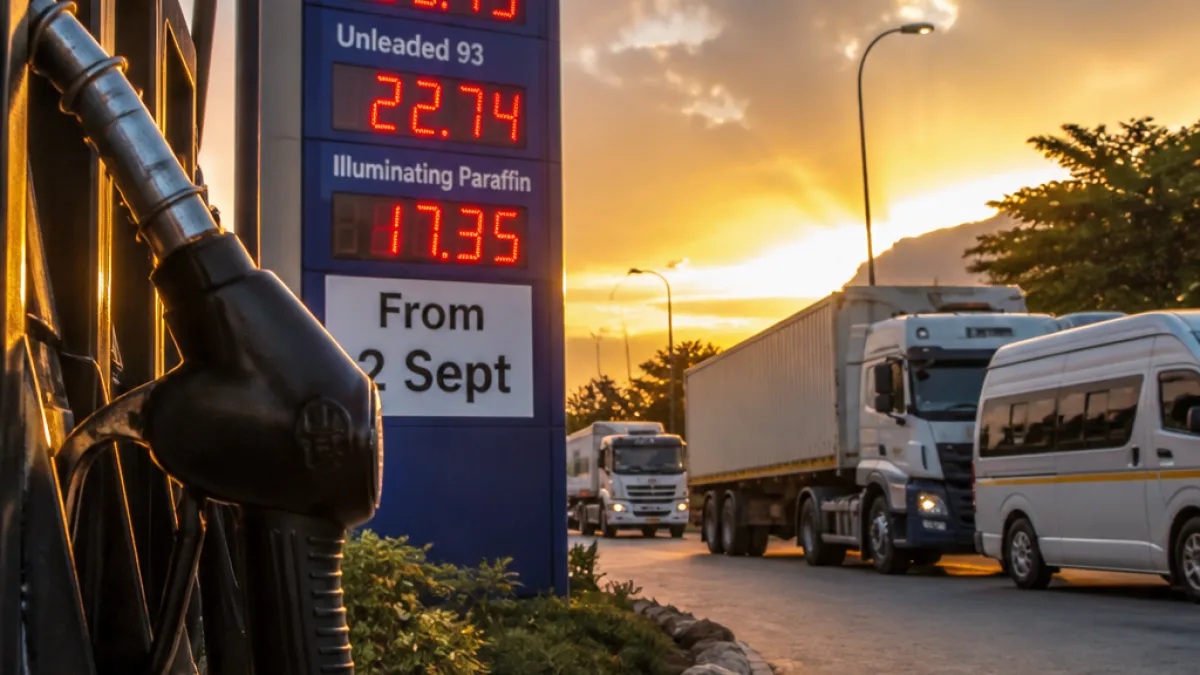
The Department of Mineral Resources and Energy (DMRE) has confirmed that fuel prices will rise across the board on 2 September 2026, with the heaviest impact falling on diesel. Both 93-octane and 95-octane petrol will increase by R1.34 per litre, while illuminating paraffin and liquefied petroleum (LP) gas will also become more expensive.
Diesel users will be hardest hit: the DMRE set an increase of R2.93 per litre for diesel with 0.05% (500ppm) sulphur content and R3.15 per litre for the cleaner 0.005% (50ppm) grade. Illuminating paraffin will rise by R2.84 per litre, and LP gas will climb by R0.79 per kilogramme nationwide.
What this means for Mpumalanga households and businesses
The immediate effect will be felt at the bowser, but the consequences extend further. Higher diesel prices typically push up costs for freight and public transport, which can feed into the prices of groceries, building materials and other goods that rely on road haulage. Small businesses that operate fleets, taxi associations and agricultural producers are likely to see tighter margins.
For residents who depend on private cars and taxis to reach work or access services, the fuel hike will add pressure to monthly household budgets already stretched by living costs. Tourism operators in Mpumalanga — including game lodges and tour companies that rely on vehicle travel between attractions such as the Kruger National Park and Panorama Route — may need to re-cost tours or pass on some increases to visitors.
How much extra will you pay? — table of announced changes
| Fuel type | Increase |
|---|---|
| 93-octane petrol | R1.34/litre |
| 95-octane petrol | R1.34/litre |
| Diesel (0.05% / 500ppm) | R2.93/litre |
| Diesel (0.005% / 50ppm) | R3.15/litre |
| Illuminating paraffin | R2.84/litre |
| LP gas | R0.79/kg |
Practical steps for motorists and managers
Drivers and fleet managers can take several measures to blunt some of the short-term effects of this adjustment:
- Plan journeys to reduce unnecessary mileage and combine errands.
- Ensure vehicles are correctly maintained and tyres are properly inflated to improve fuel economy.
- Consider shifting non-essential deliveries to less busy periods to avoid congestion-related fuel use.
- Businesses that contract transport should review fuel clauses in agreements and discuss temporary adjustments with suppliers.
Why prices change monthly
Fuel price adjustments are calculated monthly and reflect international oil markets, the rand/us dollar exchange rate, and various taxes and levies. Movements at the global level and currency shifts are passed through to domestic prices during the scheduled monthly announcement, which is why short-term volatility in international markets can translate into sudden changes at the pump.
Where to get official information
Motorists looking for the full breakdown of retail prices by province and detailed explanations of the components that make up the final pump price can consult the DMRE website or the monthly fuel-pricing circular released by the National Department of Energy (where applicable). Retail forecourts and major fuel brands also publish updated retail prices following the DMRE announcement.
For residents of Mpumalanga, careful budgeting and small efficiency measures can help absorb some of the immediate burden while businesses reassess operating costs. The monthly price-setting process means motorists should check for further adjustments at the start of each month.
Reporting from Mbombela, the rise underscores the sensitivity of local living costs to global market shifts and currency movements.