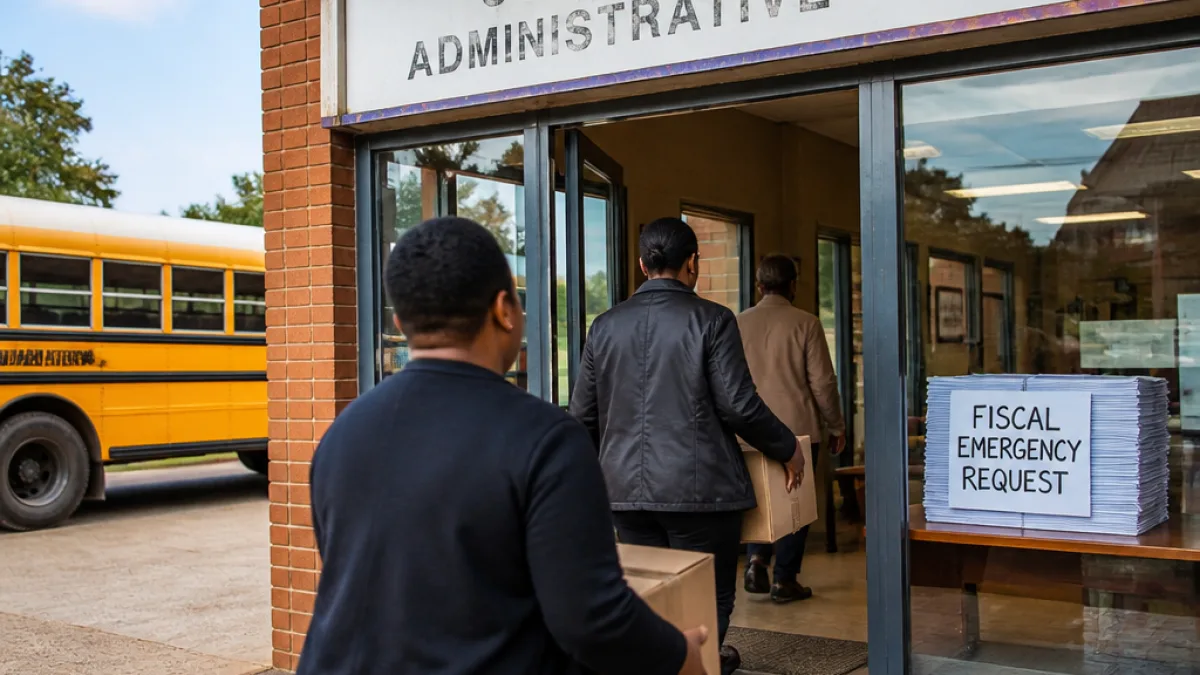
The Barberton School District in Ohio has formally asked the state to declare a fiscal emergency, saying it may run out of money before the end of the school year despite earlier budget reductions. The request came after the district implemented significant cuts, including eliminating about 70 teacher or teacher's‑aide positions and reductions the district describes as approximately $7 million.
What the district says prompted the request
Superintendent Jason Ondrus told the school board that a combination of changing school funding formulas, variations in property tax revenue and inaccurate prior assumptions about revenues and spending had created a cash shortfall that local measures alone could not resolve. He said the district needs outside help to "get through this process."
"Ultimately, we need assistance to get through this process," Ondrus said.
If the Ohio Department of Education approves the fiscal‑emergency designation, the district would gain access to a state solvency fund. That money would be provided as a loan that the district would be required to repay over several years, and it would prompt the appointment of a state oversight commission with the authority to assume duties normally carried out by the elected school board.
Concerns about staffing and services
Teachers' representatives and community members responded with concern. Krista McCoy, president of the Barberton Education Association, said the move was "deeply concerning," warning that after deep staff cuts earlier in the year, further job losses were now possible. McCoy said reduced staffing not only affects livelihoods but also weakens the district's ability to address students' academic, emotional and social needs.
Long‑time resident and former teacher Lori Lackney described the request as a difficult choice: while a state intervention might provide short‑term solvency, it could also reduce local control over schooling.
What fiscal emergency means
Fiscal emergency is the most severe form of state oversight for a school district. Among its consequences are:
- Access to a state solvency fund (a loan to restore short‑term liquidity);
- Appointment of a state oversight commission which can assume board responsibilities; and
- Repayment obligations over multiple years, which can shape future budgeting decisions.
| Item | Reported detail |
|---|---|
| Staff reductions | About 70 teacher or teacher's‑aide positions |
| Budget cuts | Approximately $7 million |
| Possible state action | State solvency loan and oversight commission |
School authorities characterised the request as a last resort after local steps did not restore balance. Ondrus described the oversight commission the state would appoint as one he understood to be "reflective of our community as well as the state of Ohio."
Why this matters to Barberton residents here
Although this Barberton is in the United States, the story carries practical lessons for local governments and provincial education planners in Mpumalanga. It underlines how:
- changes in funding formulas and the property tax base can rapidly erode a school's operating budget;
- short‑term staffing cuts can create longer‑term risks to learner support and curriculum delivery; and
- state intervention mechanisms are available to restore solvency but carry trade‑offs between financial stabilisation and local oversight.
For communities that depend on public schooling for both education and local employment, leaders must weigh the immediate fiscal relief of external loans against the potential erosion of local decision‑making and services. The Barberton case in Ohio serves as a cautionary example: budget assumptions must be continuously reviewed and contingency options explored well before a crisis point.
Local councillors, school governing bodies and provincial officials in Mpumalanga who monitor school finance may find the Ohio experience useful as they consider resilience measures — from more conservative budgeting and improved revenue forecasting to community engagement strategies that protect core learner support services during hard financial choices.
For now, the Barberton School District awaits the state's decision on whether to declare a fiscal emergency and what form state assistance and oversight will take.