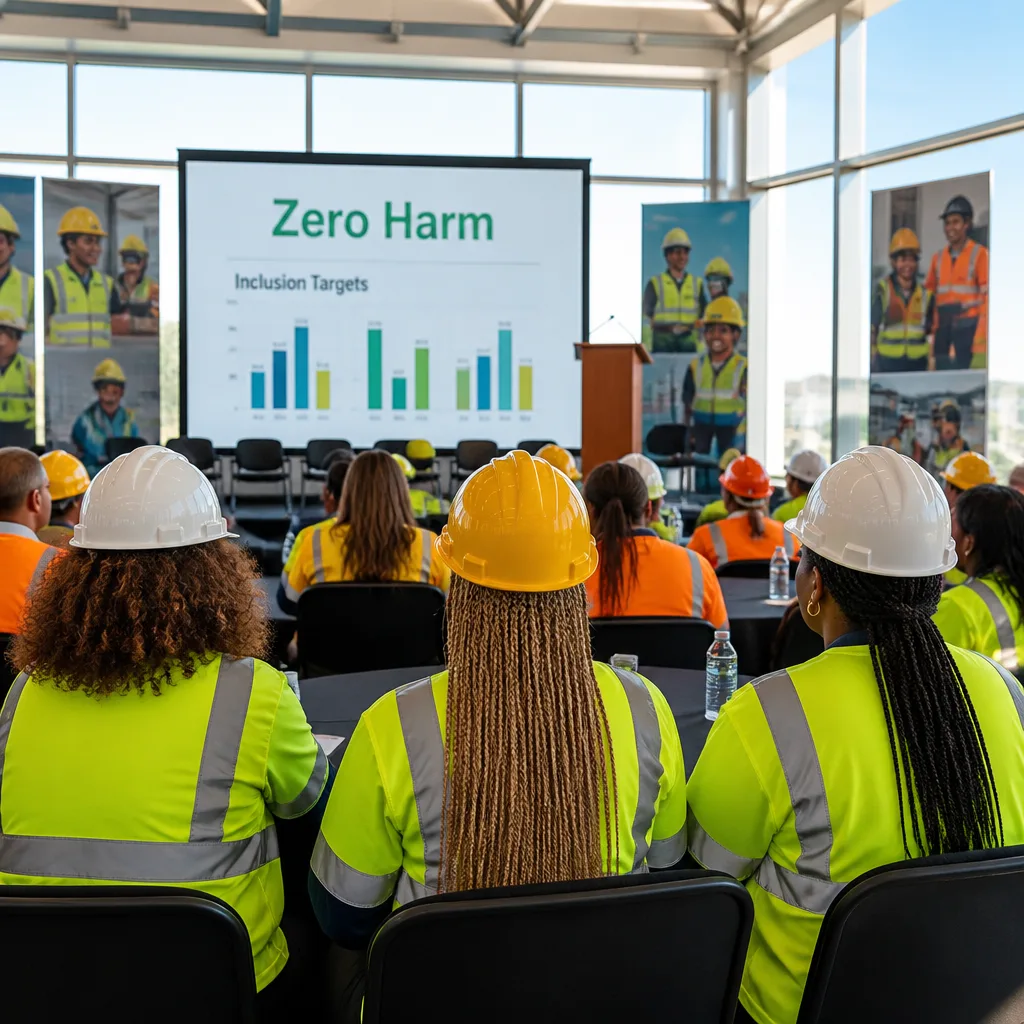
The mining industry’s long-standing commitment to safety — encapsulated by the ambition of “zero harm” — must now be matched by a concerted drive to ensure women can work, lead and progress without fear or exclusion, delegates at the third annual Women in Mining South Africa (WiMSA) symposium said.
Safety as an industry hallmark
The symposium emphasised that safety in mining is not an add-on but the organising principle of operations. Risk assessment, planning, execution and review are all shaped by the pursuit of zero harm, which the conference described as
“the conviction that every incident is preventable, every risk needs attention, and every person should return home safely.”
Those words underline a reality for the sector: safety culture is often the clearest example of where sustained leadership, investment and accountability produce measurable change. The WiMSA discussions highlighted how firms have institutionalised safety through practices commonly referred to in the industry as visible felt leadership — leaders who are physically present on site, engage with employees and demonstrate that safety is personal.
From safety to inclusion
Speakers at the symposium, reported by the original coverage, argued that the same intensity and rigour applied to safety must also be applied to workplace inclusion. The mining sector’s historical safety gains show what is possible when an industry treats a problem as a shared priority; delegates said that a comparable, intentional focus is required to remove barriers that prevent women from participating fully.
Key themes raised at the event included:
- Leadership presence: translating visible felt leadership from safety to gender equity so managers and executives regularly engage with women on site.
- Psychological safety: creating environments where women feel able to speak up about hazards, harassment or career barriers without reprisal.
- Career pathways: ensuring recruitment, training and promotion processes actively support women’s advancement into technical and leadership roles.
Mpumi Sithole, identified in the reporting as executive head of corporate affairs at Thungela, contributed to the symposium, which focused on both the growing role of women and the practical steps needed to help them build careers with confidence.
What this means for households and jobs
Mining remains a pillar of South Africa’s employment landscape and regional economies. While the symposium coverage did not include new statistical releases, the policy and cultural shifts discussed matter for household budgets and job quality. More inclusive workplaces can increase labour force participation among women, support career progression and stabilise incomes in mining communities — outcomes that feed through to spending in local towns, school fees, transport and housing costs.
At a company level, extending the discipline of safety culture to inclusion can reduce hidden costs associated with staff turnover, absenteeism and underutilised talent. Where leaders actively model inclusive behaviour, firms are more likely to retain skilled workers and reduce recruitment and training bills, a connection delegates drew repeatedly during the sessions.
Next steps for the industry
Delegates argued that achieving parity between safety practices and gender inclusion requires measurable targets, transparent reporting and accountability mechanisms. The WiMSA symposium framed the challenge as operational rather than purely cultural: if risk registers, incident investigations and toolbox talks changed how a mine operated, then recruitment pipelines, mentoring programmes and grievance channels should be given the same institutional weight.
| Area | Safety Practice | Comparable Inclusion Action |
|---|---|---|
| Leadership | Visible site engagement | Regular mentoring and sponsor programmes |
| Risk management | Risk registers and audits | Gender-disaggregated data and inclusion audits |
| Accountability | Incident investigations and corrective actions | Transparent metrics and remedial actions for discrimination/harassment |
The conversation at WiMSA is an important reminder that technical fixes and cultural change must proceed together. For an industry that has dramatically reduced fatalities and injuries through disciplined, measurable practice, the next frontier is applying the same methods to ensure women can both enter and thrive in mining careers.
Implementing those measures will not only meet social and legal expectations; it will also have economic consequences for households in mining-dependent towns. Greater inclusion can broaden the tax base, strengthen consumer demand and make the industry more resilient to skills shortages.
The symposium’s message was clear: the sector’s historic commitment to making mining safer should now be matched by an equally relentless commitment to making it more inclusive.