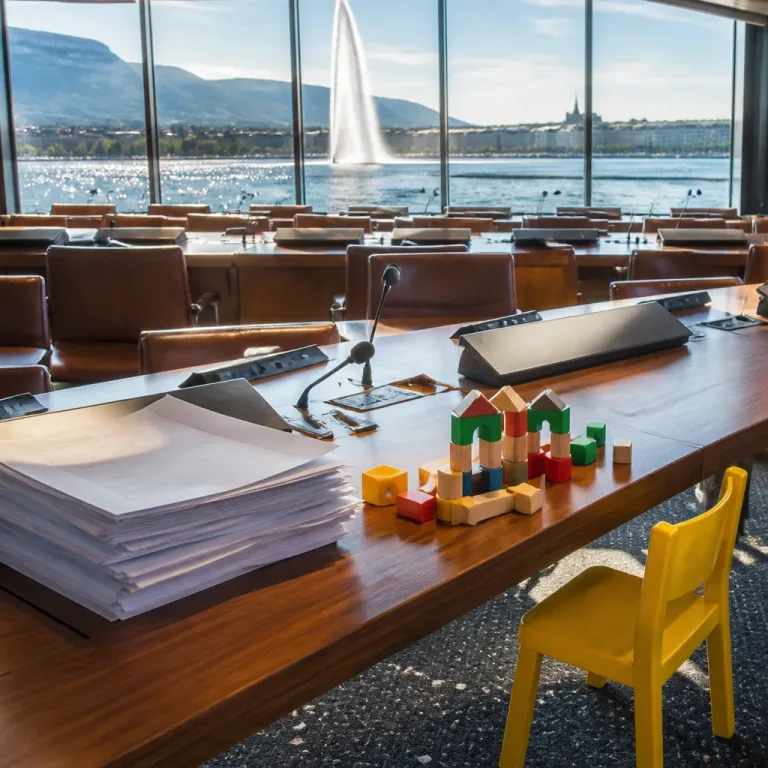
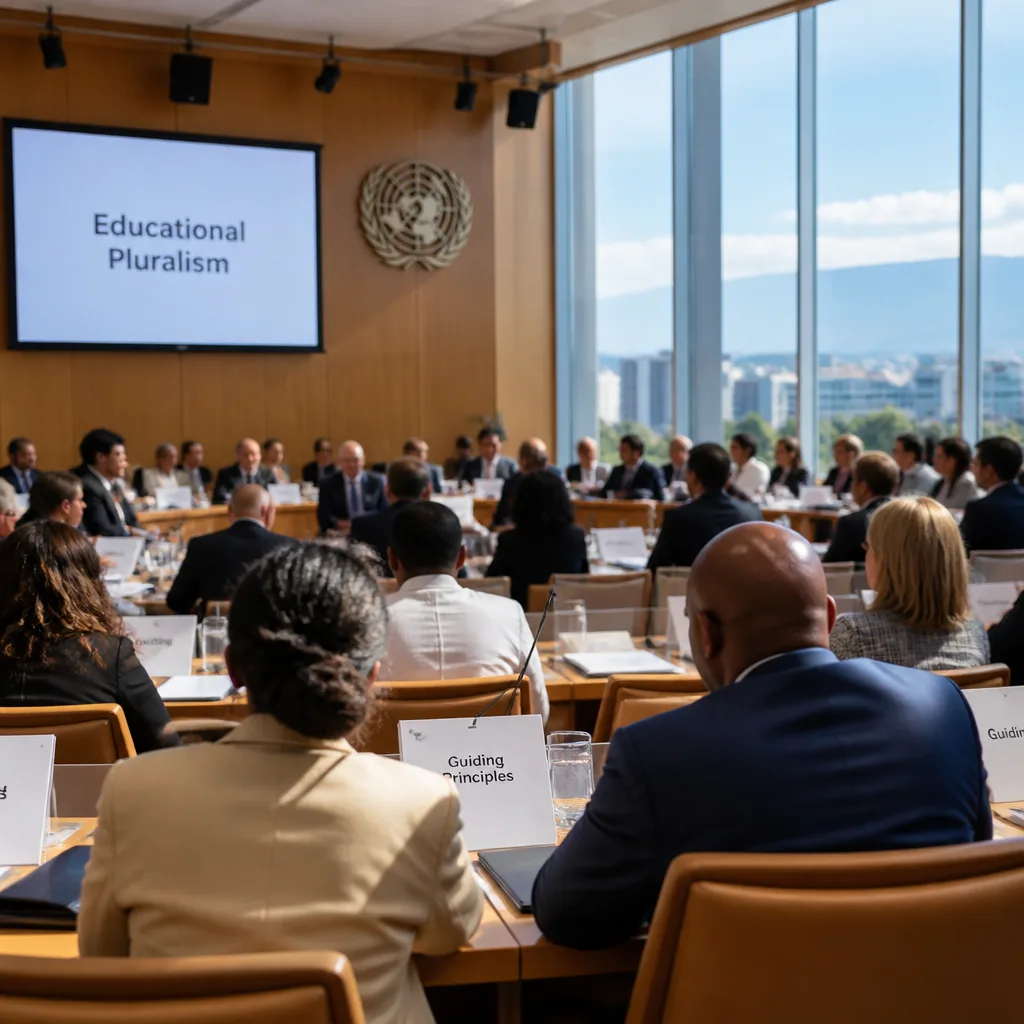
The United Nations has begun a series of consultations on proposed Guiding Principles on Educational Pluralism, with the first open meeting held in Geneva. The consultation brought together international experts to scrutinise a draft framework that seeks to help governments support a mix of public, private and faith-based schools while ensuring every child's right to education, the University of Notre Dame reported on 31 August 2026.
What the consultation aims to achieve
The initiative aims to create a shared set of norms for governments that both fund and regulate a plurality of school providers. According to the Notre Dame Law School report, the principles are intended to guide states in balancing public responsibility for education with the reality that many countries rely on a mix of providers — particularly in parts of the global South.
“By educational pluralism, we mean that the government funds schools and it regulates schools and it operates schools, but it doesn't just exclusively fund the schools that it operates,”
The quote is attributed to Professor Nicole Stelle Garnett of Notre Dame Law School, who serves on the steering committee for the project and attended the Geneva consultation.
Participants and perspectives
The Geneva meeting included a cross-section of actors from the UN system and academia. Notre Dame reported that two United Nations Special Rapporteurs — Farida Shaheed (Special Rapporteur on the Right to Education) and Alexandra Xanthaki (Special Rapporteur on Cultural Rights) — joined the consultation alongside scholars and other experts.
Professor Garnett emphasised that the debate has heightened relevance where parental choice programmes and privately delivered schooling are expanding. She noted particular concern for countries where faith-based or private schools are substantial providers of basic education to the poorest children.
- Purpose: gather feedback on proposed guiding principles before finalisation
- Focus: how governments can support plurality while safeguarding the right to education
- Context: relevance to expansion of parental choice programmes and reliance on non-state providers in the global South
| Participant | Role |
|---|---|
| Nicole Stelle Garnett | Steering committee member, Notre Dame Law School |
| Farida Shaheed | UN Special Rapporteur on the Right to Education |
| Alexandra Xanthaki | UN Special Rapporteur on Cultural Rights |
Why this matters for South Africa and similar contexts
Although the consultation is international in scope, the underlying questions are directly relevant for countries where non-state actors form an important part of the schooling landscape. In contexts where faith-based and private schools educate a significant share of learners, the draft principles speak to practical challenges: how to structure public funding, maintain regulatory safeguards, protect cultural rights and ensure that the most marginalised children remain in school.
Professor Garnett highlighted a direct risk: withdrawing funding from high-performing faith-based providers could close schools that serve poor communities, removing vital education access for children who depend on them. The consultation therefore seeks to sketch policy tools that protect both plurality and access.
The Geneva meeting was the first in a planned series of consultations. According to Notre Dame, these sessions will inform further revision of the draft principles prior to finalisation. For education systems and policymakers, the process offers a chance to shape norms that will affect regulation, funding arrangements and the rights of learners in a plural provision environment.
For parents, teachers and school leaders, the outcome could influence how government support is distributed and how accountability mechanisms are designed — with direct consequences for classroom resourcing and for children who rely on non-state schools for their education.