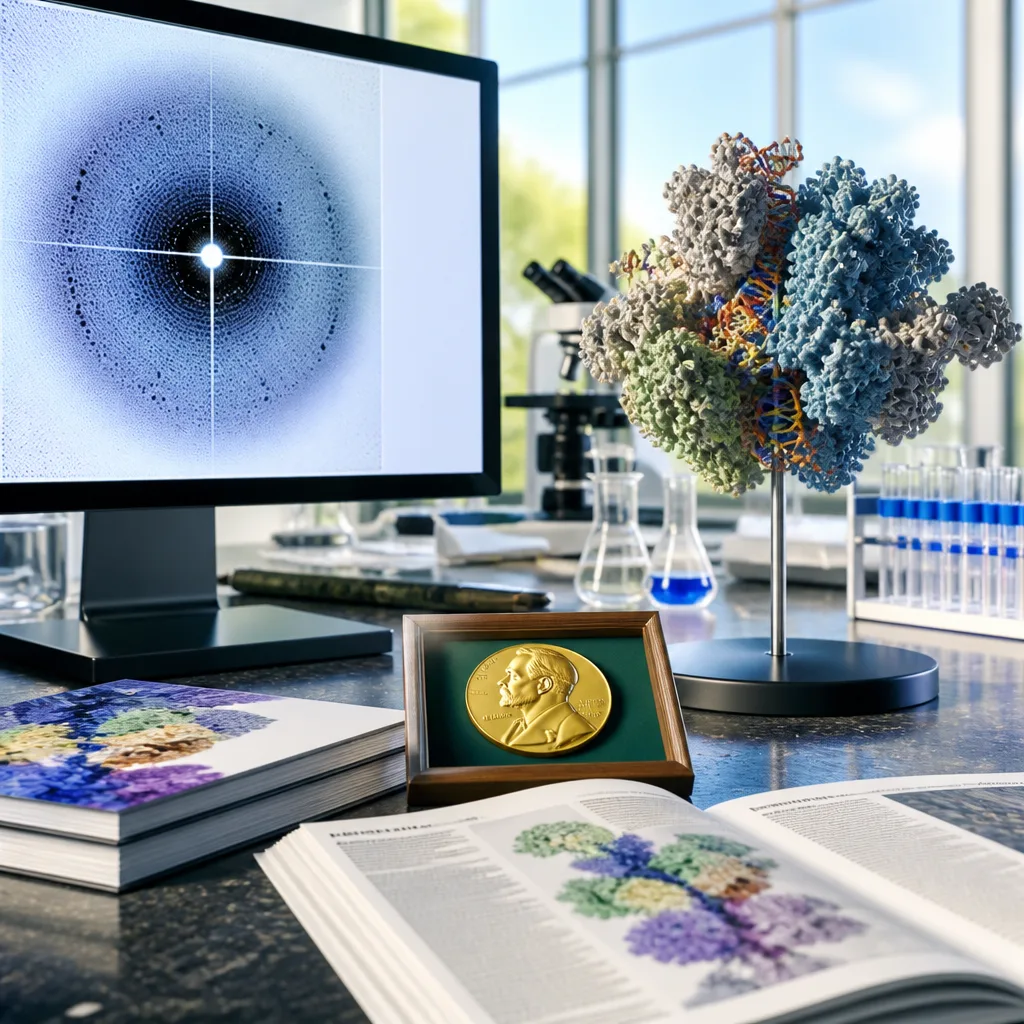
Ada Yonath, the Israeli crystallographer honoured with the 2009 Nobel Prize in Chemistry, has died at the age of 87, the Weizmann Institute announced on Monday. Her structural studies of the ribosome — the cellular machine that builds proteins — are widely credited with opening new avenues in the design of antibiotics and in efforts to curb antibiotic resistance.
From modest beginnings to a laboratory that changed biology
Born in Jerusalem in 1939, Yonath grew up in the Geula neighbourhood and began working in her early teens to help her family. She completed undergraduate studies in chemistry and a master’s in biochemistry at Hebrew University, then earned a PhD in X‑ray crystallography at the Weizmann Institute in 1968. She undertook postdoctoral work at Carnegie Mellon University and the Massachusetts Institute of Technology before returning to Israel in the 1970s.
At Weizmann she established Israel’s first protein crystallography laboratory and became the first scientist to obtain crystals of the ribosome — a milestone that allowed researchers to map the ribosome’s atomic structure. Over decades she continued work on ribosome architecture and function while serving in senior research and administrative roles, including as director of the Mazer Centre for Structural Biology.
“Her work helped pave the way for the development of more advanced antibiotics and the fight against antibiotic‑resistant bacteria – one of the most pressing medical challenges of the 21st century,” the Weizmann Institute said.
Recognition and scientific impact
Yonath received numerous honours for her contributions. She was the first Israeli woman to receive a Nobel Prize and, according to the Institute, was the first woman in 45 years to win the Nobel Prize for Chemistry. Her work on the ribosome provided a structural framework that has informed how researchers understand antibiotic binding sites and mechanisms of resistance — essential knowledge for designing new treatments as resistance spreads globally.
Her career combined method development in crystallography with persistent attempts to tackle a biological problem that many thought intractable. Producing ribosome crystals was technically demanding because ribosomes are large, flexible complexes; crystallography requires orderly, repeating arrangements of molecules. Yonath’s success made high‑resolution views of the ribosome possible and helped transform molecular biology and drug discovery.
- Born: 1939, Jerusalem
- PhD: X‑ray crystallography, Weizmann Institute, 1968
- Key achievement: First to produce ribosome crystals; structural studies that advanced antibiotic research
- Major honours: Nobel Prize in Chemistry (2009); Israel Prize (date not specified in the announcement)
| Year | Milestone |
|---|---|
| 1939 | Born in Jerusalem |
| 1968 | PhD in X‑ray crystallography, Weizmann Institute |
| 1970s | Founded Israel's first protein crystallography lab; returned to Weizmann |
| 2009 | Awarded the Nobel Prize in Chemistry |
Why the ribosome mattered
The ribosome reads genetic instructions and assembles amino acids into proteins. Many antibiotics work by binding to bacterial ribosomes and blocking protein production. Knowing the ribosome’s three‑dimensional structure helps scientists see exactly where and how drugs attach, and how mutations or chemical changes in bacteria can prevent drugs from binding effectively.
Yonath’s structures therefore supplied a basis for rational drug design — the process of deliberately crafting molecules to fit biological targets — rather than relying solely on trial and error. As the global health community confronts rising levels of antimicrobial resistance, structural knowledge of bacterial machinery remains central to discovering therapies that can outpace evolved resistance mechanisms.
The Weizmann Institute’s statement highlighted the practical consequences of Yonath’s science for “the development of more advanced antibiotics.” Her passing closes a long chapter in the effort to merge sophisticated physical methods with urgent clinical problems.
She leaves behind a scientific legacy that reshaped structural biology and continues to influence research into antibiotics and bacterial resistance worldwide.