A coordinated European research effort is developing an automated bioreactor platform to produce large quantities of pluripotent stem cells (PSCs) in three‑dimensional suspension culture, with the aim of making cell manufacturing more reliable, efficient and affordable for clinical and industrial applications.
What the project is building
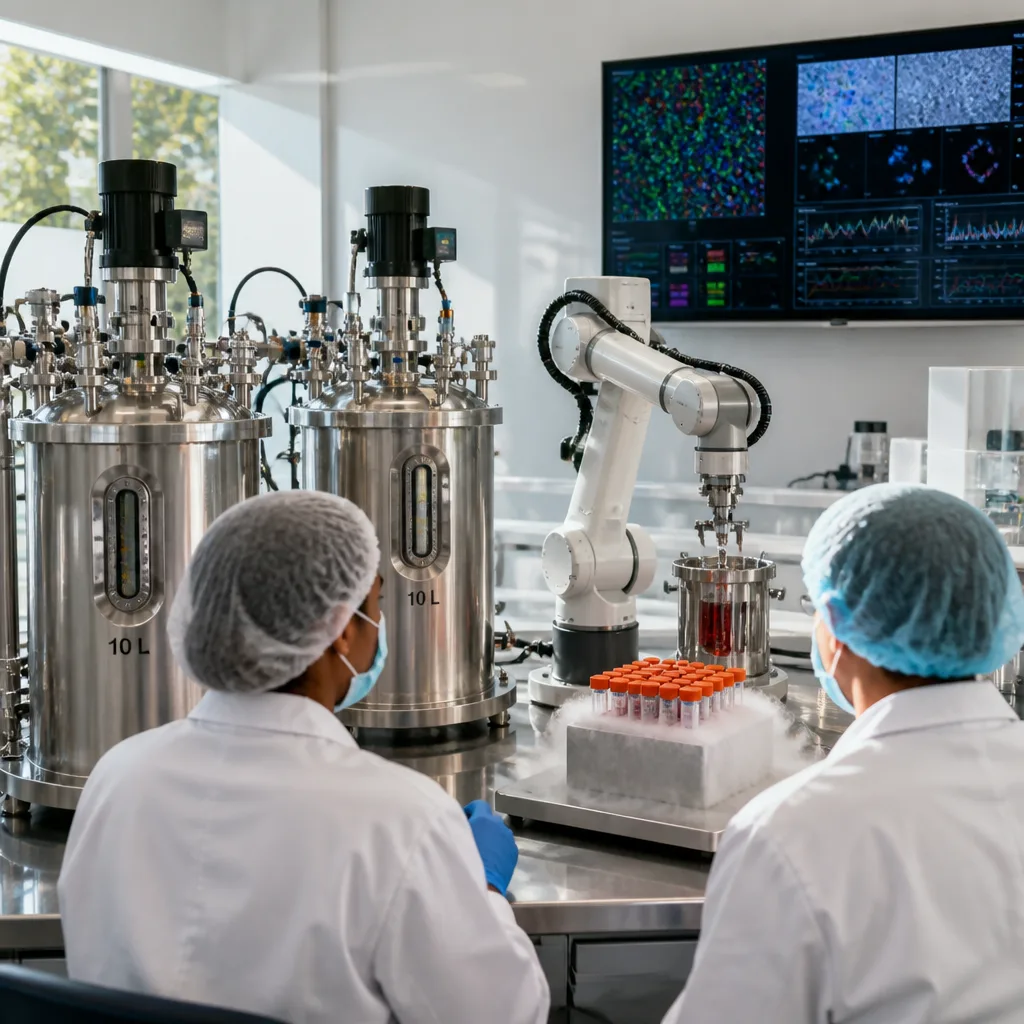
The INDUZELL project, led by Hannover Medical School (MHH), seeks to transfer PSC cultivation from conventional two‑dimensional culture dishes into standard industrial stirred‑tank bioreactors operating in 3D suspension. The team plans to scale production from current small volumes to bioreactors of up to 10 litres, and to package the process into a closed, automated platform supported by multimodal microscopy and artificial intelligence for process monitoring.
Pluripotent stem cells can differentiate into almost any specialised cell type and are central to a growing pipeline of regenerative therapies. The project description notes that PSC‑derived products are already being evaluated in more than 100 clinical trials worldwide for conditions such as Parkinson’s disease, heart failure and type 1 diabetes.
Why 3D suspension and automation matter
Traditional PSC culture uses flat, two‑dimensional cell layers in culture dishes. While useful for research, such methods are limited in yield, demanding in terms of laboratory space, and consume substantial amounts of consumables and energy. Moving to 3D suspension culture in stirred‑tank bioreactors promises several advantages:
- Higher yield: greater cell numbers per volume compared with two‑dimensional systems.
- Improved scalability: common industrial glass bioreactors allow easier upscaling from litres to larger production volumes.
- Reduced footprint and waste: lower space and plastic consumption when processes are closed and automated.
The INDUZELL team also intends to create cryopreserved cell stocks and to integrate AI‑guided process control, which could help deliver consistent product quality — a key requirement for regulatory approval and clinical translation.
Funding and timeframe
The three‑year project has received roughly €1.4 million in support from the European Regional Development Fund. Project leaders say the aim is to make PSC cultivation in larger bioreactors reliable and cost‑effective for industrial production.
| Feature | Project target |
|---|---|
| Bioreactor volume | Up to 10 litres |
| Funding | ≈€1.4 million |
| Key technologies | 3D suspension culture, cryopreservation, multimodal microscopy, AI process monitoring |
The project leader, Professor Robert Zweigerdt, is quoted in the project materials noting that PSCs are an “unlimited, renewable raw material” that can be transformed into virtually any cell type, opening applications beyond therapeutics, including pharmaceutical development and alternative food production.
“Pluripotent stem cells, as an unlimited, renewable raw material, can be transformed into virtually any cell type,” the project statement says.
Context and consequences
Reliable, large‑scale PSC manufacturing is widely recognised as a bottleneck for regenerative medicine. Without consistent, high‑quality cell supplies produced at scale, translating promising therapies from clinical trials into routine treatment becomes difficult and expensive. The shift to automated, closed 3D systems could reduce variability between batches and lower production costs — both essential for commercial viability and regulatory compliance.
For South Africa, and other middle‑income countries, advances in scalable cell production are relevant for several reasons. They may eventually lower the cost of advanced therapies, support local biomanufacturing capacity, and create opportunities for technical training and jobs in the biotech sector. However, achieving these outcomes requires parallel investment in infrastructure, regulatory frameworks, and skills development.
The INDUZELL project is an example of applied research targeting a practical manufacturing problem. Its success will need to be judged on whether the platform can deliver consistent cell quality at scale, reduce per‑unit costs, and meet the stringent safety and traceability standards demanded by regulators when cells are intended for human use.
At this stage the project is focused on developing and demonstrating the technology. Broader adoption will depend on subsequent validation, regulatory approval pathways and industrial uptake.