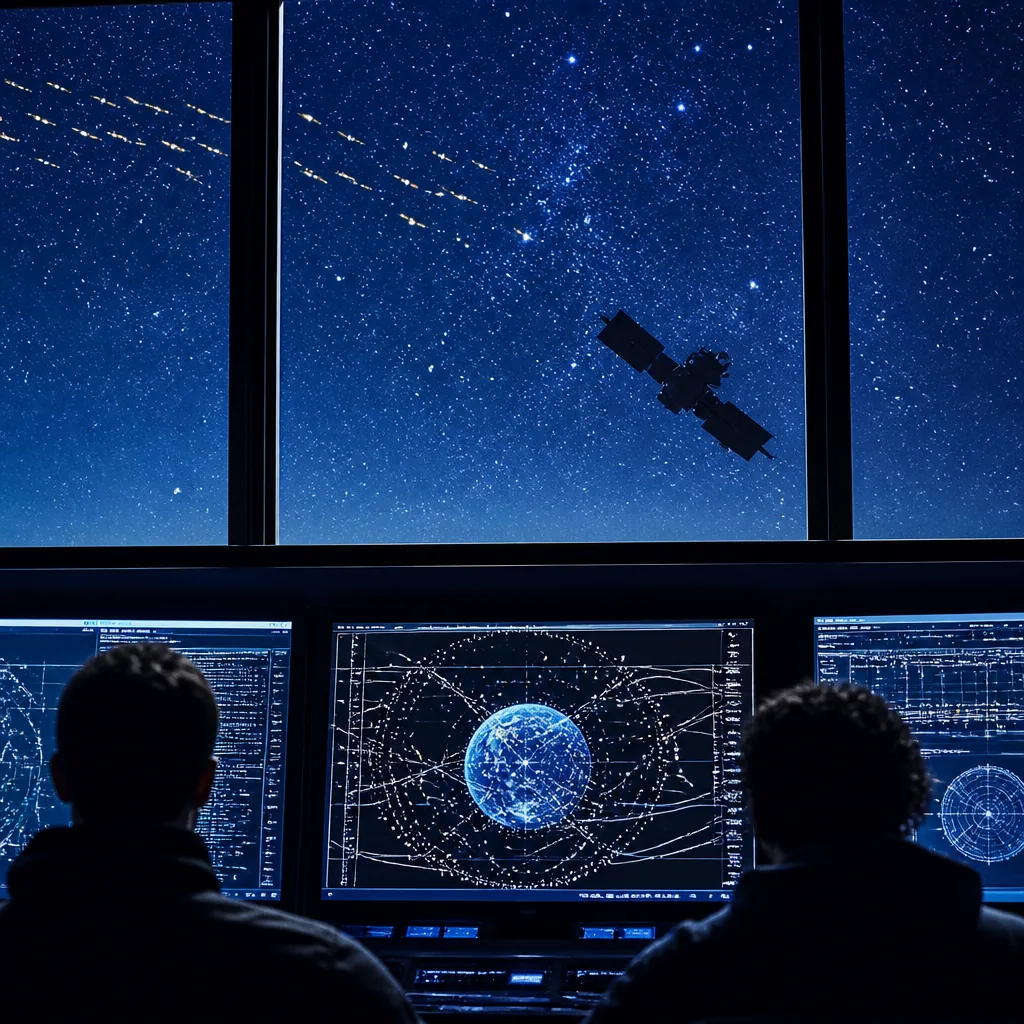
A Cold War‑era US reconnaissance satellite, known as USA 32 or Farrah III, suddenly fragmented in low Earth orbit on 13 September 2026, space‑tracking agencies reported. The break‑up occurred at an altitude of about 775 kilometres, and the number of fragments created has not yet been established.
What happened and how it was detected
Space‑Track, the US Space Force satellite‑tracking unit, announced the sudden fragmentation on 17 September, saying the event had taken place four days earlier. Private tracker s2a systems also confirmed the incident and photographed the largest surviving fragment in orbit. The exact cause of the break‑up remains unknown.
USA 32 was launched in 1988 by the US National Reconnaissance Office to intercept radio and radar signals. Its mission and capabilities were fully declassified only this year. The spacecraft likely ceased normal operations many years ago.
Possible causes and current uncertainties
Analysts and trackers are considering several plausible explanations, but stressed there is currently no conclusive evidence for any single one. Spaceweather.com suggested two leading hypotheses:
- a ruptured pressurised tank or a failed battery component inside the nearly four‑decades‑old vehicle, or
- a high‑speed impact by a small, previously undetected object.
Neither scenario has been confirmed; investigations are ongoing and more fragments may be catalogued as observations continue.
Why this matters
Debris from fragmentation events spreads along the original orbit and can pose collision hazards to other satellites. Models from Spaceweather.com indicate debris from USA 32 could have dispersed along its orbital path within 24 hours of the break‑up. The orbital band around 775 kilometres already contains remnants from earlier collisions, including debris from the 2009 collision between an American and a Russian satellite.
At least 200 other satellites operate in the same general region, increasing the potential for dangerous secondary collisions if larger fragments intersect active spacecraft. Although the International Space Station and China’s Tiangong station orbit well below this altitude, debris trajectories evolve over time under the influence of gravity and atmospheric drag, and pieces can shift into different orbital regimes.
| Fact | Detail |
|---|---|
| Satellite | USA 32 (Farrah III) |
| Launch year | 1988 |
| Altitude at break‑up | ~775 kilometres |
| Announcement | Space‑Track, 17 September 2026 |
| Satellites in region | At least 200 |
Implications for operators and South Africa
Orbital debris is a global problem. Even when fragmentation involves an old, non‑operational vehicle, the resulting fragments are hazards for active satellites providing communications, Earth observation and navigation services. Operators must assess collision risk and, where possible, manoeuvre to avoid debris.
For South Africa, the event is a reminder of the growing complexity of space traffic management. As the national space agency and commercial satellite operators expand activities, accurate tracking and timely dissemination of warnings are increasingly important. The evolving debris field from USA 32 will be monitored by international and national tracking services over the coming weeks and months.
At present, no definitive cause has been confirmed and the full scale of the debris field remains unknown. Space‑Track, s2a systems and other observers will continue to catalogue fragments and refine orbit predictions. Those updates will determine whether collision risk to other spacecraft becomes material and whether further mitigation steps are required.