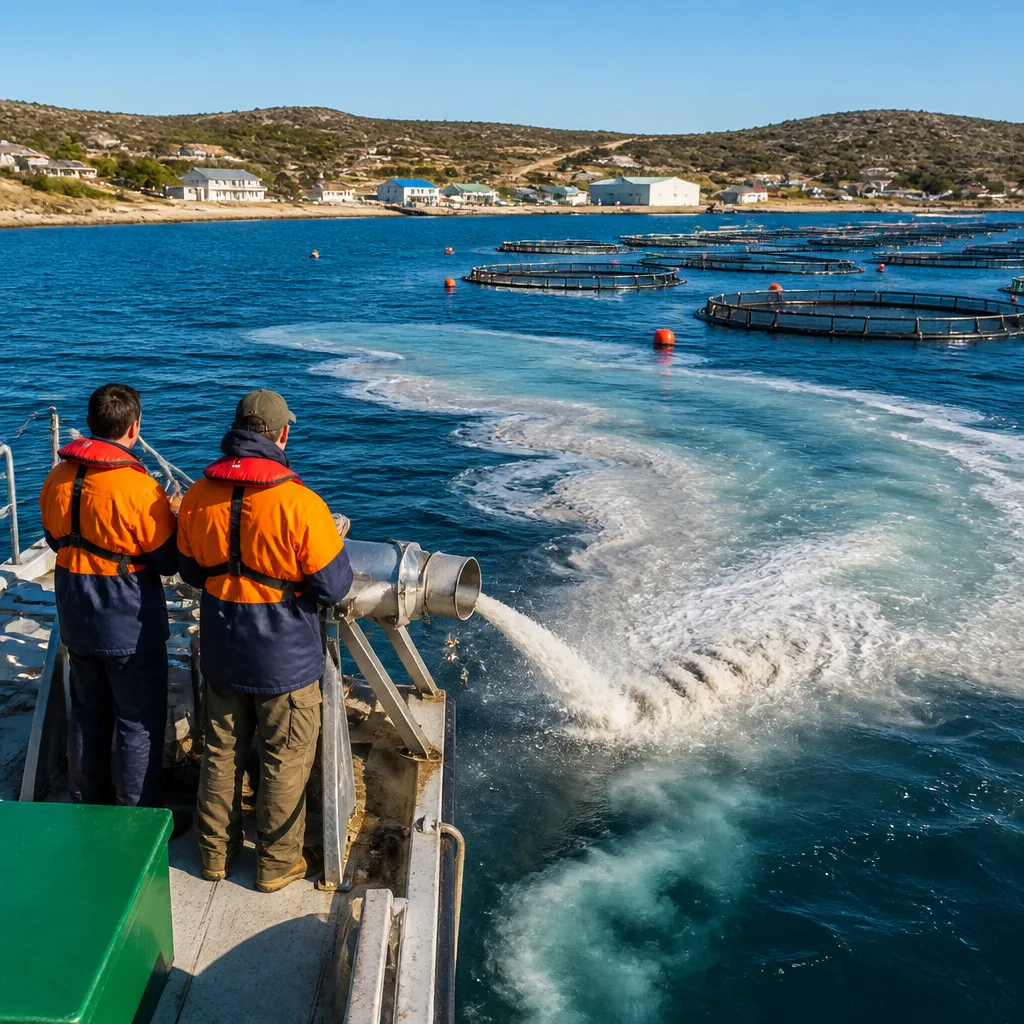
Chinese researchers have refined a modified‑clay treatment that can rapidly clear harmful algal blooms (HABs), a development gaining traction in international coastal management. The method, based on flocculation and sedimentation, was developed by the Institute of Oceanology of the Chinese Academy of Sciences (IOCAS) after a large HAB event in 1989 devastated aquaculture in the Bohai Sea.
From a local disaster to an international tool
The 1989 HAB turned stretches of seawater a dark red and killed large numbers of farmed fish and shellfish. IOCAS researchers responded by creating a practical intervention that acts like an "extinguisher" for blooms: modified clay particles are added to affected seawater, the clay binds to algal cells (a process called flocculation) and the heavier aggregates then sink by sedimentation, removing organisms from the surface water where they cause harm.
The research team reports the technology is now deployed beyond China. The source notes use in Malaysia and Turkey, including Turkey’s Gulf of İzmir, and that a 15‑nation initiative to expand cooperation on HAB mitigation was unveiled at a UNESCO conference in Paris this summer.
How the method works and its applications
Modified‑clay treatment is an engineering solution rather than a biological control. It does not target specific toxins directly; instead it removes the cells that produce toxins or cause oxygen depletion by accelerating their removal to the seabed. That makes it an emergency response tool that can be applied where rapid reduction of surface algal biomass is required, for example to protect aquaculture pens, beaches or water‑intake areas.
- Mechanism: flocculation (clay binds cells) and sedimentation (flocs sink).
- Use cases reported: Bohai Sea (original development), Malaysia and Turkey (deployments cited).
- International coordination: a 15‑nation programme announced at UNESCO in Paris.
While the technology removes algal cells from the water column, its effectiveness depends on bloom type, environmental conditions and careful operational planning. Sediment‑trapping of biomass may transfer material to the seabed, so managers must weigh short‑term benefits against potential benthic impacts.
Costs, outcomes and caution
The original Bohai Sea event caused estimated economic losses of about R200 million equivalent — the source gives the figure as 200 million yuan, approximately $29.86 million at the time. That event prompted the sustained research effort that produced the modified‑clay approach.
Scientists and coastal managers considering the method should note the difference between an operational emergency tool and long‑term ecosystem management. Removing surface biomass can protect aquaculture and reduce immediate toxin exposure, but it does not address underlying drivers of HABs such as nutrient pollution, warming waters and altered circulation. Consequently, modified clay is best seen as part of a broader HAB mitigation strategy that includes monitoring, pollution control and ecosystem restoration.
“An emergency control approach that could be deployed as quickly as an ‘extinguisher’ against HABs,” the source reports, describing the rationale behind the technology.
For South African coastal authorities and researchers, the expanding international experience with the technique offers a case study in rapidly deployable mitigation. Further evaluation under local conditions — including species composition, water depth, current regimes and benthic sensitivity — will be necessary before any operational use here.
| Item | Detail |
|---|---|
| Origin | Institute of Oceanology, Chinese Academy of Sciences (IOCAS) |
| Key mechanism | Modified‑clay flocculation and sedimentation |
| Noted deployments | Bohai Sea (China), Malaysia, Turkey (Gulf of İzmir) |
| International effort | 15‑nation programme announced at UNESCO, Paris |
Decision‑makers should treat the technology as an additional tool for HAB response, requiring environmental assessment and local trials before widespread application. The global uptake and the new multilateral initiative, however, signal growing interest in operational responses that can limit the acute economic and public‑health harms of intense bloom events.