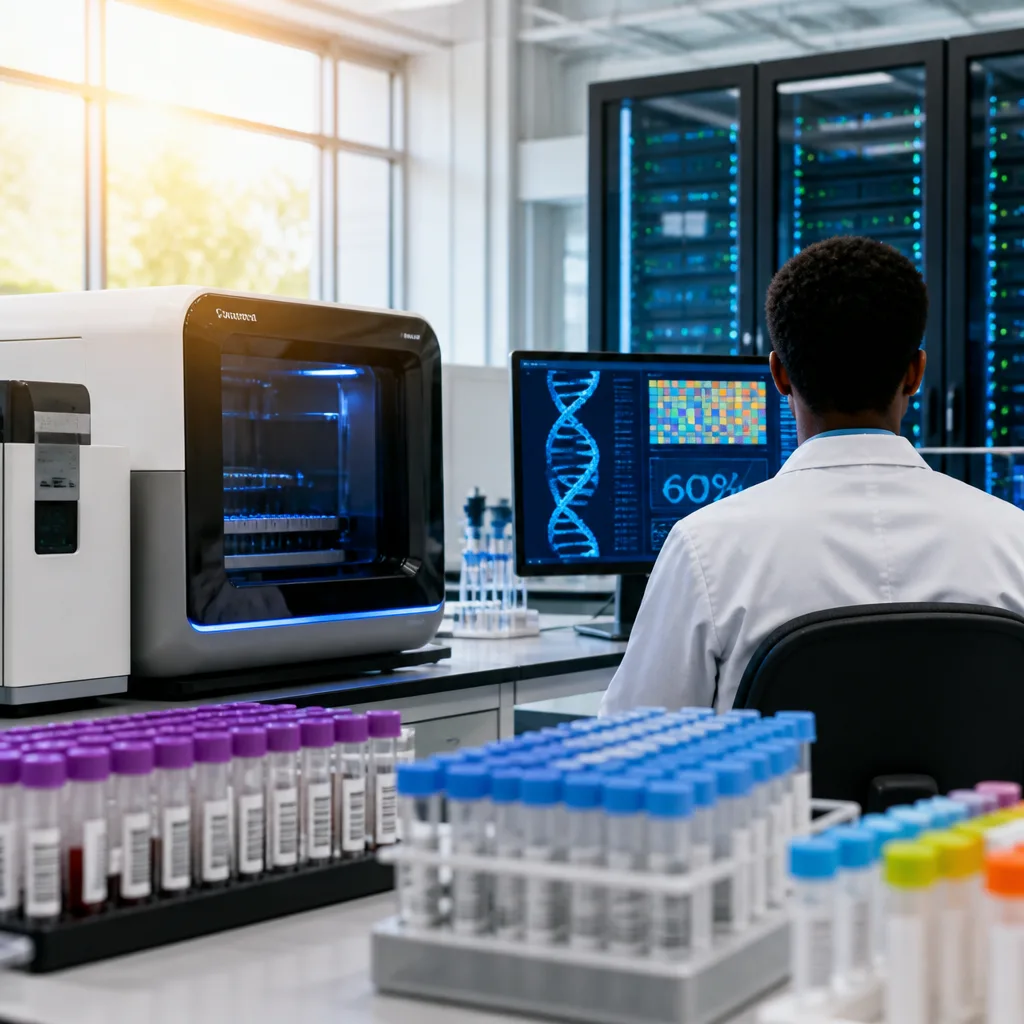
Researchers have used artificial intelligence to identify the DNA signature of a key genetic "initiator" — a short sequence that marks where a gene begins to be read and expressed. After training models on high-throughput sequencing data from roughly 500,000 variant sequences, the team report that the characteristic pattern appears in about 60% of human genes.
What the initiator is and why it matters
Genes are switched on when cellular machinery recognises signals in DNA that mark the start of transcription, the process that copies DNA information into RNA. One such signal is the initiator, a short DNA element that pinpoints where transcription begins. Correct timing and location of gene activation underpin normal development and function; when this regulation fails, cells can malfunction and contribute to diseases, including cancer.
The new work combined large-scale laboratory measurements with machine learning. Researchers measured gene expression driven by about half a million different versions of the initiator sequence. They then trained an AI model to recognise the sequence patterns associated with functional initiators and searched the human genome for matches.
"These AI models were found to provide, for the first time, strong predictions of the presence or absence of the initiator in human genes," said James T. Kadonaga, a professor in the UC San Diego Department of Molecular Biology.
Key findings and potential uses
The main findings reported are straightforward:
- High-throughput sequencing assessed expression for ~500,000 initiator variants.
- Machine learning models learned the DNA signature of the initiator from those data.
- The identified signature was present in about 60% of human genes.
The authors propose several applications. First, the models could help predict how mutations that alter the initiator sequence change gene activity, which in turn may contribute to diverse disorders. Second, the data and models could aid the design of synthetic promoters — engineered DNA sequences that switch genes on or off — with tailored functions for research or therapeutic use. More generally, the study illustrates how experimental genomics and AI can be combined to reveal previously cryptic information encoded in DNA.
Strengths, limitations and next steps
The strength of this study lies in pairing empirical measurements with machine learning: AI was not used as a black box applied to genomes alone, but was trained on laboratory results that quantify how sequence changes affect expression. This approach improves confidence that the model captures biologically relevant patterns rather than statistical artefacts.
That said, the results should be viewed as an advance rather than a final answer. The reported presence of the initiator in ~60% of human genes comes from searching for the specific signature learned by the model; not all promoters or genes use the same mechanisms, and other regulatory elements also control transcription. The predictive power for individual mutations will therefore need validation in diverse cell types and physiological contexts before clinical use.
Future work will likely test model predictions on patient-derived variants, expand measurements across different tissues, and integrate the initiator signature with other promoter and enhancer features to build a fuller map of gene regulation.
Why this matters for South Africa
Advances that improve our ability to predict how DNA changes affect gene activity have direct relevance to genomic medicine. Improved interpretation of regulatory variants can inform diagnoses and research into genetic contributors to disease. For South African research institutions and clinicians working with diverse genomes, validated models that account for regulatory sequences will be most useful when trained and tested on data representing the genetic diversity of the population.
| Item | Figure |
|---|---|
| Number of initiator variants assayed | ~500,000 |
| Proportion of human genes with initiator signature | ~60% |
The study demonstrates a practical pathway: combining large-scale laboratory assays with AI can uncover regulatory sequences that were previously difficult to define, strengthening our toolbox for understanding and eventually treating genetic disease.