President Cyril Ramaphosa has called for closer co-operation between government, universities and national science councils, saying South Africa must use its research and innovation capabilities more effectively to support economic growth and improve people’s lives.
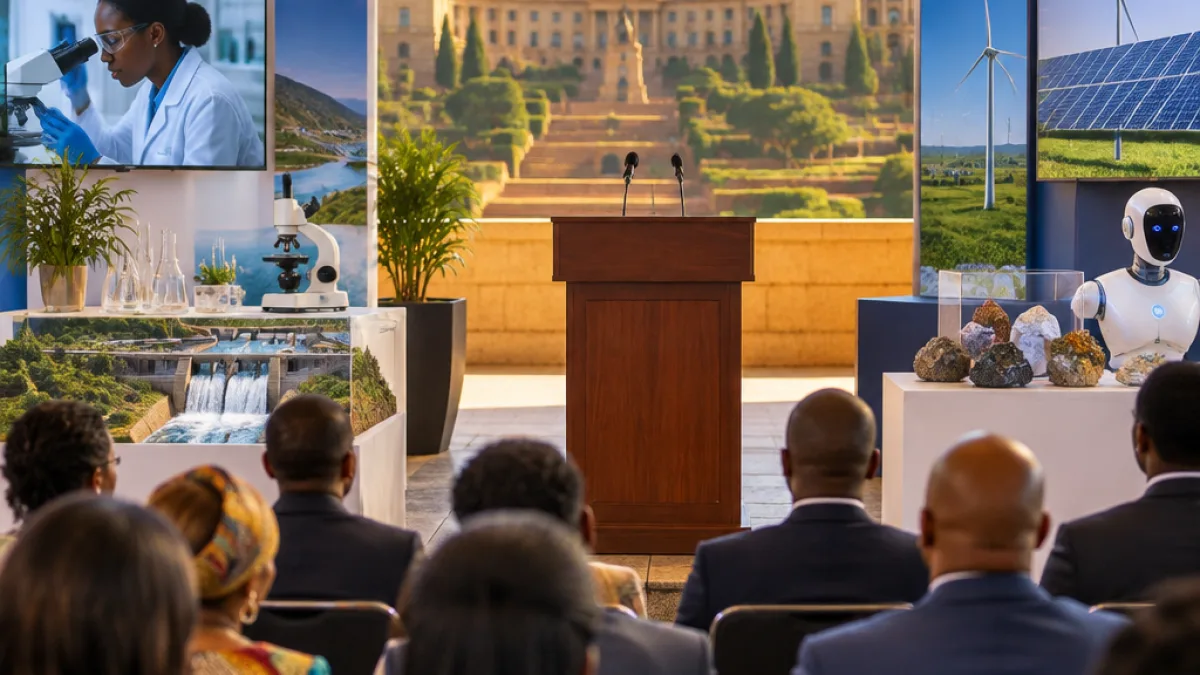
Addressing vice-chancellors and leaders of science councils at the Union Buildings, Ramaphosa said the country needed a more strategic relationship with its research community. The engagement included Science, Technology and Innovation Minister Professor Blade Nzimande and Higher Education Minister Buti Manamela.
Research linked to development
The meeting was held under the theme “Mobilising Universities and National Science Councils for the Developmental State, Economic Growth and the Skills Revolution”. It took place as the government implements the National Development Plan 2030 and the Medium-Term Development Plan 2024–2029.
These policy frameworks set out broad national goals, including economic development, skills growth and improved state capacity. Ramaphosa’s message was that universities and publicly supported research institutions should be active partners in reaching those goals, rather than operating separately from the country’s wider development programme.
The call comes against a difficult socioeconomic backdrop. South Africa’s unemployment rate is 33.7%, while poverty remains persistent and inequality is among the highest in the world. In that setting, the President said the country’s intellectual and research resources needed to be mobilised to address challenges that affect both economic opportunity and daily life.
“South Africa must be a producer, not merely a consumer, of emerging technologies.”
Building skills and technology
Ramaphosa described universities as essential partners in building a developmental state. He said countries that had successfully transformed their economies had put knowledge at the centre of development by connecting higher education, research and industry.
That approach involves more than producing academic research. It also requires the development of skills, the transfer of knowledge into the economy and the creation of technology that can be developed and governed within South Africa. The President specifically highlighted the need to build the country’s own artificial intelligence capabilities.
Artificial intelligence refers to computer systems designed to perform tasks that normally require human intelligence, such as analysing information or identifying patterns. Ramaphosa also stressed the importance of strengthening South Africa’s ability to build, govern and use data for the benefit of society. The reference to governance is significant because it places the management and use of data alongside technological development, rather than treating innovation as only a technical matter.
Priority areas for collaboration
The President identified several areas where government, higher education and science councils should work more closely:
- Skills development to strengthen the country’s human capacity;
- Water and energy security to address essential national needs;
- Industrialisation to expand productive economic activity;
- Critical minerals beneficiation, which means adding value to minerals before they are exported; and
- Public-sector capacity to improve the state’s ability to deliver.
| Focus area | Intended contribution |
|---|---|
| Skills development | Build the capabilities needed for national development |
| Water and energy | Support security in essential services |
| Industrialisation | Strengthen productive economic activity |
| Critical minerals | Increase value from South Africa’s mineral resources |
| Public-sector capacity | Improve the state’s ability to respond to national needs |
The meeting also included Vice-Chancellor and Principal Professor Tinyiko Maluleke. Its central question was how the country’s research institutions can become more closely connected to the practical work of development.
Ramaphosa’s appeal does not by itself establish new programmes or funding arrangements. It sets out a call for stronger co-ordination between institutions that produce knowledge and the government structures responsible for policy and delivery. The success of that approach will depend on how the identified priorities are translated into working partnerships, skills programmes and usable technologies.